





Pentagon Signs Deals With Three Firms for Low-Cost Mass-Produced Cruise Missiles


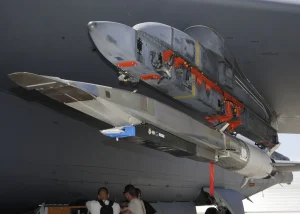
The Pentagon has reached agreements with three defense firms to mass-produce more affordable air-to-ground cruise missiles. The effort, called the Family of Affordable Mass Missiles (FAMM), includes weapons that can be dropped on a pallet from the rear ramp of a cargo aircraft. The deals are seven-year, fixed-price minimum-quantity agreements, and have not yet been approved by Congress.
Who will build them
Three companies are involved: Virginia-based CoAspire, producing the Rapidly Adaptable Affordable Cruise Missile (RAACM); California-based Anduril Industries, building the Barracuda-500; and Zone 5, owned by Norway’s Kongsberg, developing the Rusty Dagger. Anduril said it had invested more than $40 million in California production and would expand to its Arsenal-1 facility in Ohio; other firms and total contract values were not disclosed.
Two categories
FAMM splits into two use modes. The first is a traditional air-launched variant that attaches to existing aircraft weapon stations. The second is dropped as a pallet from a cargo aircraft’s rear ramp, requiring no modification to the plane. The second method turns transport aircraft into launch platforms and can commit large numbers of missiles at once. For the US Air Force, that means flexible logistics and deployment options.
Why it matters
The core logic is producing low-unit-cost missiles at high volume with a predictable demand signal. The war in Ukraine showed how quickly munition consumption in a modern conflict outpaces peacetime production. With fixed pricing and long-term commitments, the US aims to give industry a stable production base and the ability to scale rapidly in a crisis.
The pallet-drop concept marks the maturing of an approach tested earlier under the Rapid Dragon program. Increasing launch mass without depending on the fighter fleet bears directly on deterrence math. Congressional approval and locked-in prices will determine whether the program truly reaches serial production. Turkey’s defense industry has likewise placed the balance of cost and mass production at the center of its export strategy with cruise missiles such as SOM and ATMACA.
Sources
- The Washington Times (16 July 2026)
- Manufacturer statements: Anduril, CoAspire, Zone 5