





NATO Selects Saab’s GlobalEye to Replace the E-3 AWACS Fleet

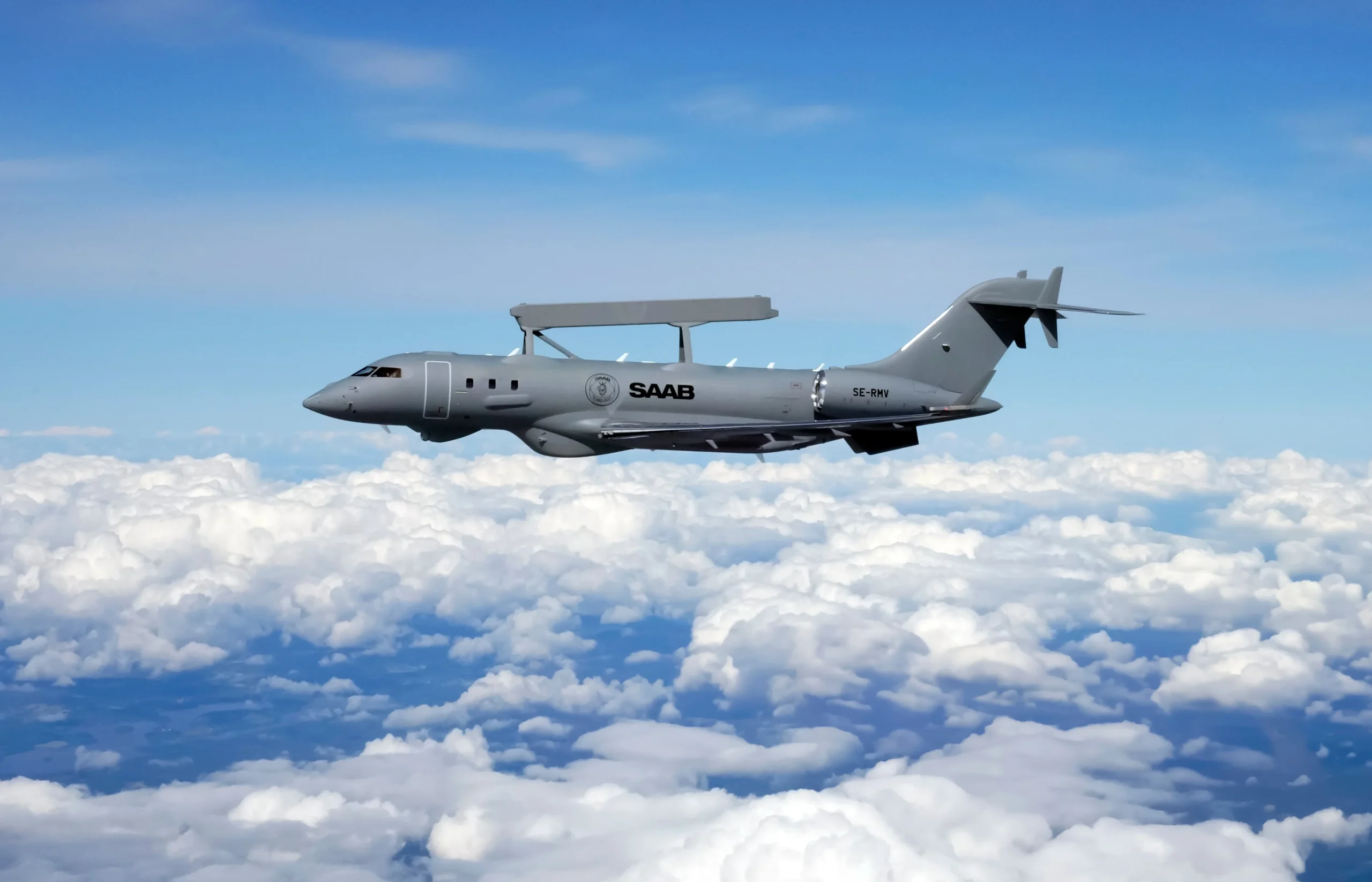
NATO has identified the aircraft that will replace its long-serving E-3A AWACS fleet. Announced on July 7, 2026 at the NATO Summit in Ankara, the Alliance has selected Swedish defense firm Saab‘s GlobalEye as its future airborne early warning and control (AEW&C) solution.
The decision in Ankara
NATO Secretary General Mark Rutte announced the Alliance will begin formal negotiations with Saab for up to ten GlobalEye platforms. Belgium, Canada, Denmark, Germany, Latvia, Lithuania, Luxembourg, the Netherlands, Norway, Romania and Sweden are involved in the decision, forming the core coalition that will co-fund and operate the fleet. Saab CEO Micael Johansson said the company was “honoured and proud to support NATO’s next-generation AEW&C capability.”
What GlobalEye can do
GlobalEye combines Saab’s extended-range Erieye radar with an advanced sensor suite and multi-domain command-and-control software, mounted on a Bombardier Global 6500 business jet. The system can detect low-observable targets, drones, and ballistic and hypersonic missiles at long range with high update rates, even in heavily jammed electronic environments.
Why it matters now
NATO’s Cold War-era E-3A AWACS fleet is nearing the end of its operational life, representing one of the most critical gaps in the Alliance’s integrated air defense architecture. Russian missile and drone activity edging closer to European airspace is pushing NATO to modernize its early-warning capability. The announcement does not yet constitute a contract — Saab will now enter formal negotiations with the NATO Support and Procurement Agency (NSPA).
Why Ankara matters
The decision being announced at a summit hosted by Türkiye carries symbolic weight given Türkiye’s position within NATO’s collective air and missile defense architecture. Türkiye sits at the center of growing air-threat perceptions along the Alliance’s southern and eastern flanks, and questions over regional patrol and rotation arrangements are expected to surface as the GlobalEye fleet’s final basing plan takes shape.
What’s next
No timeline has been set for concluding the Saab-NSPA negotiations. Industry sources do not expect first deliveries before the late 2020s once a contract is signed, meaning the E-3A fleet will remain operational for a transitional period.
Sources
Saab AB press release (July 7, 2026); Breaking Defense.