IAI Harpy: The Anti-Radiation Loitering Munition That Turns Enemy Radar Into Its Own Kill Switch

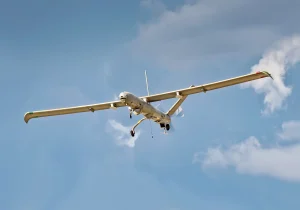
The IAI Harpy is built on a single, elegant strategic principle: if an enemy air defense radar is active, it reveals its own position; if it is turned off to avoid Harpy, it can no longer guide interceptors. Either choice is harmful. The Harpy forces enemy radar operators into an impossible dilemma — and in doing so, suppresses air defenses more efficiently than any conventional anti-radiation missile.
SEAD and the Persistent Suppression Problem
Traditional anti-radiation missiles (ARMs) like the AGM-88 HARM operate on a simple principle: detect radar emission, guide to source, destroy. The problem: sophisticated radar operators can switch off at the moment of launch, causing HARM to miss or land harmlessly. Harpy eliminates this problem entirely. It orbits its designated area for 6-9 hours. When a radar emits, Harpy attacks. If the radar shuts down, Harpy continues orbiting and waits. The target is trapped: it cannot engage incoming aircraft without activating its radar; it cannot activate its radar without triggering Harpy.
Technical Specifications
| Parameter | Harpy | Harpy NG |
|---|---|---|
| Range | 500 km | 500+ km |
| Endurance | 6-9 hours | 9+ hours |
| Guidance | Passive radar seeker (broadband) | Passive radar + EO/IR |
| Warhead | 32 kg | 32+ kg |
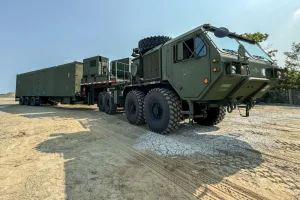
| Launch system | Mobile canister (6 rounds) | Mobile canister |
| Autonomy | Fully autonomous fire-and-forget | Autonomous + optional man-in-the-loop |
The China Crisis: When Export Control Meets Technology Transfer
In 2004-2005, China returned Harpy systems it had purchased from Israel to have them upgraded — without informing the United States. Washington interpreted this as an unauthorized transfer of US-origin technology (Harpy contains components derived from US-supplied subsystems) and imposed significant diplomatic pressure on Israel. The crisis resulted in Israel significantly tightening its export control procedures and explicitly subjecting future sales of certain advanced systems to US veto authority. For defense export analysts, the Harpy episode remains a textbook case study of how technology transfer monitoring shapes the geopolitics of arms sales.
India: The Long-Term Operational User
India has operated Harpy since the late 1990s, making it one of the system’s longest-serving export customers. The Indian Air Force deploys Harpy as a SEAD asset against both Pakistani and Chinese air defense radar networks along the disputed borders. India is currently upgrading its Harpy fleet to Harpy NG standard — adding EO/IR imaging for non-emitting targets — under an ongoing IAI contract.
Comparison with Alternative SEAD Systems
| System | Country | Type | Range | Persistent? |
|---|---|---|---|---|
| Harpy | Israel | Loitering munition | 500+ km | Yes (6-9 hrs) |
| AGM-88 HARM | USA | Anti-radiation missile | 150 km | No |
| ALARM | UK | Anti-radiation missile | 90 km | Limited (loiter mode) |
| Kh-31P | Russia | Anti-radiation missile | 110 km | No |
| KARGI | Turkey | ARM (development) | ~50 km (target) | No |
Editorial Assessment — Envanter Media
Harpy represents a design philosophy of elegant simplicity: instead of building a smarter seeker head for a ballistic missile, build a drone that loiters until the target reveals itself. This concept — now widely adopted in the “loitering munition” category by Harop, Switchblade, Lancet, and others — originated with Harpy in the 1980s. IAI did not just build a weapon; it invented a weapon category. That legacy is Harpy’s most enduring contribution to the evolution of air power doctrine.