Are Ford-class Aircraft Carriers Sold to Foreign Countries?

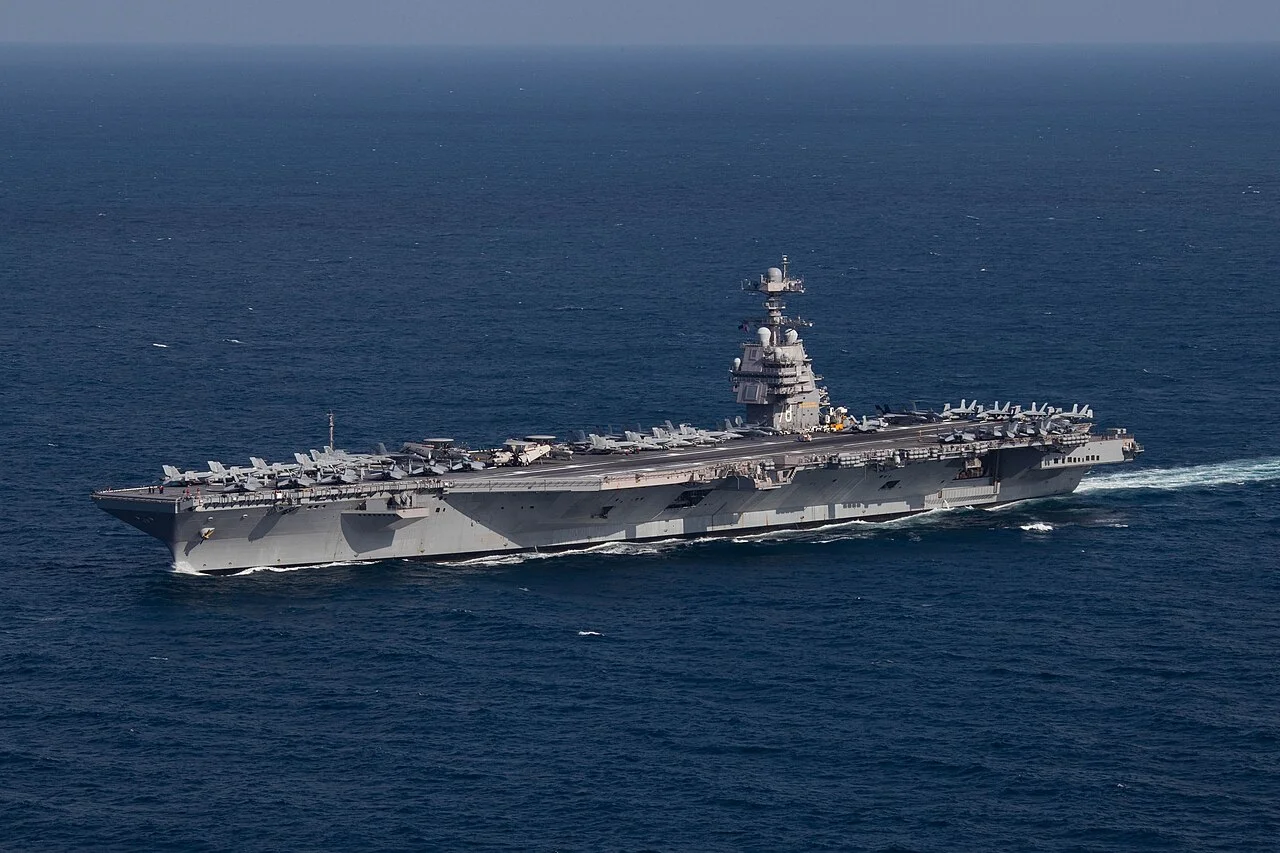
Search interest in “Ford-class aircraft carrier export” often assumes there is a standard Foreign Military Sales case, as there is for many fighters, missiles or patrol aircraft. Official U.S. Navy fact files and public FMS documentation point to a different answer. This article stays with those official sources and with the official class explainer already scheduled on this site. It is not a prediction of future policy, and it is not sales advice.
What official Navy pages say the class is for
The official U.S. Navy fact file on aircraft carriers, updated February 27, 2025, describes the Nimitz-class and Gerald R. Ford-class ships as the largest warships in the world, designed for an approximately 50-year service life with a single mid-life refueling, and presents them as U.S. Navy force-structure ships. The same official materials identify USS Gerald R. Ford (CVN 78) as the lead ship of the class, delivered in 2017 as the force-structure replacement for USS Enterprise (CVN 65). Official command-history and Navy feature pages discuss the lead ship’s nuclear propulsion — two reactors and four shafts, in the official CVN 78 figures — and the design features intended for U.S. carrier air-wing operations. None of those official class pages describes the Ford class as an item offered to foreign navies through Foreign Military Sales.
What official FMS documentation does not show
The Defense Security Cooperation Agency publishes major arms-transfer notifications and official news about Foreign Military Sales cases. This article is written from those official public channels as they stood for this explainer: it identifies no official DSCA notification, and no official Navy announcement, of a Ford-class nuclear aircraft carrier sale, lease or FMS case to a foreign government. The absence of a public official case is not the same thing as a newly discovered legal ban stated in this article, and it is not a prediction that policy could never change. It is a report of what official public FMS and Navy class documents do, and do not, currently describe.
Nuclear propulsion adds a layer that ordinary FMS of conventionally powered ships does not. Official Navy pages present Ford-class ships as nuclear-powered. Transfers of nuclear-propulsion technology and related naval nuclear plants are governed by U.S. law and policy beyond the routine description of a fighter or missile FMS case. This article does not restate those statutes as a homemade legal opinion; it notes that official class documents treat these ships as U.S. Navy nuclear-powered aircraft carriers, not as a standard export product. For how the official FMS process itself works, see the earlier English explainer How the US Foreign Military Sales process works. For the official class facts, see the Ford-class official guide.
How to read a “which countries are buying” question
Allied navies operate aircraft carriers of their own design or have acquired other ships through official transfer or purchase programs. Those official programs, where they exist, are documented as cases for those ships — not as Ford-class export cases. A foreign interest story, a shipyard marketing claim or an unofficial rumor is not a substitute for a DSCA notification or a Navy announcement. Until such an official document appears, the accurate public description is that Ford-class carriers are official U.S. Navy ships under official U.S. Navy fact files, and that no official public FMS case for the class is identified here.
Sources
- U.S. Navy official fact file, “Aircraft Carriers – CVN,” last updated February 27, 2025, https://www.navy.mil/Resources/Fact-Files/Display-FactFiles/article/2169795/aircraft-carriers-cvn/
- Naval Air Force Atlantic, official USS Gerald R. Ford (CVN 78) command history, https://www.airlant.usff.navy.mil/Organization/Aircraft-Carriers/USS-Gerald-R-Ford-CVN-78/Command-History/
- Defense Security Cooperation Agency, official public FMS news and statutory notifications, https://www.dsca.mil/