US Space Force Operations: Official Missions from Warning to GPS

Official U.S. Space Force pages describe a set of core space operations — including missile warning, position, navigation and timing, satellite communications, and space-domain awareness — and, more recently, a change in the name of the field command that generates and presents those forces. This article stays with those official statements. A mission list is not a public inventory of every satellite, and a command redesignation is not, by itself, a change in the underlying missions described on official fact sheets.
The official command change in 2025
According to an official Space Force news story published November 17, 2025, Chief of Space Operations Gen. Chance Saltzman redesignated Space Operations Command (SpOC) as United States Space Force Combat Forces Command (CFC) in a ceremony at Peterson Space Force Base, Colorado, on November 3, 2025. U.S. Space Force Lt. Gen. Gregory Gagnon assumed command of the newly renamed CFC, succeeding Lt. Gen. David N. Miller, Jr., the SpOC commander. The same official story says the former SpOC command flag was furled, symbolizing the inactivation of SpOC and the transfer of its legacy to CFC, and that the CFC flag was unfurled for the first time at that ceremony.
The official article states that CFC is responsible for generating and presenting combat-ready intelligence, cyber, space and combat support forces. It says the command will focus on generating and presenting combat-ready units of action, maturing the Space Force generation model, strengthening Mission Deltas, and elevating combat-focused training and qualifications. It also reports that CFC comprises approximately 12,000 Guardians, Airmen and civilian personnel across 11 Deltas, 82 squadrons and 25 units of action. Those figures are official as of that November 2025 story; this article does not update them from unofficial later counts. The mission of CFC, the same story says, is “to protect America and its allies in, from, and to space… now and into the future.”
Official mission areas described on Space Force fact sheets
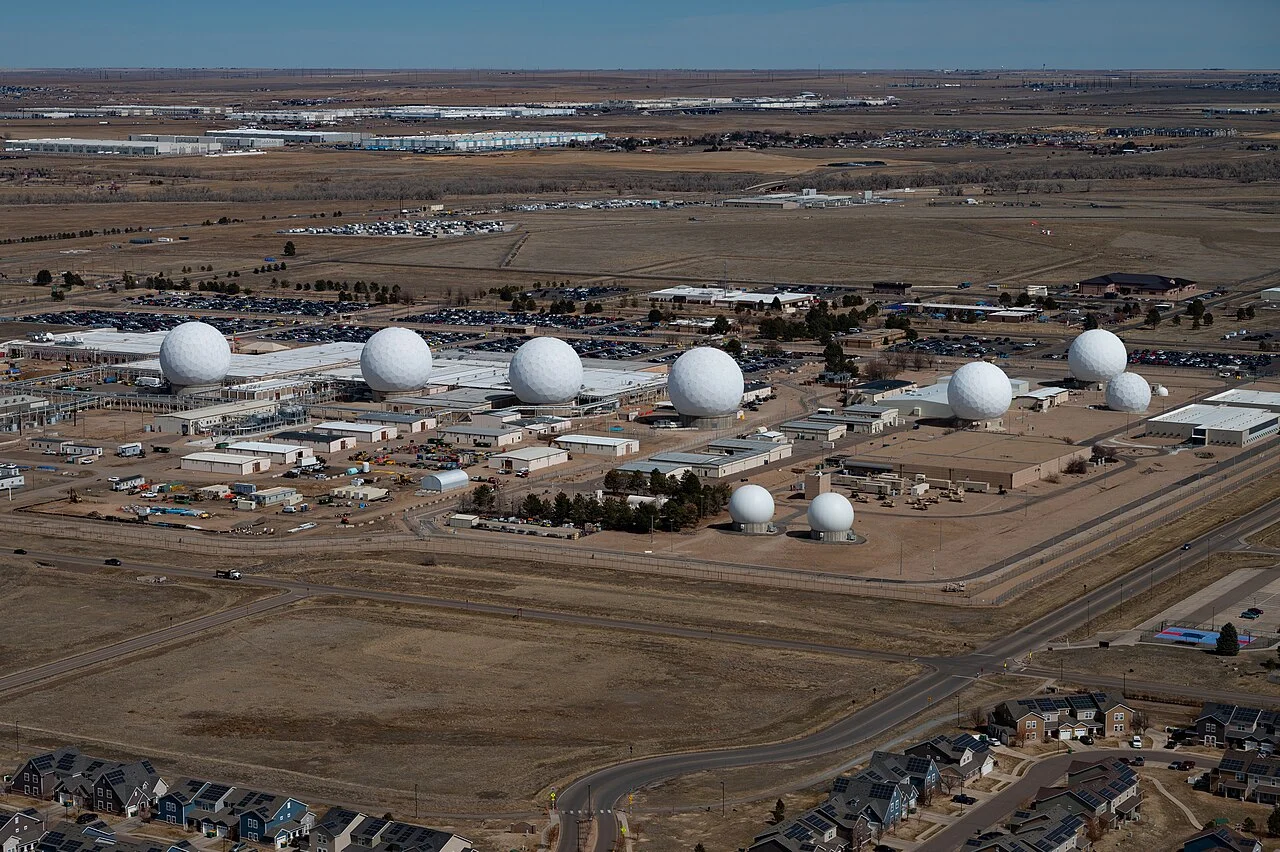
An official Space Operations Command overview, still published on the Combat Forces Command site, lists the operational capabilities the field command provides to the Space Force, U.S. Space Command, and other combatant commands and military services: space-domain awareness; space electronic warfare; missile warning; command and control; cyber operations; intelligence, surveillance and reconnaissance; position, navigation and timing; and orbital warfare. The same overview says the command has been responsible for operating installations at Buckley, Peterson and Schriever Space Force Bases and at Cheyenne Mountain Space Force Station in Colorado, as well as geographically separated units in the United States and overseas. Because the November 2025 redesignation transferred SpOC’s legacy to CFC, those mission areas are the official public description of what the field command is organized to generate and present; they are not a claim that every listed capability is continuously provided in every theater at every moment.
Individual official fact sheets fill in some of those mission areas. A Space Force fact sheet on the Global Positioning System describes GPS as a constellation of orbiting satellites that provides position, navigation and timing data to military and civilian users globally, and says the system is operated and controlled by Space Delta 8, located at Schriever Air Force Base, Colorado. A fact sheet on Defense Support Program satellites says U.S. Space Force-operated DSP satellites are a key part of North America’s early-warning systems, operating in geosynchronous orbits at 22,300 miles, and help protect the United States and its allies by detecting missile launches, space launches and nuclear detonations. Other official fact sheets describe related missions such as the Defense Meteorological Satellite Program’s weather and space-weather data for Department of Defense operations, and space-surveillance missions including the Geosynchronous Space Situational Awareness Program and Ground-Based Electro-Optical Deep Space Surveillance. Those are official system descriptions. This article does not invent constellation sizes, detection ranges or availability percentages beyond what those fact sheets state.
How to read these official pages together
The November 2025 redesignation is an official organizational change. It does not, in the story cited here, republish a complete new catalog of every satellite or radar. Older official fact sheets remain useful for describing named systems, provided their dates and wording are respected and are not silently converted into a 2026 order of battle. Readers looking for how to join the service, rather than how official pages describe its operations, can use the earlier English explainer How to Join the U.S. Space Force, which is scheduled from official recruiting and training pages.
Sources
- U.S. Space Force Combat Forces Command, 1st Lt. Laura Anderson, “U.S. Space Force establishes Combat Forces Command, welcomes new FLDCOM commander,” published November 17, 2025, https://www.ussf-cfc.spaceforce.mil/News/Article-Display/Article/4333400/…
- Official Space Operations Command overview / fact sheet, U.S. Space Force Combat Forces Command site, https://www.ussf-cfc.spaceforce.mil/About-Us/Fact-Sheets/Display/Article/2550627/space-operations-command/
- U.S. Space Force official fact sheets on GPS, Defense Support Program satellites, and related missions, https://www.spaceforce.mil/About-Us/Fact-Sheets/Tag/153963/space-operations-command/