The US Navy Is Going to the Seabed: USS Baltimore Is Being Rebuilt to Take Over From Jimmy Carter

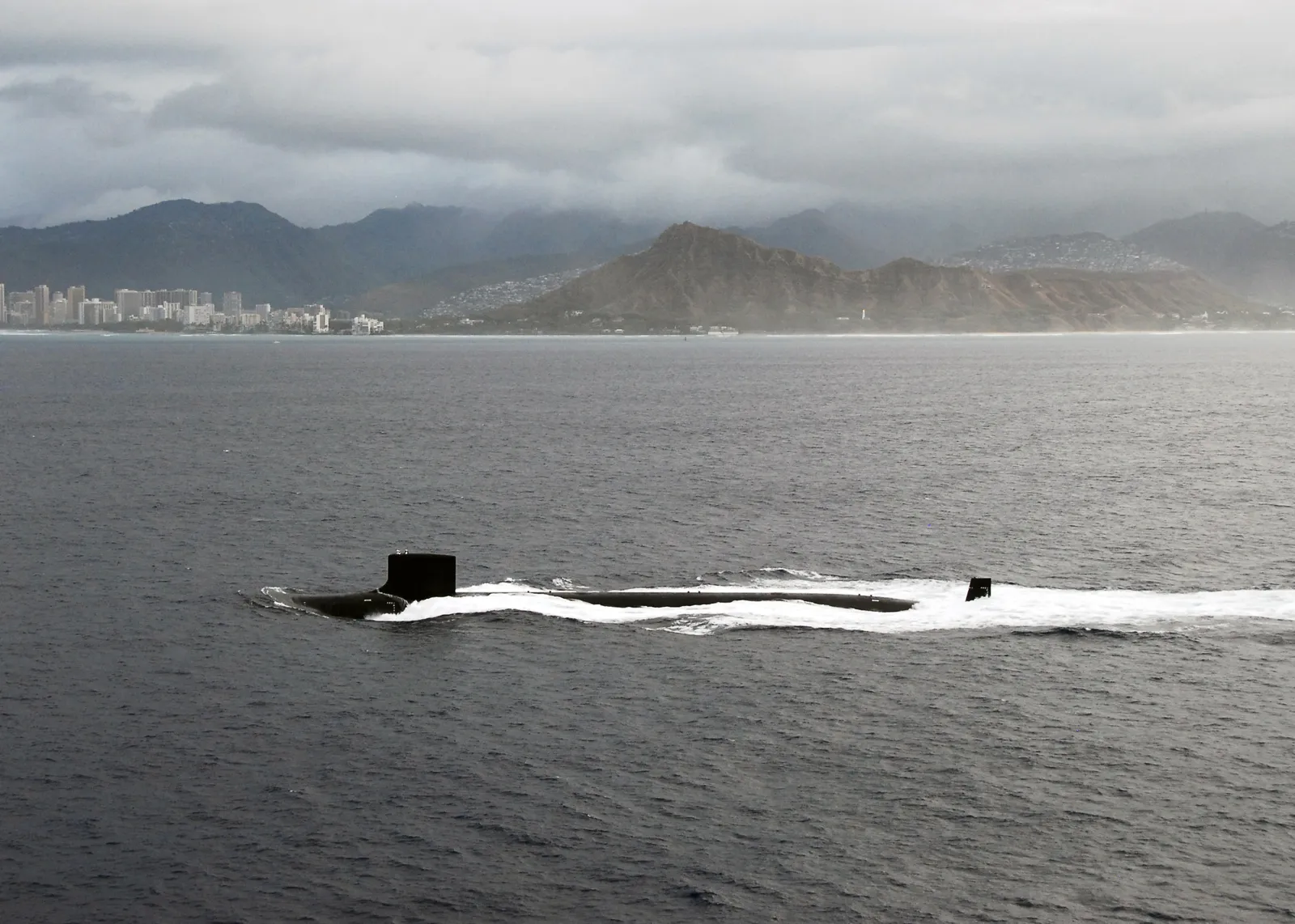
The US Navy is rebuilding an attack submarine that has not yet touched the water into a vessel designed to work on the ocean floor. USS Baltimore (SSN 812), the penultimate Block V Virginia-class boat, is being reconfigured to absorb the missions USS Jimmy Carter has carried alone since 2005. The list of modifications says something blunt about how the Navy now sees the seabed: not as a survey area, but as a battlespace.
At a Glance
- What: Virginia-class Block V boat USS Baltimore (SSN 812) is being converted into a Subsea and Seabed Warfare (SSW) platform.
- Who: General Dynamics Electric Boat, Groton, Connecticut, working with the US Navy.
- Replacing: USS Jimmy Carter (SSN 23), commissioned February 2005 with a roughly 100-foot Multi-Mission Platform hull insert.
- Changes: Extended drop keel with special mission insert, saturation diving accommodations, tethered vehicle operations, a bespoke non-propulsion electronics architecture.
- The price: Reconfiguring or sacrificing the Virginia Payload Module volume — the four tubes that carry 28 extra Tomahawks.
- Why it matters: Cables, pipelines and sensor fields are now both targets and protected infrastructure, and the Navy wants to work them from a serial-production hull rather than a one-off ship.
There is no second Jimmy Carter — which is why a Virginia was chosen
For two decades the most delicate American work on the ocean floor has been done by a single ship. USS Jimmy Carter, third and last of the Seawolf class, was set apart during construction by a roughly 100-foot (30 m) Multi-Mission Platform section spliced into her hull. That section carries an ocean interface for divers and remotely operated vehicles, plus additional manoeuvring gear that lets the boat hold station over a chosen point on the bottom. She was commissioned in February 2005, which makes her comfortably over twenty years old.
The problem is arithmetic. The Seawolf class ended at three hulls, so when Jimmy Carter retires there is nothing of her kind behind her. The Navy had two options: design a bespoke ship from a blank sheet, or adapt something already moving down the line. It picked the second.
According to Naval News, teams at General Dynamics Electric Boat and the Navy intend to turn USS Baltimore (SSN 812), the penultimate Block V Virginia, into a boat capable of “special operations, special warfare, and seabed manipulation attack” missions. That phrasing comes from Electric Boat job postings — and the fact that it was written down that plainly, in a field that usually reaches for euphemism, is itself part of the story.
None of this is brand new. Engineering work traces back to at least 2022, and FY2025-2027 budget material carries lines for SSW platform integration and testing. The job openings went up on 9 August 2026. This is not a concept study; it is a programme that has started hiring.
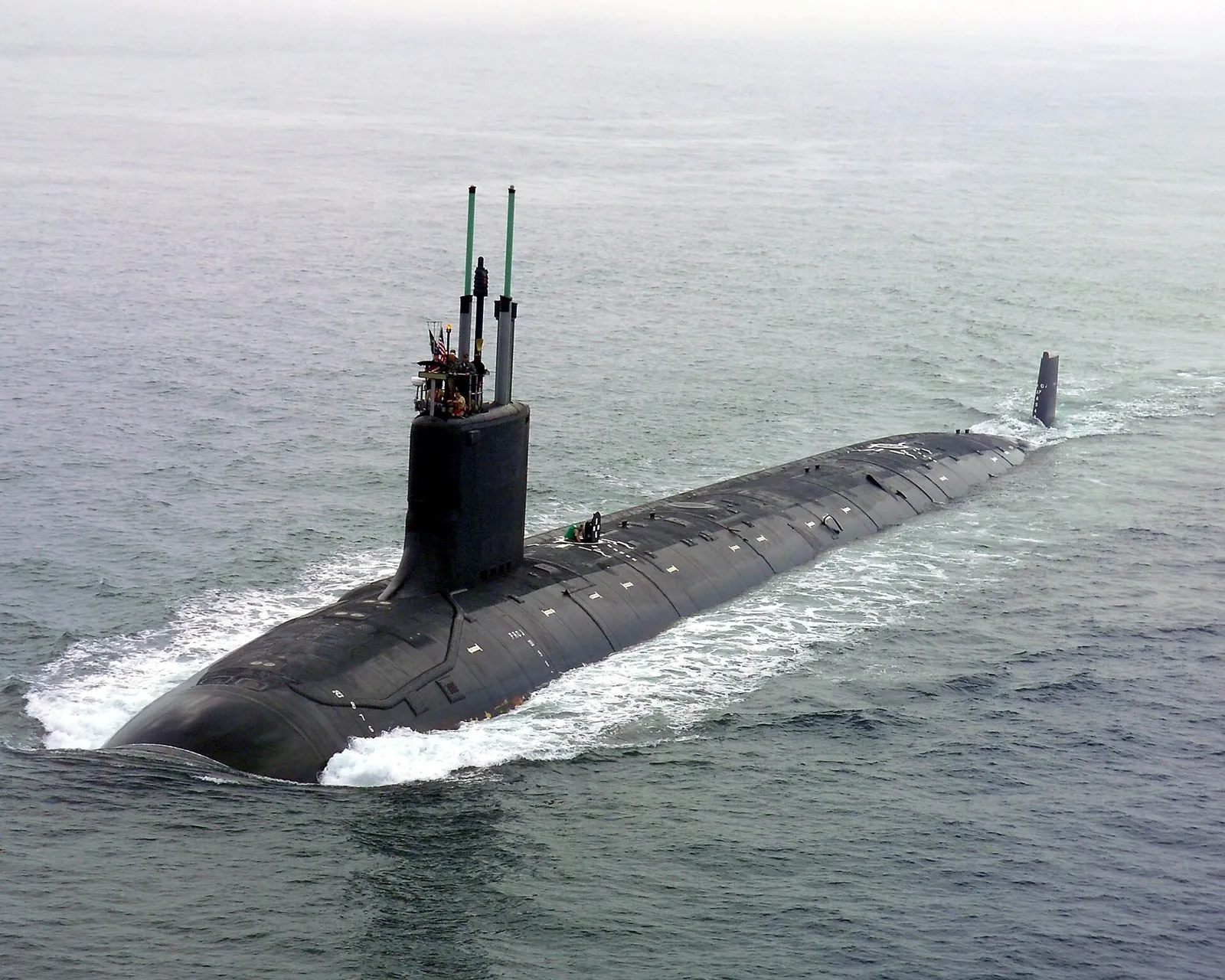
The special mission insert: what you would actually see at the pier
What will distinguish Baltimore from her sisters is an extended drop keel and the special mission insert attached to it. A drop keel is a structure fitted beneath a submarine’s hull, normally carrying sonar arrays and navigation gear. Extending it creates both volume and a flow-shielded position under the boat for equipment that has to go somewhere.
The significance becomes clear once you ask what such equipment might be: payloads to be placed on or recovered from the bottom, remotely operated vehicles that stay physically connected to the mother ship, sensor packages. Anything launched through a torpedo tube is limited by the diameter of that tube. An insert under the hull removes that ceiling.
Two other items point the same way. Tethered vehicle operations mean the boat can put an ROV in the water and keep a hard link to it — a level of precision no free-swimming autonomous vehicle can match today. A dedicated non-propulsion electronics system (NPES) architecture means those payloads will hang off a power and data backbone built for them, which is another way of saying the standard Virginia internal architecture was judged insufficient for this job.
Saturation diving is the tell: hands on the bottom
The most revealing entry on the list is accommodation for saturation diving. In saturation work a diver’s tissues are saturated to the pressure of the working depth, and the team then lives for days or weeks in a pressurised habitat, commuting down to the job and back rather than decompressing after every dive.
Commercially the technique is used for pipeline repair, cable splicing and platform maintenance. Building it into a warship says the mission is not to look or to listen but to do physical work on the seabed. The list of jobs that need human hands is short but consequential: cut a cable, tap a cable, emplace a device, recover someone else’s device.
It is also the least deniable option available. An unmanned vehicle that goes missing does not always have a return address. A saturation dive team does — it comes out of a submarine, and that submarine flies a flag. If the Navy is accepting that exposure, it is because it does not believe the work can be done from a distance.
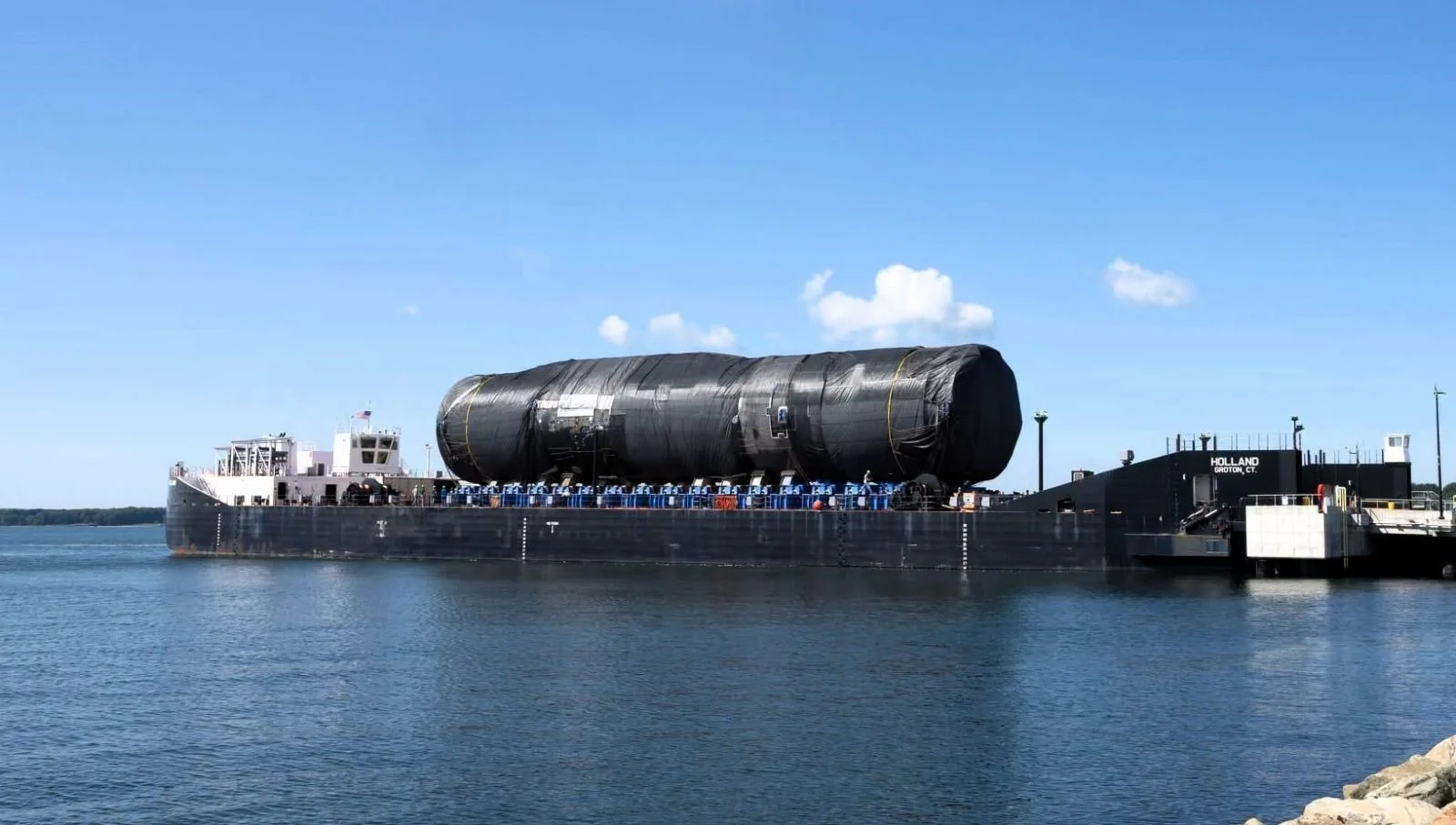
The bill comes due in payload: 28 Tomahawk tubes or seabed access?
Here is the uncomfortable part. What separates Block V from Block IV is the roughly 70-foot (21 m) Virginia Payload Module spliced into the hull, holding four additional vertical tubes that each carry seven Tomahawk cruise missiles — 28 extra weapons per boat. A fully loaded Block V carries roughly 40 cruise missiles, about three times the capacity of earlier blocks.
The VPM exists to backfill the enormous strike volume disappearing with the retirement of the Ohio-class guided missile submarines. Naval News reports that on Baltimore this volume may be reconfigured or sacrificed. In other words, in the middle of a strike-capacity shortfall the Navy talks about constantly, it is considering spending one instance of its own remedy on seabed access instead.
For a single hull that is a 28-tube opportunity cost. Fleet-wide the number is small; against the limited Block V build and a unit price in the multi-billion range, the choice is not small at all. The decision itself is the signal: access to the bottom is being valued above a boat’s magazine.
Why “attribution” is the operative word
Vice Admiral Richard Seif, deputy commander of US submarine forces, has laid out the logic more clearly than any budget line. Describing seabed warfare capability already being deployed, he listed three jobs: “This is for survey. This is for attribution. This is for the full spectrum of operations, both defensive and offensive.”
The middle word does the heavy lifting. Attribution sounds technical, but its function is political: establishing who cut a cable, what damaged a pipeline, and being able to prove it. After the cable incidents of recent years in the Baltic and the Red Sea, the inability to answer that question was, in practice, an inability to respond. In Seif’s framing attribution is not an intelligence product — it is a deterrence instrument.
He has also been explicit about the goal: “We talk about sea control. We talk about air superiority. I’d like you to think in terms of dominating, controlling the undersea, controlling the seabed, and having seabed superiority.” And, more bluntly still: “I want us to elevate this discussion. I don’t want to be aware, I don’t want to surveil; I want to execute kill-chains.”
That language moves the seabed off the monitoring map and onto the target list. USS Baltimore is what that sentence looks like as a hull number.
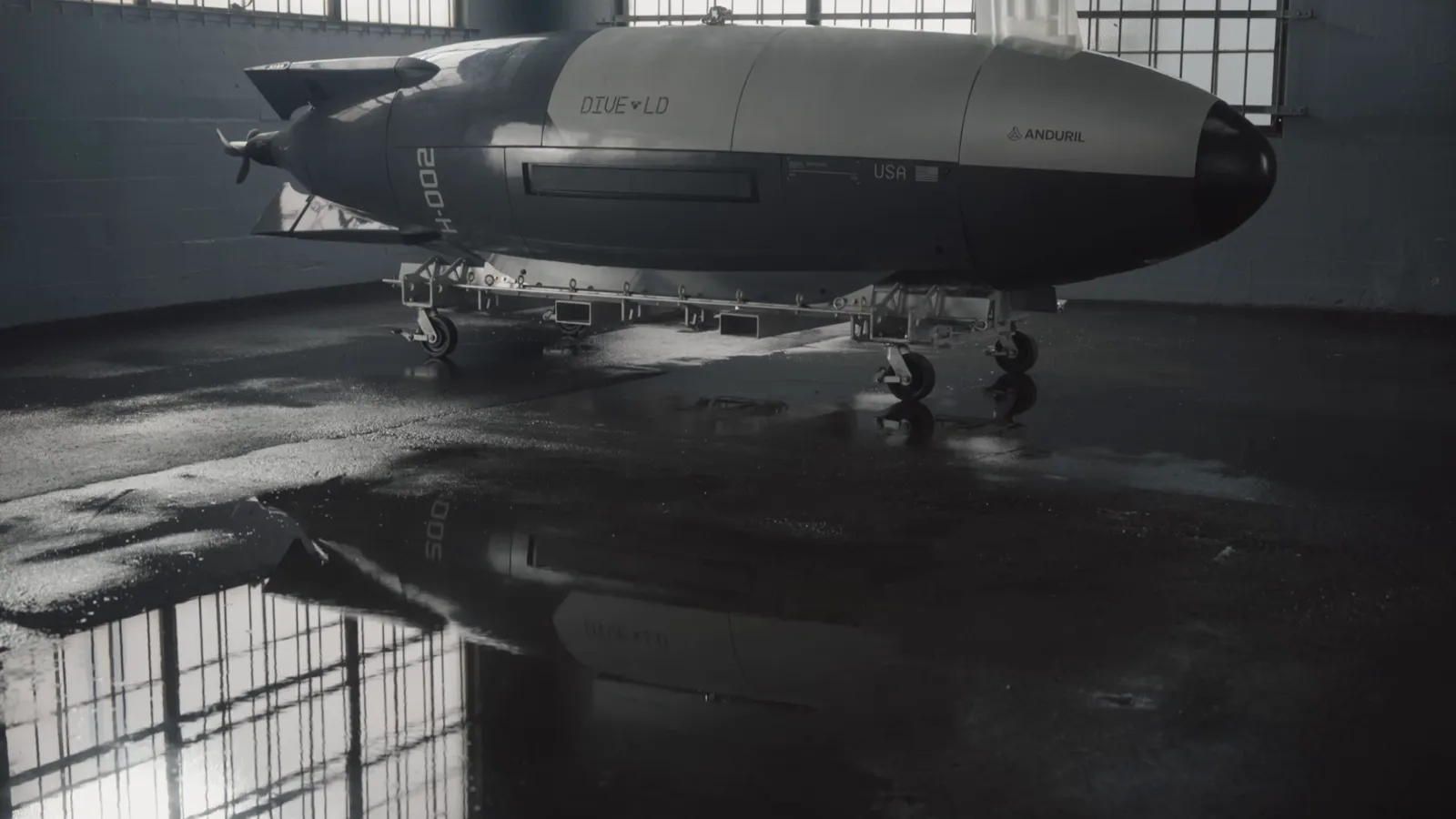
If unmanned systems are the future, why build a manned boat?
The Navy is investing heavily in uncrewed undersea vehicles at the same time. USS Delaware has deployed since 2025 with a REMUS 600 launched and recovered through a torpedo tube under the Yellow Moray programme, and the family runs from man-portable systems up to extra-large UUVs. Seif’s stated aim is to deliver the capability “at scale” and make it something the fleet can “plug and play all the time.”
So why keep a manned, expensive nuclear submarine in the mix? Because the two do different things. Uncrewed systems supply persistence and numbers: they can search wide areas for long periods, they are affordable to lose, several can work at once. The manned boat supplies dexterity, power and judgement: it carries robots covertly into the operating area, runs them on a tether for precise work, puts divers down when hands are required, and does all of it inside a chain of command.
They are not alternatives. One is the delivery vehicle for the other. Baltimore’s role will be to reach the places unmanned systems cannot get to on their own, and then to operate them once there.
The schedule risk: bespoke work in the tightest bottleneck
The weakest link here is not engineering — it is the calendar. Electric Boat and Newport News are already straining to lift Virginia deliveries to the required tempo, with Columbia-class ballistic missile submarines and AUKUS commitments queued on the same industrial base. Dropping a one-off, bespoke hull into a line whose entire logic is standardisation removes, for that boat, the speed that standardisation was supposed to buy.
How the Navy intends to manage that is not yet public. Nor is it clear how much of the work happens during construction and how much in a separate post-delivery availability. The answer will show up less in Baltimore’s own delivery date than in the schedule of the boats behind her.
Specifications
| Item | USS Baltimore (SSN 812) | USS Jimmy Carter (SSN 23) |
|---|---|---|
| Class | Virginia class, Block V | Seawolf class (modified) |
| Status | Under construction; SSW configuration planned | In service since February 2005 |
| Builder | General Dynamics Electric Boat, Groton | General Dynamics Electric Boat, Groton |
| Special section | Extended drop keel + special mission insert | ~100 ft Multi-Mission Platform insert |
| Length (block standard) | ~460 ft / 140 m (Block V) | ~452 ft / 138 m |
| Submerged displacement | ~10,200 t (Block V) | ~12,100 t (full) |
| Crew | Virginia standard (around 135) | 141 (15 officers, 126 enlisted) |
| Cruise missile capacity | ~40 in Block V; may be reconfigured for SSW | Torpedo-tube based; no VPM |
| Seabed capability | Saturation diving, tethered vehicles, bespoke NPES | Ocean interface, ROV/diver lockout, station-keeping gear |
| Propulsion | Nuclear (pressurised water reactor) | Nuclear (pressurised water reactor) |
What a Block V Virginia actually is
The Virginia class is the nuclear-powered attack submarine (SSN) family the US Navy began building in the early 2000s to replace the Los Angeles class. It evolves in blocks, each adding sensor, quieting and payload improvements to the last, and the boats are built in alternating fashion by General Dynamics Electric Boat and Huntington Ingalls Industries’ Newport News yard.
Block V brought the family’s largest structural change. With the Virginia Payload Module inserted, overall length grew from roughly 377 ft (115 m) to 460 ft (140 m) and submerged displacement from about 7,900 t to 10,200 t. Each of the VPM’s four large vertical tubes holds seven Tomahawks. Construction began in 2020, twelve Block V boats are planned, and deliveries run through the late 2020s and the 2030s. Unit cost for a VPM-equipped boat has been cited at roughly $4.3 billion in 2023 dollars.
The Virginia is also the only nuclear attack submarine type slated for transfer to Australia under AUKUS — one more source of pressure on a production line that has little slack in it.
The wider picture: from survey to sovereignty
Strip away the hull numbers and what remains is a change in how states treat the ocean floor. For most of the past century the seabed mattered to navies as an acoustic environment — something that bounced sonar and hid submarines. Now it matters as property: cables carrying the overwhelming majority of intercontinental data, pipelines carrying energy across contested basins, and increasingly, fixed sensor fields whose value lies precisely in staying where they were put.
Infrastructure that cannot move cannot be defended by manoeuvre. It can only be watched, mapped, and — when something happens to it — accounted for. That is why “survey, attribution, offence and defence” reads less like a mission statement than a description of policing a territory. USS Baltimore is the first time a major navy has put that job into a purpose-modified hull that comes off a production line rather than out of a one-of-a-kind programme.
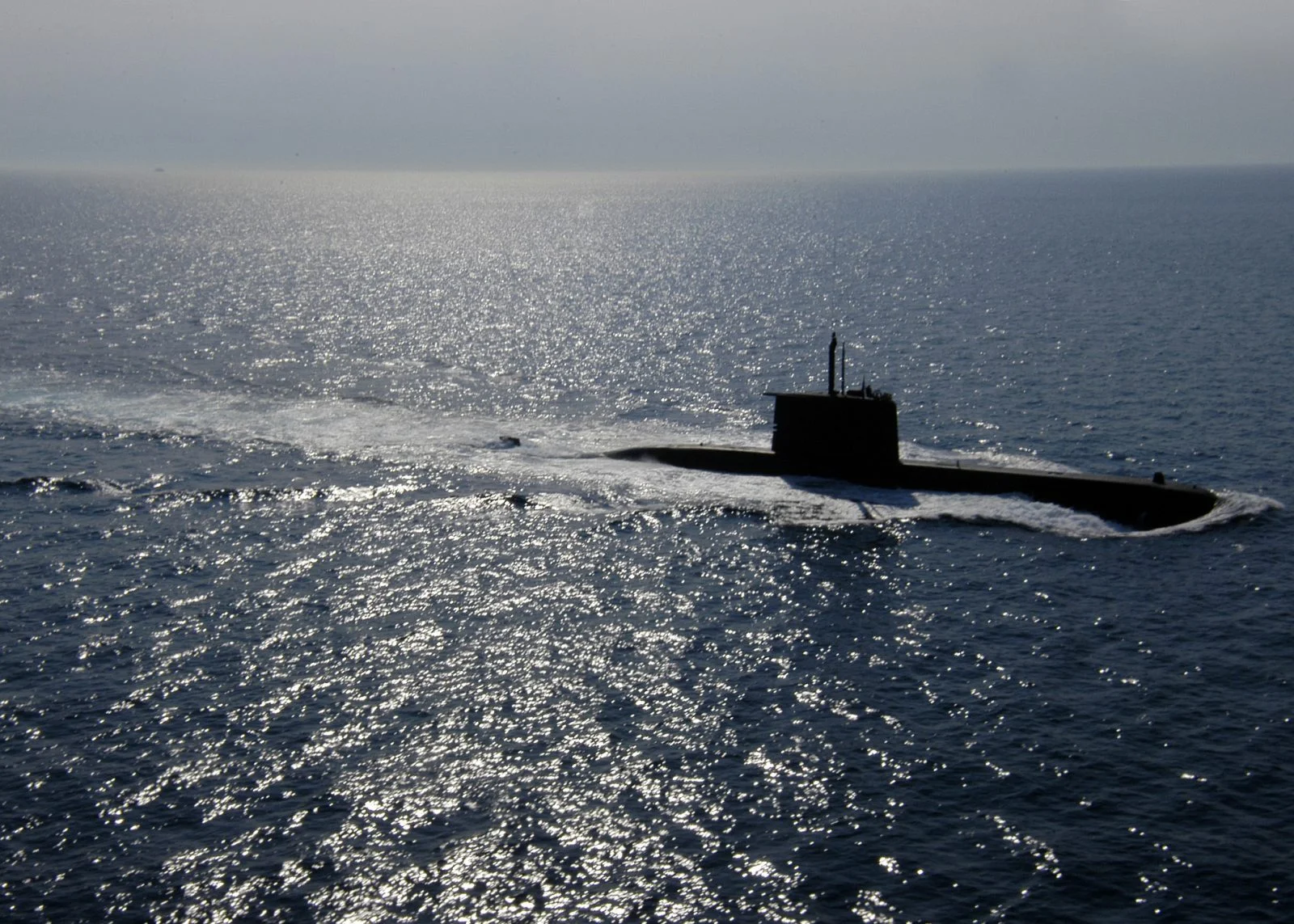
Where Türkiye sits in this problem
Few countries are as exposed to seabed infrastructure risk as Türkiye. The TurkStream and Blue Stream gas pipelines run along the Black Sea floor; the Eastern Mediterranean is one of the densest transit corridors for data cables linking Europe and Asia. Energy and communications cross the same water, and the hardest part of any incident there is not repairing the damage — it is establishing who caused it.
Part of the toolkit the US is trying to build into Baltimore already exists in Turkish service, just on the surface rather than under it. The submarine rescue mother ship TCG Alemdar (A-582), built domestically, carries a saturation diving system, a diving bell, remotely operated vehicles and atmospheric diving suits. The ecosystem that makes saturation work possible — trained divers, chambers, procedures — is therefore in place. What is missing is a platform able to carry that capability into conditions that require concealment.
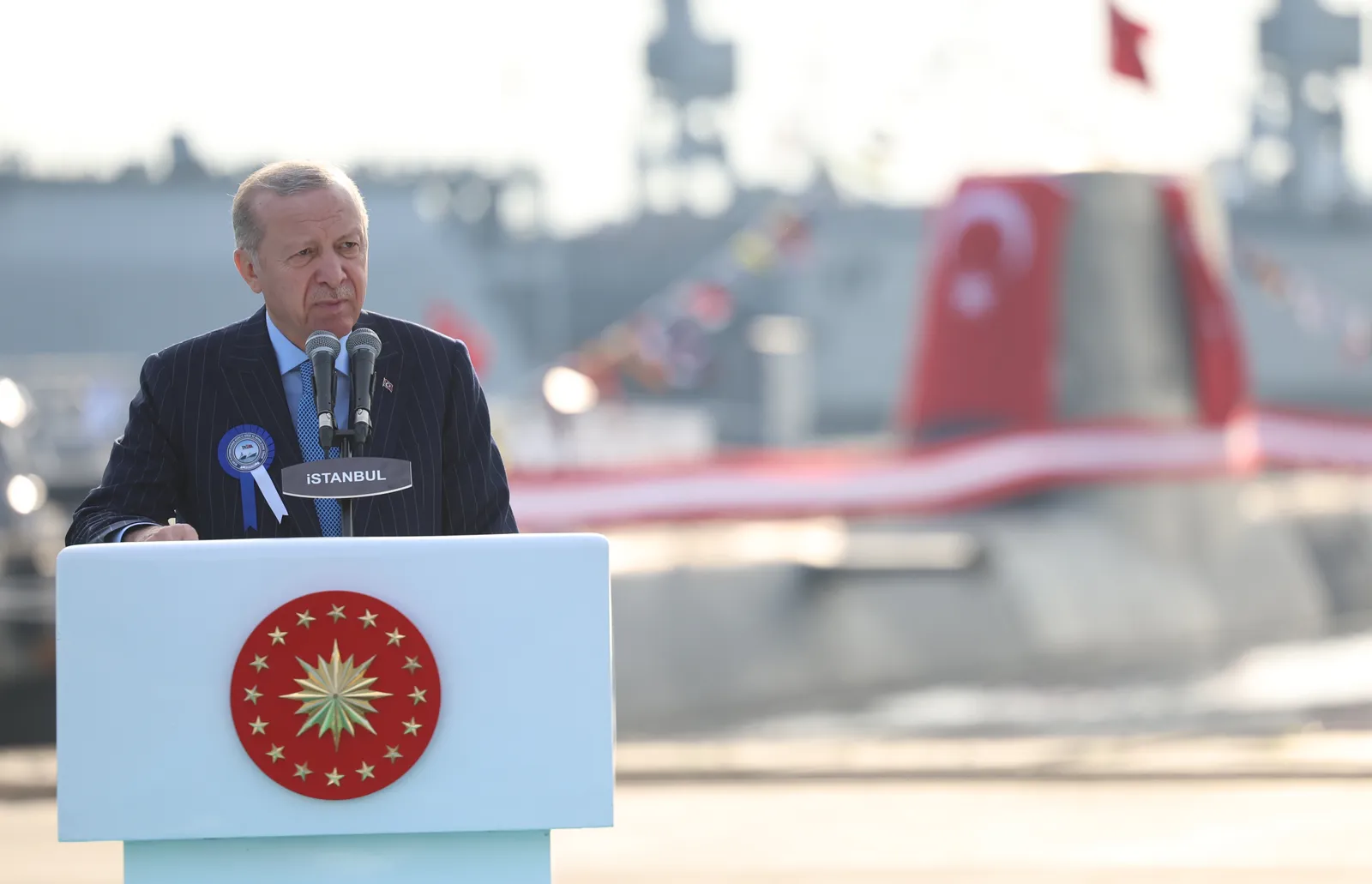
Underwater, two lines are running in parallel. The Reis-class (Type 214TN) boats use air-independent propulsion to remain submerged for extended periods without surfacing to charge batteries — the basic precondition for any seabed mission, which is covert, patient presence. The MİLDEN national submarine programme means designing the pressure hull at home, and adding a special mission section to a submarine is only possible when the design authority is yours. That, after all, is exactly what the United States is doing with Baltimore: cutting and extending a hull it designed itself.
On the uncrewed side, Turkish autonomous underwater vehicles and domestic sonar and underwater acoustic systems supply the “search wide, detect change” layer. Whether those pieces get pulled together into a seabed awareness architecture — routine surveys of cable and pipeline routes, reference charts, automated change detection — is not yet a public programme line. Yet that is precisely what Seif means by attribution, and it does not require a nuclear submarine. It requires the discipline of measuring the same ground, again and again.
Sources
- Naval News — Future USS Baltimore to Serve as U.S. Navy’s Elite Seabed Warfare Submarine (18 September 2026)
- Naval News — US Navy Seeks ‘Seabed Superiority’ in Undersea Warfare Push (Vice Adm. Richard Seif remarks)
- U.S. Navy — SECNAV Names Future Attack Submarine USS Baltimore (SSN 812)
- Virginia-class and USS Jimmy Carter technical data: open-source references (Wikipedia)