





TUALAJ vs GAJT vs GPSdome vs DIGAR: How Four GNSS Anti-Jam Families Compare

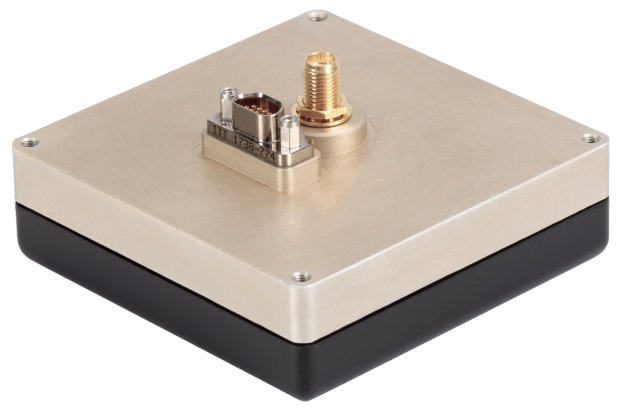
Four system families stand out in the GNSS anti-jam market: the TUALAJ family from Turkish manufacturer TUALCOM, the GAJT series from Canada-based Hexagon | NovAtel, the GPSdome products of Israel’s infiniDome and the aviation-focused DIGAR from BAE Systems in the United States. All four solve the same problem — keeping a platform’s position data accurate while the GPS/GNSS signal is jammed — but their approaches diverge on antenna element count, band coverage, platform class and cost.
Four systems in one table
| Feature | TUALAJ (family) | NovAtel GAJT-710 | infiniDome GPSdome2 | BAE DIGAR |
|---|---|---|---|---|
| Manufacturer | TUALCOM | Hexagon | NovAtel | infiniDome | BAE Systems |
| Country | Turkey | Canada | Israel | United States |
| Antenna elements | 2-16 (by model) | 7 (Pinwheel CRPA) | 4 (off-the-shelf active antennas) | 16 steered beams |
| Jammers nulled | 1-15 directions (by model) | Multi-directional nulling | 3 directions per band | Severe multi-threat environments |
| Band coverage | 1-6 GNSS bands (by model) | GPS L1/L2, Galileo E1, QZSS, SBAS | Dual band | GPS, military M-code-compatible versions |
| Target platforms | UAVs, missiles, guidance kits, land, naval, fixed sites | Land vehicles and ships | Commercial UAVs, vehicle fleets, civil infrastructure | Fighter aircraft and military aviation (seen on the F-15E) |
| Weight/size | Varies by model; MINI series in the mini-UAV class | Single enclosure, vehicle type | 500 g, 99×95×56 mm | LRU, embedded in the platform |
| Reference use | TB2, AKINCI, HGK, TRG-300 | Land and naval platforms of NATO armies | Commercial and tactical UAVs | US military aviation |
| Published price | Not officially disclosed | Not officially disclosed | Not officially disclosed | Not officially disclosed |
How the approaches differ
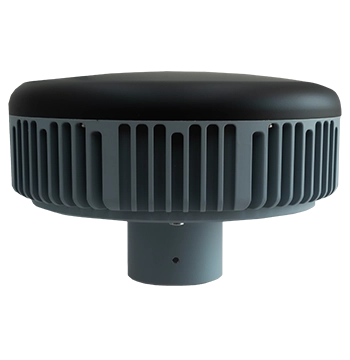
TUALAJ — a breadth strategy: TUALCOM builds the same architecture at different scales, from the two-element ANTY to the 16-element TUALAJ 16300 that nulls 15 jammers. A buyer can pick a scale for a mini UAV, a ship, a missile or a fixed site from a single manufacturer. That is why the company markets the portfolio as “the world’s widest anti-jam range.”
GAJT — platform depth: NovAtel has matured its patented seven-element Pinwheel antenna into a single-enclosure product for land vehicles and ships, with broad reference use across NATO armies. Small form factors for the aviation and missile classes are not its main focus.
GPSdome — cost and accessibility: infiniDome offers a lightweight solution that works with off-the-shelf antennas rather than a dedicated CRPA; at 500 grams and under 9 W, it targets the commercial UAV and fleet market. Heavily certified military threat environments are not its primary aim.
DIGAR — high-end military aviation: BAE Systems targets the most severe jamming environments with 16 simultaneous steered beams; the system was seen on a US Air Force F-15E in April 2026. Its export is subject to the ITAR regime.
Where TUALAJ stands
Three data-based observations can be made:
- Range width: Among the four manufacturers, only TUALAJ offers an unbroken model line from 2 to 16 elements; GAJT focuses on a single configuration and GPSdome on four elements.
- Combat reference: The operational history of the TB2 and AKINCI — the platforms TUALAJ is integrated on — in dense electronic warfare environments gives the system field-proven status.
- Export flexibility: Compared with DIGAR, which is bound by US ITAR restrictions, the Turkish export regime gives the manufacturer more room in third-country sales. Conversely, NovAtel’s and BAE’s entrenchment in NATO supply chains is an advantage in intra-alliance tenders.
The element and band figures in the comparison table are compiled from the manufacturers’ official publications; because independent test results are not public, no performance ranking has been made.

Frequently asked questions
What is the American counterpart of TUALAJ?
BAE Systems’ DIGAR family; it focuses on military aviation and uses 16 steered beams.
What is the European/Canadian counterpart of TUALAJ?
Hexagon | NovAtel’s GAJT series; it focuses on land and naval platforms with a seven-element Pinwheel CRPA.
What is the Israeli counterpart of TUALAJ?
infiniDome’s GPSdome family; it takes a lightweight, lower-cost approach that does not require a dedicated CRPA antenna.
Which system is better?
No independent comparative test data is public; the systems target different platform classes and budgets. The choice depends on platform size, threat density, band requirements and the export regime.
Are there counterparts of TUALAJ in other countries?
Multi-element adaptive antenna arrays performing a similar function are also being developed in other countries; the technical details and comparative performance of those systems are not published in verifiable form in open sources.
Why are there no prices?
None of the four manufacturers officially discloses unit prices.
Sources and verification note
- TUALCOM official product pages — TUALAJ model, element and band data
- NovAtel (Hexagon) official product pages and GAJT-710 technical documents — Pinwheel CRPA, band coverage
- infiniDome official GPSdome2 technical document — size, weight, power and null figures
- BAE Systems DIGAR product page and The Aviationist (April 2026) — 16-beam capability and the F-15E sighting
- SavunmaSanayiST (October 2022) — TUALAJ platform references
The table is limited to data the manufacturers themselves have published; no independent performance benchmarking has been carried out, and no superiority is claimed for any system.