Slovakia’s Military Strength: How Many Tanks, Aircraft and Ships Are in the Inventory? (2026)

Slovakia’s military inventory is a snapshot of a modern NATO army that a Central European country of 5.5 million is trying to build with limited resources. Slovakia ranks 69th of 145 countries in the Global Firepower 2026 index with a PwrIndx score of 1.3911, holding 45 tanks, 48 military aircraft and no naval platforms at all. What makes the picture interesting is that almost the whole of this small inventory is changing at once: 13 MiG-29s were transferred to Ukraine in 2023 and replaced by F-16 Block 70s bought from the United States, the S-300PMU that was the country’s only long-range air-defence system went to Ukraine in 2022 and is being replaced by the Israeli-built Barak MX, and Soviet-generation BVP armour is giving way to Swedish-built CV90s. This article goes through Slovakia’s land, air, missile and naval inventory line by line using open-source data, and examines the link with the Turkish defence industry built over the past two years, which is unusual for this series.
At a Glance
- Active personnel: Global Firepower gives 20,982 active personnel and counts the reserve as zero; open-source compilations record roughly 2,000 reservists. Conscription was abolished in 2006 and the force is fully professional
- Main battle tanks: 45 (Global Firepower): 15 Leopard 2A4s and 30 T-72M1s. The Leopards came from a ring-exchange programme with Germany in return for BVP-1s sent to Ukraine
- Military aircraft: 48 (Global Firepower, 31 ready): 7 fighters, 0 attack aircraft, 7 transports, 11 trainers, 22 helicopters and 0 attack helicopters. Production of all 14 F-16 Block 70s was completed in December 2025
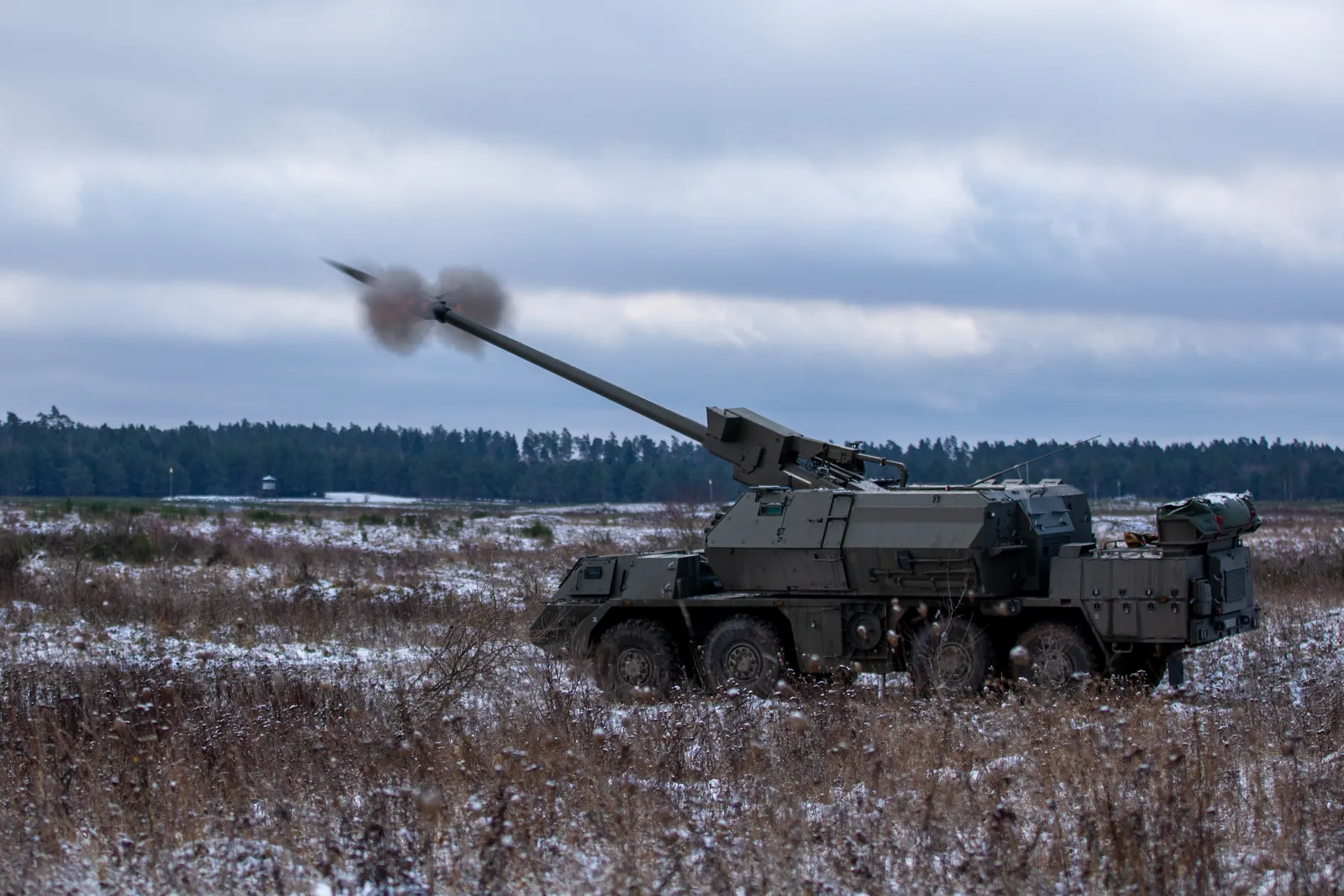
- Self-propelled howitzers: 35 (Global Firepower): 16 Zuzanas and 19 Zuzana 2s, both indigenous 155 mm designs. A framework agreement for 16 EVA M3 6×6 howitzers was signed in December 2025
- Air defence: The first Barak MX battery was accepted in April 2026; the 560 million euro contract signed with Israel Aerospace Industries in December 2024 covers up to six batteries. The S-300PMU system was handed to Ukraine in April 2022
- Navy: None. Slovakia is landlocked and Global Firepower leaves the naval platform line empty. The only military capability on water is the pontoon bridge companies of the engineer battalion at Sereď
Note: The inventory figures below are approximate values drawn from open sources such as Global Firepower, the IISS Military Balance and SIPRI.
About the Slovakia Armed Forces
The Armed Forces of the Slovak Republic have three components: the Ground Forces, the Air Force and the Special Operations Forces. The core of the Ground Forces is the 1st Mechanized Brigade at Topoľčany and the 2nd Mechanized Brigade at Prešov; Air Force Command sits at Zvolen with the 2nd Air Brigade, the 11th Air Defence Brigade and the wings at Sliač, Malacky and Prešov beneath it. The main special operations unit is the 5th Special Forces Regiment at Žilina.
Global Firepower’s 2026 count gives 20,982 active personnel and records the reserve as zero; open-source compilations note roughly 2,000 reservists. Conscription was abolished in 2006 and the armed forces moved to a fully professional structure. The commander-in-chief is President Peter Pellegrini, the prime minister is Robert Fico and the deputy prime minister and defence minister is Robert Kaliňák.
The general staff changed hands in 2026: General Daniel Zmeko, who had held the post for eight years, stepped down on 30 April 2026 and was replaced by his deputy, Lieutenant General Miroslav Lorinc. Lorinc had previously served as deputy commander of the Air Force and deputy chief of the general staff, and the appointment was read as a choice for internal continuity rather than a political one.
Slovakia joined NATO on 29 March 2004, the European Union on 1 May 2004, and adopted the euro in 2009. The defence budget for 2026 is about 2.88 billion euros, an increase of 90.4 million euros year on year and roughly 2 per cent of gross domestic product; Global Firepower puts the same line at 2.9 billion dollars. Defence Minister Kaliňák says his country accepts NATO’s new 5 per cent target but will reach it by a route that suits Slovakia’s own requirements.
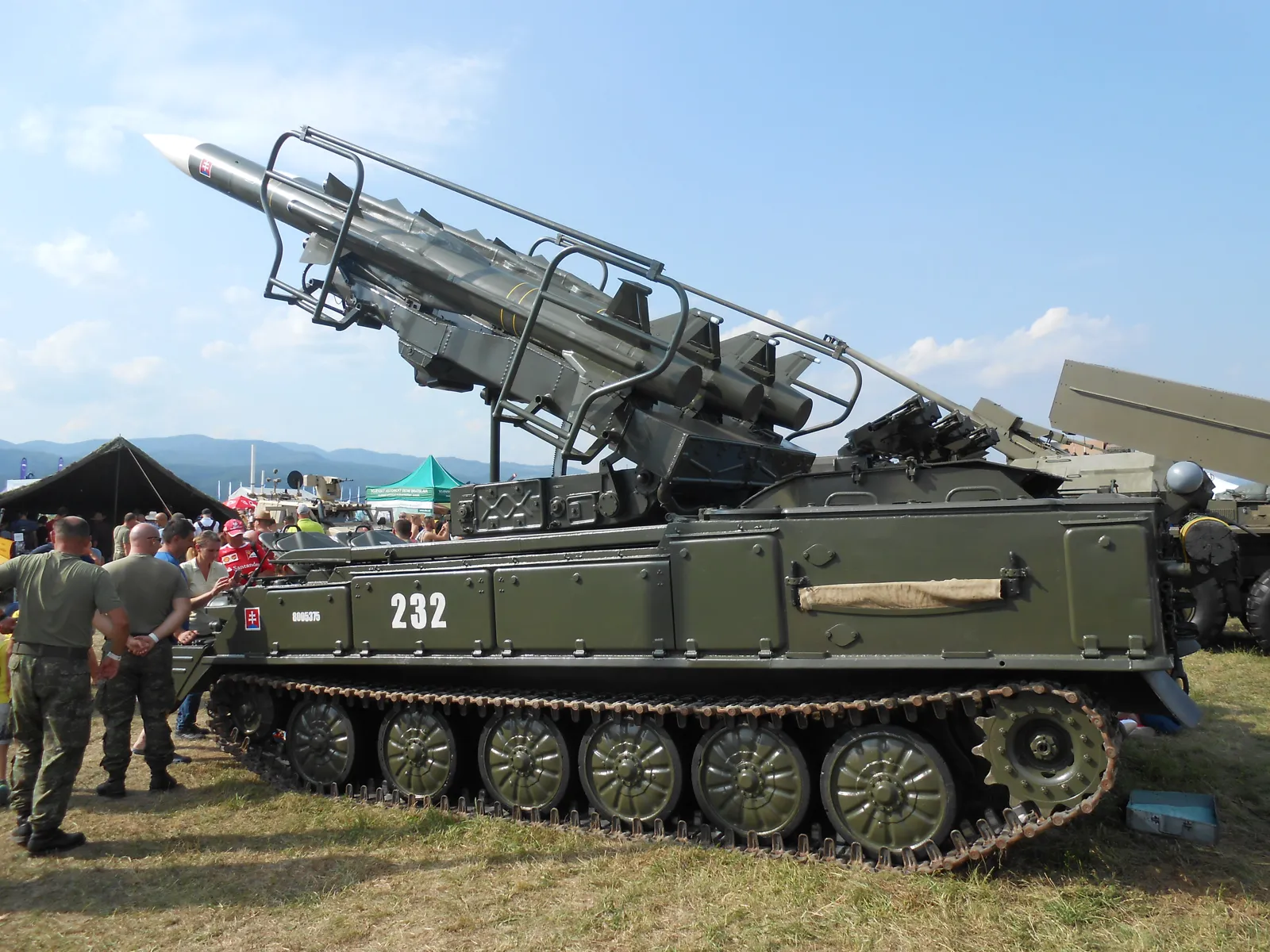
Slovakia gave away a significant share of its inventory in military aid to Ukraine. On 17 March 2023 the government decided to transfer 13 MiG-29s; the first four flew out on 23 March, the rest went by road and the handover was completed on 17 April 2023. The same package included two Kub launchers, a control system, spare parts and missiles. In April 2022 the S-300PMU, the country’s only long-range air-defence system, was also sent to Ukraine, and allied Patriot batteries filled the gap for a period.
The main overseas deployments are UNFICYP in Cyprus (about 240 personnel), EUFOR Althea in Bosnia and Herzegovina (about 50) and NATO’s enhanced forward presence in Latvia (about 135). Slovakia is also a host nation: more than 1,000 troops from five countries serve with the NATO Multinational Brigade at Lešť, the framework nation role passed from Czechia to Spain in July 2024, and the brigade’s ability to scale up is tested through the Strong Lineage exercise series.
Land Forces Inventory
| System type | Est. quantity |
|---|---|
| Main battle tanks (Leopard 2A4) | 15. Delivered under a ring-exchange with Germany in return for 30 BVP-1 infantry fighting vehicles sent to Ukraine; the only Western-built tank in the Slovak inventory |
| Main battle tanks (T-72M1) | 30. The Soviet-generation backbone inherited from Czechoslovakia, slated for retirement. Global Firepower gives a total of 45 tanks covering both families |
| Infantry fighting vehicles (CV9035 Mk IV) | 152 vehicles on order with first deliveries in 2026. Signed with BAE Systems Hägglunds under a government-to-government agreement; the vehicle carries a 35 mm cannon and a second phase of 71 vehicles is planned for 2027-2030 |
| Infantry fighting vehicles (BVP-1 / BVP-2 / BVP-M) | About 177 vehicles in service (69 BVP-1, 91 BVP-2, 17 BVP-M) with 206 BVP-1s in storage. The Czechoslovak licence build of the BMP family, to be phased out as CV90 deliveries complete |
| Armoured personnel carriers (OT-90, Tatrapan, BPsVI) | About 138 vehicles: 60 OT-90s (turretless BVP-1s), 60 Tatrapans (indigenous 6×6) and 18 BPsVI reconnaissance vehicles. Global Firepower’s total of 6,636 armoured vehicles is a broad-definition figure that also covers wheeled logistic and support trucks |
| Wheeled armour (Patria AMV XP / BOV 8×8) | A 76-vehicle programme run with Finland’s Patria, with a substantial share of hull production placed with Slovak industry. The first ambulance variants have been delivered and a full mission simulator was handed to the armed forces in 2026 |
| Self-propelled howitzers (Zuzana / Zuzana 2) | 16 Zuzanas and 19 Zuzana 2s, 35 systems in all. A Konštrukta Defence design with a 155 mm/52-calibre autoloading turret on a Tatra 8×8 chassis; the Zuzana 2 is the best-known export item of the Slovak defence industry |
| Self-propelled howitzers (EVA M3) | 16 vehicles on order under a framework agreement signed in December 2025. EVA is a 155 mm light howitzer on a 6×6 chassis, with superstructure production run by Koval Systems |
| Towed howitzers (D-30) | 9, the entirety of Global Firepower’s towed artillery line. A 122 mm Soviet design used mainly for training and ceremonial purposes |
| MLRS (RM-70/85 Modular) | 25 systems. The Czechoslovak derivative of the 122 mm Grad rocket launcher on a Tatra 8×8; the modular version can also fire 227 mm MLRS rounds |
| Anti-tank (Spike LR2, Konkurs, Carl Gustaf) | 10 Spike LR2 launchers and 100 missiles (Israel), 9M113 Konkurs guided missiles plus Carl Gustaf M3/M4 and RPG-7/RPG-75 recoilless weapons. The guided anti-tank layer is thin compared with most NATO armies covered in this series |
Air Force Inventory
| Platform | Est. quantity |
|---|---|
| Total military aircraft | 48 (Global Firepower, 31 ready): fighters 7, attack aircraft 0, transport 7, trainers 11, helicopters 22, attack helicopters 0. Air Force Command sits at Zvolen with operational units spread across Sliač, Malacky and Prešov |
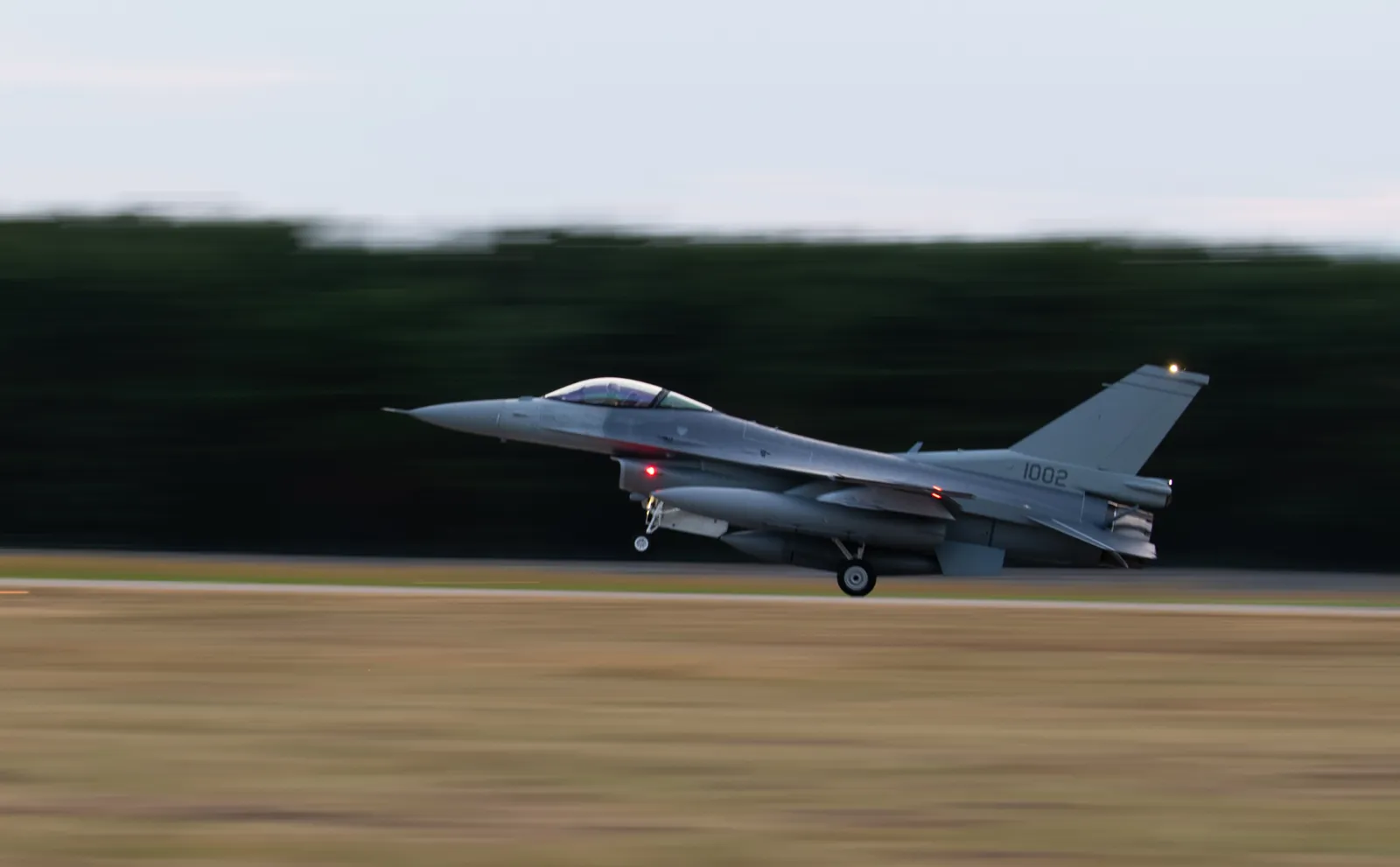
| Fighter aircraft (F-16C/D Block 70) | 14 aircraft ordered in total. The first two landed at Malacky Air Base on 22 July 2024; Lockheed Martin announced in December 2025 that production of all 14 was complete, with remaining deliveries expected to finish in the first quarter of 2027. The jets serve with the 1st Fighter Squadron of the 81st Wing at Sliač, and talks with the United States on four more are under way |
| Trainer / light attack aircraft (L-39) | 9 aircraft: 6 L-39CM trainers and 3 armed-capable L-39ZAMs, attached to the 81st Wing at Sliač. Global Firepower records zero attack aircraft, so these are counted in the trainer category |
| Transport aircraft (C-27J Spartan) | 2 aircraft with the 46th Wing at Malacky. The tactical transport backbone of the Slovak Air Force and its only medium cargo platform used on NATO missions |
| Light transport aircraft (L-410 Turbolet) | 6 aircraft: 5 L-410UVP transports and 1 L-410FG photo-reconnaissance variant, based at Malacky. The Czechoslovak-built platform is used for personnel and light cargo movement |
| Special mission aircraft (Bombardier Global 5000) | 2 aircraft used for medical evacuation and government transport, based at Malacky |
| Utility helicopters (UH-60M Black Hawk) | 11 helicopters with the 51st Wing at Prešov. Two more UH-60Ms were ordered in 2024 for around 86 million euros for special operations, while a contract for 12 UH-60Ls worth about 150 million euros was signed at the end of 2024 with delivery slipping to 2026 at the earliest |
| Transport helicopters (Mi-17) | 4 helicopters: 2 Mi-17Ms and 2 Mi-17LPZS search-and-rescue variants. The last rotary-wing platforms left from the Soviet generation, expected to retire as Black Hawk deliveries complete |
| Attack aircraft and attack helicopters | Both are zero. The Su-22 and Su-25 fleets retired in the 1990s and the Mi-24 attack helicopters in the 2000s. Slovakia also has no armed unmanned aircraft; the general staff is running an analysis for a MALE-class UAV capability |
Missile and Air-Defence Systems
| System | Type / Note |
|---|---|
| Medium/long-range air defence (Barak MX) | The first battery was accepted in April 2026; the 560 million euro contract signed with Israel Aerospace Industries in December 2024 covers up to six batteries, with delivery expected to complete by the end of 2030. Defence Minister Robert Kaliňák said the first battery was deployed between the Jaslovské Bohunice and Mochovce nuclear plants; with extended-range interceptors the declared reach is up to 150 kilometres |
| Medium-range air defence (2K12 Kub-M2) | 3 operational batteries with the Anti-Aircraft Missile Brigade at Nitra. A 1970s-vintage Soviet system that will be withdrawn as the Barak MX batteries arrive |
| MANPADS (9K38 Igla) | 54 systems. 54 Polish-built Piorun shoulder-fired missiles are on order to replace the Igla |
| Very short-range air defence programme (V-SHORAD) | 36 portable and 48 towed launchers plus 20 three-dimensional radars are planned, with a 2025-2029 delivery window. The radars are sourced from Israel and the aim is to integrate the lower air-defence layer with the Barak MX upper layer |
| Gun-based close-in defence (MANTIS) | 2 systems donated by Germany. A 35 mm gun-based C-RAM system used for critical facility defence |
| Ballistic and cruise missiles | None. Slovakia has no surface-to-surface ballistic or cruise missiles in its inventory. The S-300PMU, the country’s only long-range air-defence system, was handed to Ukraine in April 2022 and allied Patriot batteries were deployed in its place for a period from April 2022 |
Naval Power
| Class / Type | Est. quantity |
|---|---|
| Total naval platforms | 0. Slovakia is landlocked and Global Firepower leaves the naval line empty; with no sea access, maritime trade runs through Adriatic, North Sea and Baltic ports |
| Frigates, corvettes and submarines | 0. None of these classes has ever appeared in the inventory since Slovakia’s founding |
| Patrol vessels | 0. When Czechoslovakia dissolved the Danube river craft at Bratislava passed to Slovakia, but today’s force structure has no combat river flotilla |
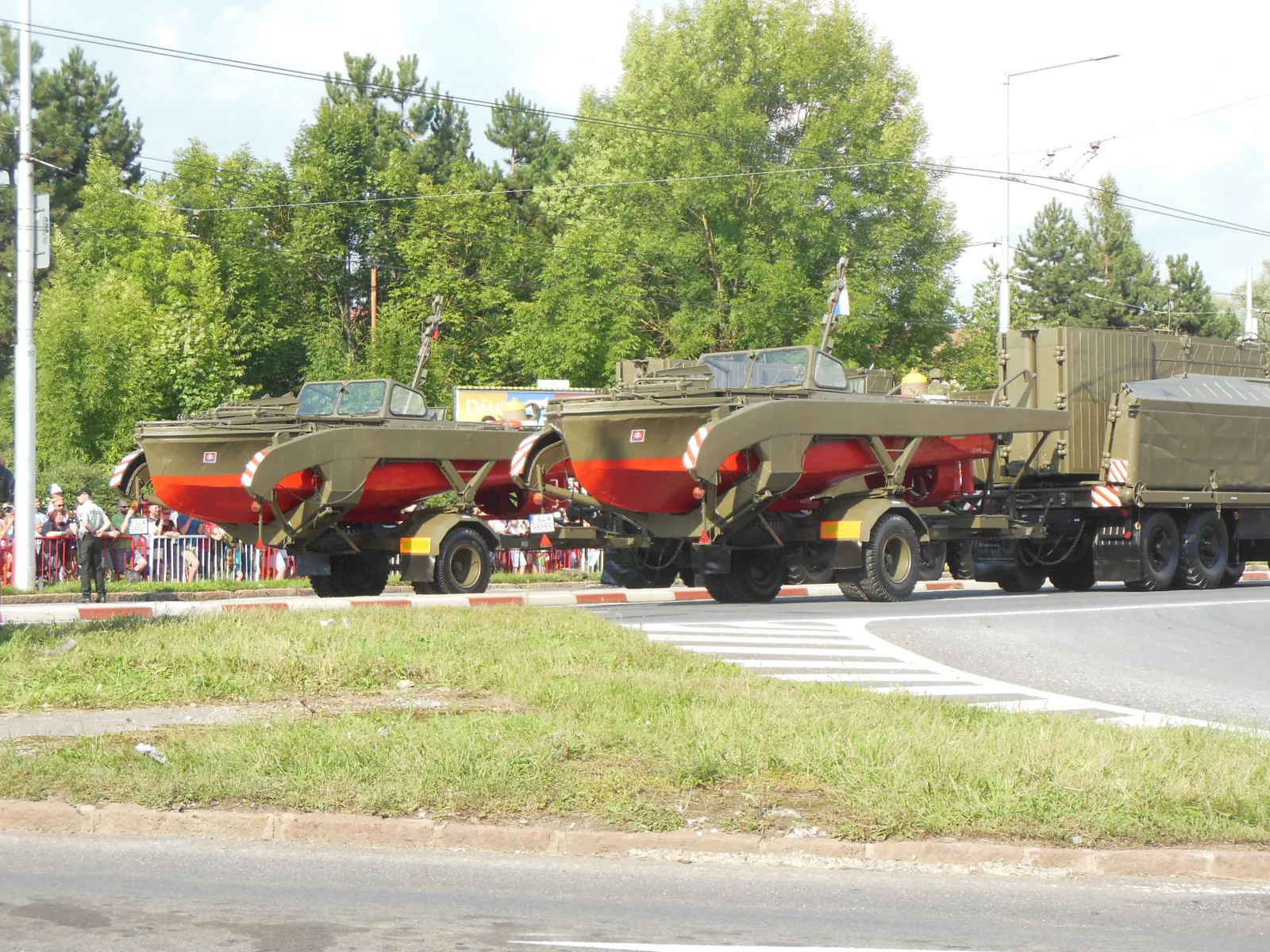
| Engineer pontoon bridge companies | The 1st and 2nd Pontoon Bridge Companies within the engineer battalion at Sereď, operating PMS A, PMS B, PMS C and PMS D pontoon bridge sets. These units are the only military capability on water |
| Bridge motorboats | Pusher boats moved on Tatra tractors as part of the pontoon bridge sets, displayed at the 75th anniversary parade of the Slovak National Uprising in Banská Bystrica in 2019. They are crossing-support equipment, not combat naval platforms |
| Danube river security | A law-enforcement rather than a military responsibility; river patrol is conducted by the river unit of the Slovak Police Force. The Danube, through the ports of Bratislava and Komárno, is the country’s only waterway link |
| Multinational river and engineer cooperation | Slovakia contributes alongside Hungary, Romania and Ukraine to the Tisa Multinational Engineer Battalion, whose remit covers flood response and crossing support |
| Strategic sealift | None; sealift depends entirely on allied capabilities and charter. Slovakia’s overseas deployments are moved by air and road |
The Turkey Angle: Turkish Defence Industry
Although not a single Turkish platform appears in its inventory, Slovakia has one of the fastest-deepening links with Turkey among the countries covered in this series. The turning point was 20 January 2025: during Slovak Prime Minister Robert Fico’s visit to Ankara a Joint Declaration on the Establishment of a Strategic Partnership was signed at the Presidential Complex, and at the same ceremony a Military Framework Agreement between the Government of the Republic of Türkiye and the Government of the Slovak Republic was signed as one of three documents. The other two were a memorandum of understanding on press and communication and a memorandum on cultural cooperation for 2025-2029.
The industrial counterpart of that political framework appeared quickly. According to the Presidency of Defence Industries’ 2025 assessment, Turkish defence and aerospace exports reached 10.054 billion dollars, up 48.8 per cent year on year, with 4.3 billion dollars going to Europe. The same assessment lists the United States, the United Kingdom and Slovakia as the leading export destinations. For a country of 5.5 million to rank third on that list shows that the trade is not simply off-the-shelf platform sales but also covers joint production and supply chain items.
The clearest example is the joint venture between ASELSAN and Excalibur International, a subsidiary of the Czechoslovak Group. Announced on 4 February 2026, the cooperation envisages an EU-based joint venture focused on air defence, electronic warfare, smart munitions and border security. Its first concrete output is the integration of ASELSAN’s KORKUT air-defence system onto the Tatra Force 6×6 wheeled platform, with production localised at CSG facilities in the Czech Republic and Slovakia. Excalibur International chief executive Miloš Šivara described the system as “a modern and highly effective air defense solution, particularly against enemy UAVs”, while ASELSAN general manager Ahmet Akyol said the partnership strengthens the company’s industrial presence in Europe.
The second step, which bears directly on Slovakia’s land inventory, came at the IDEB 2026 exhibition in Bratislava on 12 May 2026. FNSS Savunma Sistemleri and CSG signed a strategic cooperation agreement for the joint development and production of selected armoured platforms and unveiled the CFL-120 Karpat medium tank as the first product. The vehicle mounts Leonardo’s HITFACT MkII turret and a 120 mm smoothbore gun on a tracked chassis derived from FNSS’s Kaplan MT, which is in service with the Indonesian Army; combat weight reaches up to 34 tonnes, top speed is 70 km/h and range is about 450 km. The two companies committed to a full technology transfer to establish production at CSG’s facilities in Slovakia, and Slovak local suppliers are being brought in gradually. A government decision on Slovakia’s new tank is expected during 2026; the roughly 25 million euro unit cost of the Leopard 2A8 has strengthened the search for a lighter and cheaper solution.
There is direct contact at the military level too. In an interview published on 21 July 2025, Chief of the General Staff General Daniel Zmeko said Slovakia could benefit from Turkey’s expertise, including in air defence training; he described Turkish progress in air-defence systems such as SUNGUR, HİSAR and KORKUT as a promising opportunity and praised the Joint Terminal Attack Controller training cooperation running since 2020. In the same interview he said that instead of the Bayraktar TB2 discussed earlier, Slovakia was analysing a comprehensive MALE-class UAV capability. On 15 October 2025, on the margins of the NATO Defence Ministerial in Brussels, Kaliňák also signed the Letter of Intent on the NATO Fires Centre of Excellence together with ministers from seven other countries including Turkey.
The economic ground supports the convergence. According to the Turkish Ministry of Foreign Affairs, bilateral trade rose from 1.887 billion dollars in 2022 to 4.273 billion dollars in 2025, with Turkish exports at 1.952 billion and imports at 2.321 billion. The Joint Economic and Trade Committee was established on 20 February 2024. About 268,000 Slovak tourists visited Turkey in 2025 and roughly 1,350 Turkish citizens live in Slovakia. In sum: there is not one Turkish-built platform in the Slovak inventory today, but there is a signed military framework agreement, two established industrial partnerships and two systems of Turkish origin planned for production on Slovak soil. This is a relationship that has moved past the “potential market” framing seen in most countries in this series, without yet reaching the delivery stage.
Frequently Asked Questions
How many tanks does Slovakia have? Global Firepower’s 2026 count gives Slovakia 45 tanks: 15 Leopard 2A4s and 30 T-72M1s. The Leopards were delivered under a ring-exchange with Germany in return for 30 BVP-1 infantry fighting vehicles sent to Ukraine and are the only Western-built tanks in the inventory. The T-72M1s are a remnant of the Soviet generation inherited from Czechoslovakia and are slated for retirement. The new tank programme is weighing the Leopard 2A8, the CV90120-T and the FNSS-CSG CFL-120 Karpat unveiled at IDEB 2026, with a government decision expected during 2026.
What combat aircraft does Slovakia operate? The only fighter type in the Slovak Air Force is the F-16C/D Block 70. Fourteen aircraft were ordered in total; the first two landed at Malacky Air Base on 22 July 2024 and Lockheed Martin announced in December 2025 that production of all 14 was complete. Remaining deliveries are expected to finish in the first quarter of 2027, and talks with the United States on four more aircraft are under way. The jets are based with the 81st Wing at Sliač. Beyond them the force flies 6 L-39CM trainers and 3 armed-capable L-39ZAMs; Global Firepower records zero attack aircraft. The 13 MiG-29s previously in the inventory were transferred to Ukraine in March-April 2023.
Does Slovakia have a navy? No. Slovakia is landlocked and Global Firepower leaves the naval platform line empty; no frigate, corvette, submarine or patrol vessel has ever appeared in the inventory. When Czechoslovakia dissolved, the Danube river craft at Bratislava passed to Slovakia, but today’s structure includes no combat river flotilla. The only military capability on water is the 1st and 2nd Pontoon Bridge Companies of the engineer battalion at Sereď, which provide crossing support with pontoon bridge sets ranging from PMS A to PMS D and their pusher motorboats. Patrolling the Danube is a police rather than a military task, handled by the river unit of the Slovak Police Force.
What is Slovakia’s air-defence system? The country’s new principal layer is the Barak MX. The 560 million euro contract signed with Israel Aerospace Industries in December 2024 covers up to six batteries and the first battery was accepted in April 2026; Defence Minister Robert Kaliňák said it was deployed between the Jaslovské Bohunice and Mochovce nuclear plants. Delivery is expected to complete by the end of 2030. The existing inventory also holds 3 operational 2K12 Kub-M2 batteries with the Anti-Aircraft Missile Brigade at Nitra, 54 Igla shoulder-fired missiles and 2 MANTIS systems donated by Germany. The S-300PMU, the country’s only long-range system, was transferred to Ukraine in April 2022, and Slovakia has no ballistic or cruise missiles.
Is there defence cooperation between Turkey and Slovakia? Yes, and it has deepened quickly over the past two years. On 20 January 2025 in Ankara, during Prime Minister Robert Fico’s visit, a Military Framework Agreement between the two governments was signed alongside the Joint Declaration on a Strategic Partnership. In the Presidency of Defence Industries’ 2025 assessment, Slovakia was listed as the third-largest export destination of the Turkish defence and aerospace industry. On the industrial side there are two concrete partnerships: the ASELSAN-Excalibur International (CSG) joint venture announced on 4 February 2026 will integrate the KORKUT air-defence system onto the Tatra Force 6×6 platform with production localised at CSG facilities in the Czech Republic and Slovakia; and at the IDEB exhibition on 12 May 2026 FNSS and CSG unveiled the CFL-120 Karpat medium tank and agreed on a full technology transfer to establish production in Slovakia. Against that, no Turkish-built platform is in service in the Slovak inventory today and Slovakia is not a Bayraktar TB2 customer.
Bottom Line
Slovakia’s inventory is one of the clearest examples of how quickly a small NATO army can change hands. The numbers are modest: 20,982 active personnel, 45 tanks, 48 military aircraft, zero naval platforms. Yet almost all of this small inventory is being renewed at once. The transfers to Ukraine stripped the country of two critical capabilities; with 13 MiG-29s gone in 2023 and the S-300PMU in 2022, Slovakia defended its own airspace for a time by leaning on allied presence. Today the gaps are closing: production of all 14 F-16 Block 70s is complete, the first Barak MX battery arrived in April 2026 and deliveries of 152 CV9035 Mk IVs begin in 2026. The weaknesses are equally plain: attack aircraft and attack helicopters stand at zero, there is no armed unmanned aircraft, the guided anti-tank layer is thin, and defence spending sits just above the NATO threshold at about 2 per cent of GDP. Against that, the country has a defence industry extraordinarily large for the size of its army; Slovak arms and ammunition exports passed the 2 billion euro mark for the first time in 2025, with the Zuzana 2 howitzer and 155 mm artillery ammunition at their core. For Turkey, Slovakia sits in a position rarely seen in this series: not one Turkish item in the inventory, but a signed military framework agreement, two established industrial partnerships and two systems of Turkish origin planned for production on Slovak soil. The relationship has moved beyond the “potential market” framing; the one missing link is the conversion of these partnerships into the Slovak Armed Forces’ own inventory. What happens to the CFL-120 Karpat in the tank competition will settle during 2026 whether that link closes.
Related Reading
Sources
- Global Firepower — Slovakia
- IISS — The Military Balance
- SIPRI — Arms Transfers Database
- Wikipedia — Slovak Armed Forces
- Wikipedia — Slovak Air Force
- Wikipedia — List of equipment of the Slovak Army
- Turkish MFA — Relations between Türkiye and Slovakia
- CSG — Joint venture with ASELSAN and the KORKUT-Tatra integration
- EDR Magazine — CSG and FNSS unveil the CFL-120 Karpat at IDEB 2026
- Defence Turkey — Interview with Chief of the General Staff Gen. Daniel Zmeko
- The Defense Post — Slovakia accepts its first Barak MX battery
- FlightGlobal — Lockheed completes F-16 deliveries for Slovakia
- Patria — Updated agreement with Slovakia on AMV XP 8×8 vehicles
- Army Recognition — Slovakia’s CV90 Mk IV programme