ROKETSAN Test Facilities: Motor, Ballistic & Flight Tests

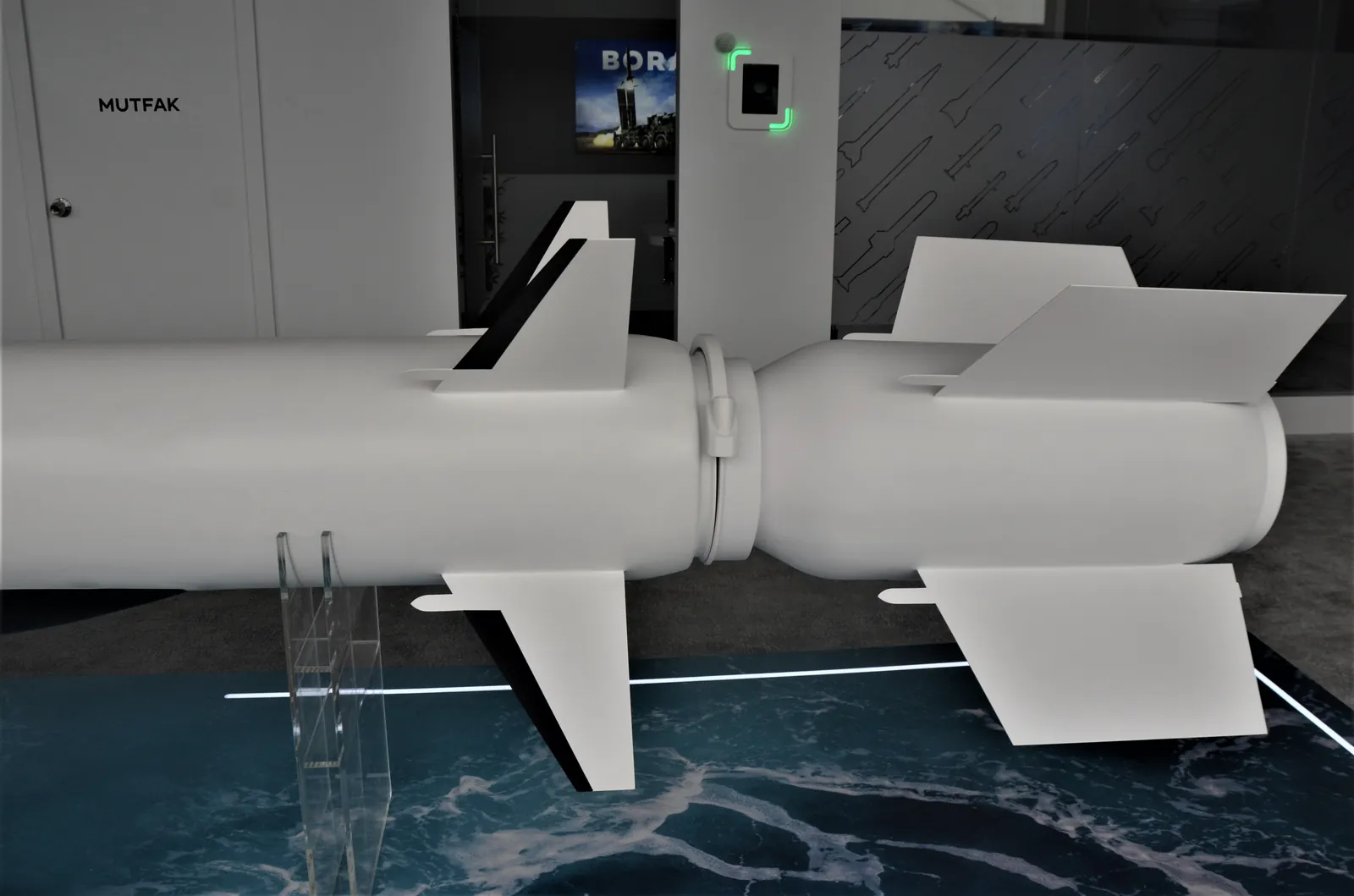
ROKETSAN is one of Turkey’s leading missile and rocket manufacturers, and behind every system it fields sits an extensive chain of testing. From static rocket-motor firings to ballistic and armor trials, environmental qualification and live-fire flight tests, the company runs a broad set of test facilities centered on its main campus at Elmadag, Ankara.
These capabilities are not reserved for ROKETSAN’s own products. The company also offers ballistic, laboratory and flight test services as an independent provider to other defence firms and institutions. This article walks through what ROKETSAN tests, where it does so, and how its facilities are accredited.
| ROKETSAN Testing at a Glance | |
|---|---|
| Company | ROKETSAN A.S. |
| Founded | 14 June 1988 |
| Main campus | Elmadag, Ankara |
| Headquarters | Ankara, Turkey |
| General Manager | Murat Ikinci |
| Ownership | TSKGV foundation (not publicly traded) |
| Main test areas | Motor firing, ballistic, laboratory, flight |
| Key accreditation | TURKAK, Closed Ballistic Laboratory (2015) |
Where are ROKETSAN’s test facilities?
ROKETSAN’s principal test site sits at its main campus in Elmadag, Ankara, where the company concentrates much of its production and testing activity. Corporate management and headquarters functions are also based in Ankara.
The exact locations and internal layout of the test ranges are restricted for security reasons. ROKETSAN does not publish precise coordinates or detailed maps of its firing areas, so public information describes the types of testing performed rather than facility-by-facility geography.
Static rocket-motor firing tests
Static firing is the backbone of solid-propellant motor development. The motor is anchored to a rigid test stand and fired in place while instrumentation records its behavior. ROKETSAN uses these tests to measure thrust, chamber pressure and burn time and to validate motor design before a system ever flies.
- Static motor firing to characterize thrust curves and pressure profiles
- Strand burner tests to measure propellant burn rate
- Closed-bomb / closed-volume burn-rate tests for propellant characterization
Because the motor is held stationary, engineers can gather precise data without the variables introduced by flight, making static firing central to solid-motor qualification.
What is ballistic testing at ROKETSAN?
ROKETSAN runs ballistic test services covering both terminal and armor ballistics. These trials assess how projectiles and warheads perform against targets and how protective materials stand up to threats, reporting metrics such as armor penetration and protection level.
A central asset here is the company’s Closed Ballistic Laboratory (KBL), which allows controlled armor and terminal-ballistic testing in an enclosed, instrumented environment. ROKETSAN offers these ballistic evaluations as a service to external customers as well as for its own programs.
Laboratory and environmental testing
Before a missile or subsystem is cleared for the field, it must survive the physical stresses of transport, storage and operation. ROKETSAN’s laboratory and environmental test services subject hardware to a battery of conditions that reproduce these stresses.
- Vibration and shock to simulate handling, transport and launch loads
- Temperature and humidity cycling across operational extremes
- EMC/EMI testing to verify electromagnetic compatibility and immunity
These environmental qualifications confirm that electronics, structures and propellants continue to function reliably after real-world exposure.
As a TSKGV foundation company, ROKETSAN is not listed on a stock exchange and does not publish market-style financial disclosures. Detailed budgets for individual test facilities are not officially disclosed. The table below summarizes what is publicly established about the company’s testing footprint rather than facility-level spending.

Flight and live-fire testing
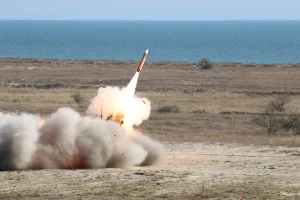
The final proof of any missile is a flight test. In these trials the complete system is launched to validate range, accuracy and guidance under realistic conditions. Live-fire testing ties together everything verified on the static stand and in the laboratory into an end-to-end demonstration.
As with its other ranges, ROKETSAN keeps the specific locations and internal details of its flight-test areas restricted. The company offers flight test services externally, alongside its ballistic and laboratory testing.
Accreditation: the Closed Ballistic Laboratory
ROKETSAN’s Closed Ballistic Laboratory (KBL) was accredited by TURKAK (the Turkish Accreditation Agency) in 2015. The accreditation covers a set of recognized ballistic and armor standards:
- MIL-STD-662 (V50 ballistic test for armor)
- MIL-DTL-12560
- MIL-DTL-46100
- MIL-DTL-46027
Accreditation to these standards signals that ROKETSAN’s ballistic results meet internationally recognized methods, which underpins the credibility of the test services it offers to third parties.
Testing as an independent service
A distinguishing feature of ROKETSAN’s test infrastructure is that it is open to external customers. The company markets ballistic test services, laboratory test services and flight test services to other defence firms and institutions, not only for its own missile and rocket programs.
This lets partners access accredited ballistic laboratories, environmental test rigs and instrumented ranges without building comparable facilities of their own, positioning ROKETSAN as a test-and-evaluation provider within Turkey’s defence ecosystem.
Exact locations and internal details of ROKETSAN’s test ranges are restricted for security reasons and are not officially disclosed. Facility-level budgets are likewise not published. Figures and standards cited here reflect publicly available and official ROKETSAN information; where a detail is unavailable it is marked as not officially disclosed rather than estimated.
Frequently Asked Questions
Where are ROKETSAN’s test facilities located?
ROKETSAN’s main test site is at its campus in Elmadag, Ankara, where much of the company’s production and testing is concentrated. Corporate management is based in Ankara. The exact locations and internal layout of the test ranges are restricted for security reasons and are not officially disclosed.
What tests does ROKETSAN perform?
ROKETSAN’s testing spans four main areas: static rocket-motor firing tests (thrust, chamber pressure and burn time), ballistic and armor testing, laboratory and environmental testing (vibration, shock, temperature, humidity, EMC/EMI), and flight or live-fire tests that validate range, accuracy and guidance.
What is a static firing test?
In a static firing test, a rocket motor is fixed to a rigid stand and fired in place so instrumentation can record thrust, chamber pressure and burn time without the variables of flight. ROKETSAN also uses strand burner and closed-bomb (closed-volume) tests to measure solid-propellant burn rate.
What is ballistic testing?
Ballistic testing evaluates how projectiles and warheads perform against targets (terminal ballistics) and how armor withstands threats (armor ballistics), reporting values such as penetration and protection level. ROKETSAN performs this work in its Closed Ballistic Laboratory and offers it as a service.
Is ROKETSAN’s Closed Ballistic Laboratory accredited?
Yes. ROKETSAN’s Closed Ballistic Laboratory was accredited by TURKAK in 2015 for MIL-STD-662, MIL-DTL-12560, MIL-DTL-46100 and MIL-DTL-46027, meaning its ballistic tests follow internationally recognized standards.
Can other companies use ROKETSAN’s test facilities?
Yes. ROKETSAN offers ballistic, laboratory and flight test services as an independent provider to other defence firms and institutions, in addition to using the facilities for its own products.
Sources
- roketsan.com.tr — Ballistic Test Services
- roketsan.com.tr — Laboratory Test Services
- roketsan.com.tr — Flight Test Services
- TURKAK accreditation of the Closed Ballistic Laboratory (2015) — MIL-STD-662, MIL-DTL-12560, MIL-DTL-46100, MIL-DTL-46027