India Bars Imports on 405 More Defence Items, Including Su-30MKI and T-90 Spares

The Department of Defence Production (DDP) under India’s Ministry of Defence notified its sixth Positive Indigenisation List (PIL) on 18 August 2026. The list covers 405 strategically important defence items, which may not be procured from abroad after specified dates.
What is on the list
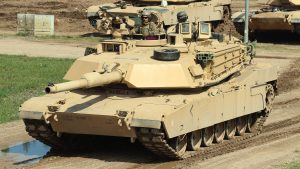
The items comprise line-replaceable units (LRUs), subsystems, sub-assemblies, spares, components and critical raw materials. The parent systems span air, land and naval platforms as well as missile and electronic warfare systems. Reporting indicates the list includes items tied to the Su-30MKI fighter and the T-90 main battle tank — two platforms that form the backbone of the Indian inventory.
Of the 405 items, 16 were identified by the Indian Coast Guard and 389 by defence public sector undertakings (DPSUs). The list carries an estimated business potential of roughly INR 3,070 crore.
How the mechanism works
The word “positive” is slightly misleading; the instrument is essentially an import ban with a timetable. The ministry assigns each listed item a date, after which it may only be sourced from within India. That gives domestic manufacturers the input they need most before committing capital: guaranteed demand.
The obstacle to indigenisation is usually not engineering but scale. A supplier asked to produce a specialised hydraulic valve or a flight control card ordered a few hundred times a year still has to buy tooling, obtain certification and hire qualified staff. Without assurance that demand will persist, the investment does not pay back. A dated import ban removes that uncertainty.
The mechanism carries a known risk in the other direction. If the domestic alternative does not mature on schedule, the ban translates directly into reduced readiness — what keeps an aircraft on the ground is more often an unavailable spare than the aircraft itself. That is why the lists are issued incrementally and start with relatively low-risk items.
Five years of results
India has run this policy since 2020. According to ministry figures, more than 15,700 defence items have been indigenised to date, generating an estimated import substitution value of about INR 9,000 crore over the past five years.
Those numbers show the lists advancing at component level rather than platform level. While India continues to pursue indigenous aircraft and vehicle programmes, the near-term priority is shifting sustainment of foreign-origin platforms already in service onto domestic industry.
Why raw materials are on the list
One notable feature is the inclusion of critical raw materials alongside spares and subsystems, reflecting a lesson from recent supply crises: producing a component domestically does not confer independence if its input is imported.
Speciality alloys, high-temperature ceramics, composite fibres and certain rare earth elements used in defence electronics are processed in a small number of countries. A missile body can be manufactured at home and the chain still be fragile if the alloy comes from a single supplier. Adding raw materials extends the logic to the bottom of the chain.
It is also a longer game. Developing a domestic equivalent of an LRU may take two or three years; standing up production of a speciality alloy, with the certification that entails, takes considerably longer. Listing them early means the clock has been started deliberately.
Strategic weight
India’s inventory is heavily Russian in origin. Its Su-30MKI fleet is among the largest Flanker fleets in the world, and T-90s form the armoured core of its ground forces. The pressure the war in Ukraine has placed on Russian defence export capacity turned sustaining that inventory into a live risk.
In that light the lists are not only industrial policy but a security of supply measure. Keeping spares flowing without dependence on a third country’s war calendar is a concrete gain in readiness.
Regional implications
Using policy instruments to force indigenisation rates upward is not unique to India. Turkey has followed comparable logic over the past two decades: long-term programmes that give domestic suppliers predictable demand, offset arrangements and phased localisation at subsystem level.
The starting points differ. Turkey has built indigenisation largely around its own platform programmes — ALTAY, HÜRJET, MİLGEM and its UAV families — while India is concentrating on localising the component base of foreign platforms already in the inventory. Both routes point at the same objective: limiting the operational effect of an interruption in foreign supply.
Given the scale of the Indian market, the lists also concern foreign firms manufacturing in the country. A domestic content requirement is rarely a market closing for an exporter; more often it is a push toward joint production.
Sources
- Ministry of Defence, Department of Defence Production announcement, 18 August 2026
- Indian Ministry of Defence indigenisation programme data