US Army Pushes Battlefield AI Toward Corps Level Under NGC2
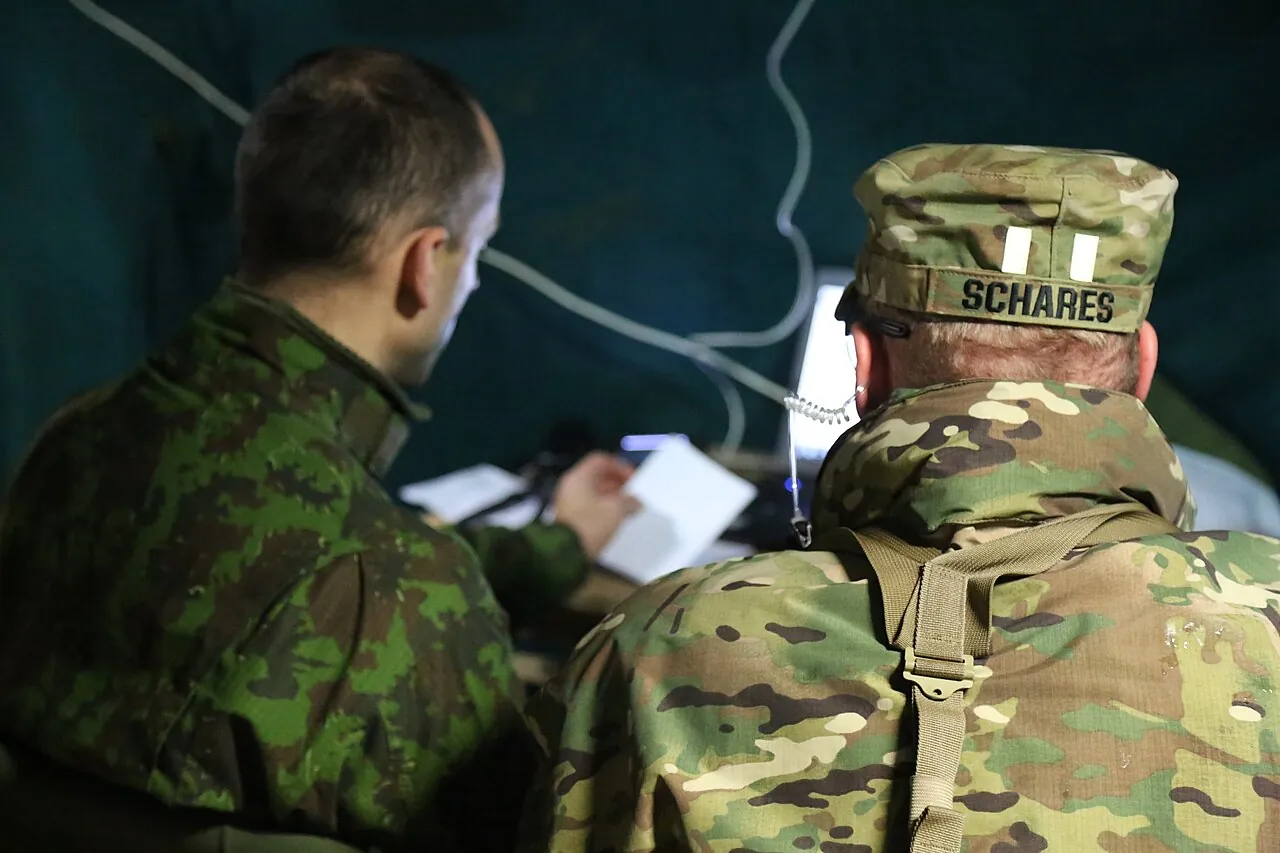
The US Army is widening the use of operational artificial intelligence under its Next Generation Command and Control (NGC2) programme. Texas-based Striveworks is scaling its support from the 4th Infantry Division to the 25th Infantry Division, supplying its Chariot Core platform to deploy, monitor and sustain AI models across cloud and tactical-edge environments.
What NGC2 is trying to fix
NGC2 is an attempt to rebuild a command and control estate that grew by accretion over decades around a single data architecture. The stated goal is that every echelon from soldier to corps draws on the same data and can run modern warfighting applications, while staying connected across the dispersion that survivability now demands.
In legacy systems each function — intelligence, fires, logistics, air defence — ran in its own software, often in its own data format. The commander’s picture arrived late and had to be stitched together by hand. Removing those partitions is the programme’s core claim.
What the AI actually does
On its first NGC2 deployment, Striveworks let operators consolidate output from hundreds of separate AI systems into a single battlefield view. The company reports substantial speed-ups in making sense of intelligence and in target processing.
The distinction worth holding onto is that the AI is not deciding. It is compressing time. A division headquarters takes in thousands of sensor reports, images and signals intercepts an hour, and human analysts cannot triage that volume at the speed of the fight. Model-based filtering aims to put only what warrants attention in front of a commander.
From prototype to formation
The programme closed a ten-month prototyping effort at Project Convergence-Capstone 6. What follows is continuous delivery into formations, starting with I Corps headquarters. Army leaders have said the digital command and control prototype, budgeted above $3 billion, demonstrated successfully.
Note that the capability is not being pushed to the whole force at once. It is trialled in a limited number of units, fed back, then extended — the 4th to 25th Infantry Division move is exactly that pattern. The choice of unit is not incidental either. The 25th is postured in the Indo-Pacific and works on distributed operations across island geography, where communications distances are long and link outages routine. Testing there generates a different class of engineering feedback than European land scenarios.
The hard part is the edge
A model running in a cloud region and a model running in a brigade headquarters with a severed satellite link are not the same problem. At the tactical edge, bandwidth is thin, power is rationed and connectivity is intermittent. Platforms like Chariot Core exist to push a model forward, keep it running there, and update it when the link returns.
Monitoring matters as much as deployment. A target-detection model quietly degrading on bad input is more dangerous than no model at all, because it still produces confident output — and there is no analyst in the loop expecting it to be wrong.
Sources
- Striveworks — company statements on NGC2 deployment, August 2026
- U.S. Army — NGC2 programme and Project Convergence-Capstone 6 releases