US Army Hunts for Legacy Bradley Parts and Trainers for Ukrainian Mechanics
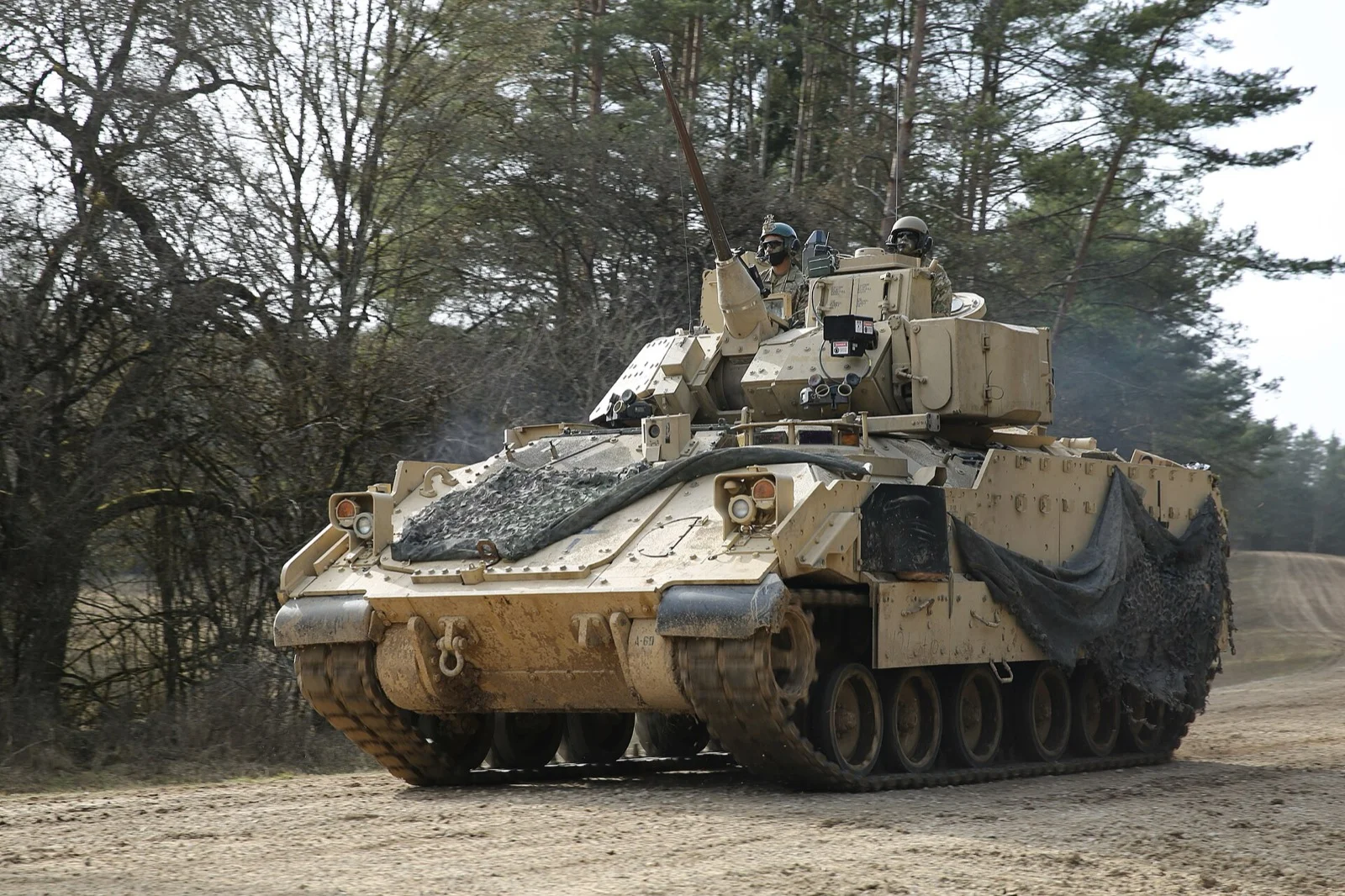
US Army Contracting Command – Detroit Arsenal is looking for contractors able to supply out-of-production spare parts for the M2A2 ODS-SA Bradley infantry fighting vehicles in Ukrainian service. The market survey sets a second condition alongside the parts: bidders must also be able to train Ukrainian mechanics to maintain and repair the vehicles.
The notice is market research, not a solicitation. In US practice this stage defines the requirement and tests whether industry can meet it before any competition opens.
Why the parts have gone missing
The shortfall list includes a turret drive control unit, a transmission control module, sighting-system fasteners, lens lighting and a range of structural, electrical and mechanical subassemblies specific to the vehicle. What they share is that they fell out of the supply chain when their production lines closed.
Age explains it. The Bradley entered service in the early 1980s and the M2A2 ODS-SA configuration rests on 1990s electronics. A hull and a gun will last decades; the firms that made the control units frequently did not. Defence logisticians call this diminishing manufacturing sources, and it is among the most persistent cost drivers on any long-lived platform.
The training clause matters more than it looks
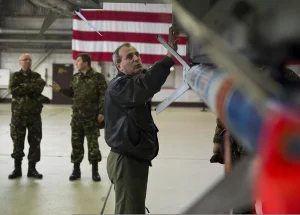
The binding constraint on Western armour in Ukraine has rarely been the vehicles themselves. It has been sustainment. A damaged vehicle sent out of the country for repair can be gone for weeks, counted in the inventory the whole time and contributing nothing.
Moving repair capacity inside Ukraine and training local technicians compresses that cycle. Washington has previously cleared support packages aimed at keeping Ukrainian Abrams, Bradley and HIMARS systems in the fight; this notice continues that line. The Army is also reported to be weighing an extension of the incumbent contractor’s scope covering Bradleys and M88 recovery vehicles — a familiar shortcut when a fresh competition would cost months the front does not have.
How the Bradley has performed
The M2 pairs a 25 mm M242 Bushmaster cannon with TOW anti-tank missiles on a tracked chassis. Ukrainian assessments have been most positive on crew survivability: repeated cases have seen vehicles disabled by mines or artillery with the crew walking away. The 25 mm gun has proved effective against APCs and light armour, while engagements with heavy tanks depend on getting inside TOW range.
The wider sustainment lesson
Three years of donated Western vehicles have made one point hard to avoid: military aid cannot be measured in platform counts. Vehicles arrived from many donors, each with its own spares chain, manual set and training burden. On paper it produced a substantial armoured force; in the field it produced a logistics problem.
Donor policy has shifted accordingly. Parts, workshop capacity and training packages that keep existing vehicles running increasingly take precedence over sending new types. Cutting a vehicle’s return-to-front time from weeks to days delivers combat power on a scale comparable to adding vehicles outright — and considerably faster.
Sources
- US Army Contracting Command – Detroit Arsenal, market survey notice, August 2026
- US Defense Security Cooperation Agency — Ukraine Bradley maintenance and overhaul notifications