What is the F-35 Lightning II? Lockheed Martin’s Fifth-Generation Stealth Fighter, Explained

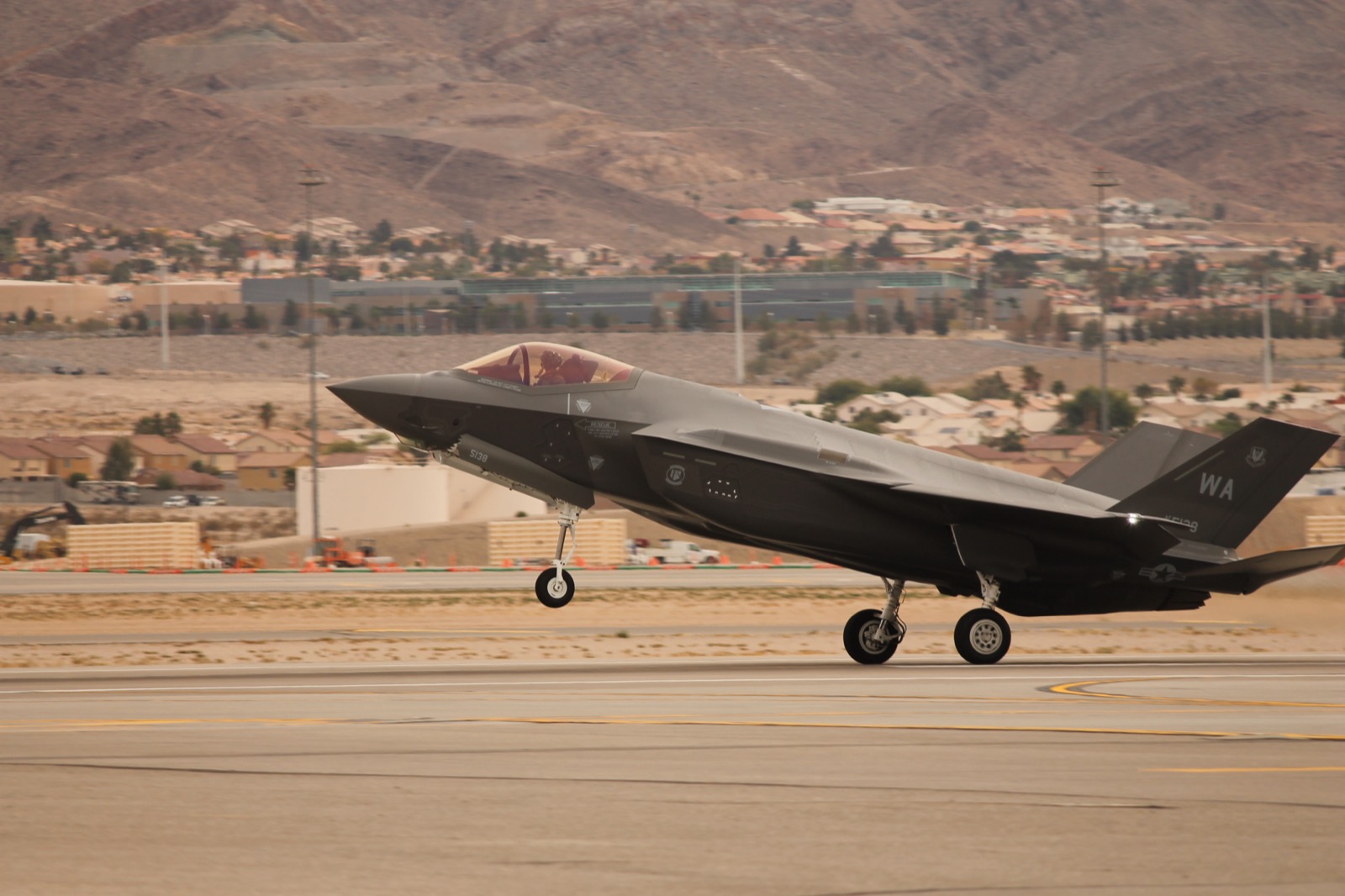
The F-35 Lightning II is a family of single-seat, single-engine, all-weather fifth-generation stealth fighters built by Lockheed Martin with primary partners Northrop Grumman, BAE Systems, and Pratt & Whitney. Conceived in the late 1990s under the U.S. Joint Strike Fighter (JSF) program to replace nine different fighters across three services and a dozen allied air forces, the F-35 is now operated by 19 countries with more than 1,200 aircraft delivered as of late 2025 and a production backlog exceeding 3,000 airframes. It is the most expensive defense program in human history — projected lifetime cost above USD 2 trillion — and, for better or worse, the centerpiece of allied airpower for the next four decades.
Key facts at a glance
| Attribute | Value |
|---|---|
| Type | Fifth-generation multi-role stealth fighter |
| Origin | United States (multinational program) |
| Manufacturer | Lockheed Martin (prime); Northrop Grumman; BAE Systems |
| First flight | 15 December 2006 |
| Service entry | USMC (F-35B) July 2015; USAF (F-35A) August 2016 |
| Crew | 1 |
| Engine | Pratt & Whitney F135-PW-100, 191 kN (43,000 lbf) with afterburner |
| Length | 15.7 m (A); 15.6 m (B); 15.7 m (C) |
| Wingspan | 10.7 m (A/B); 13.1 m (C) |
| Empty weight | 13.3 t (A) — 15.7 t (C) |
| MTOW | 31.8 t (A/C); 27.2 t (B) |
| Max speed | Mach 1.6 |
| Combat radius (A, internal fuel) | 1,239 km |
| Service ceiling | 15,240 m (50,000 ft) |
| Internal weapons | Up to 2,591 kg (4 hardpoints) |
| External weapons | Up to 6,800 kg (6 additional hardpoints, non-stealth) |
| Operators | 19 nations (US, UK, Italy, Norway, Netherlands, Australia, Israel, Japan, South Korea, Belgium, Denmark, Finland, Poland, Germany, Czech Republic, Greece, Romania, Singapore, Switzerland) |
| Unit cost (FY2024) | USD 82.5M (A); USD 109M (B); USD 102M (C) |
| Program lifetime cost | ~ USD 2 trillion (CBO 2023 estimate) |
One program, three airframes
The JSF program produced three variants sharing roughly 70 percent of parts but optimized for very different operating environments:
| Variant | Service | Take-off mode | Distinctive features |
|---|---|---|---|
| F-35A | USAF + most international operators | Conventional | Internal 25 mm GAU-22/A cannon; air-to-air refueling boom-compatible |
| F-35B | USMC, UK Royal Navy, Italy, Japan | STOVL (short take-off, vertical landing) | Lift fan behind cockpit; rotating engine nozzle; smaller internal fuel/weapons |
| F-35C | U.S. Navy, USMC carrier wings | Catapult / arrested recovery | Bigger wing; folding wingtips; heavier landing gear |
Stealth and sensor fusion
The F-35’s defining feature is not raw speed or maneuverability but sensor fusion. Five major sensors feed a single tactical picture displayed to the pilot:
- AN/APG-81 AESA radar (Northrop Grumman) — long-range search, synthetic-aperture mapping, and electronic attack.
- AN/AAQ-37 EO-DAS (Distributed Aperture System) — six infrared cameras providing 360° situational awareness, missile-launch detection and helmet-mounted display imagery.
- AN/AAQ-40 EOTS (Electro-Optical Targeting System) — IRST and laser designator integrated into the chin.
- AN/ASQ-239 EW suite (BAE Systems) — passive emitter location, jamming, and decoying.
- MADL (Multifunction Advanced Data Link) — secure, low-probability-of-intercept network among F-35s.
Combined with very low-observable shaping (radar cross-section publicly described as “the size of a metal golf ball” at certain aspects), the F-35 is intended to see first, shoot first, exit first. Where fourth-generation fighters relied on speed and turning to survive, the F-35 relies on detection asymmetry.
Weapons
In its stealthy “Day 1” configuration the F-35 carries up to four weapons internally — typically two AIM-120 AMRAAMs and two 2,000-pound JDAMs or AGM-158 JASSM-ERs. In permissive “Beast Mode,” the jet can add another six external hardpoints carrying up to 6.8 tonnes of additional ordnance, at the cost of stealth.
| Mission | Weapons |
|---|---|
| Air-to-Air | AIM-120D AMRAAM, AIM-9X Block II, MBDA Meteor (Block 4), AIM-260 JATM |
| Air-to-Surface | GBU-31/32/38 JDAM, GBU-39 SDB, GBU-53/B StormBreaker, AGM-158 JASSM-ER, AGM-154 JSOW |
| Anti-ship | AGM-158C LRASM (planned) |
| Nuclear | B61-12 (USAF F-35A only) |
| Gun | 25 mm GAU-22/A (A internal, B/C in stealthy gun pod) |
Combat record
The F-35 has flown combat with five air forces:
- Israel — 2018. The IAF announced the first operational combat use of the F-35 (Adir) during strikes on Syrian and Iranian targets. Multiple sorties have since been confirmed against Iran-aligned forces in Syria, Lebanon and the April/October 2024 strikes deep into Iran.
- United States — 2019. USMC F-35Bs from USS Essex struck Taliban targets in Afghanistan.
- United Kingdom — 2019. RAF F-35Bs from RAF Akrotiri flew strike missions over Iraq and Syria against Islamic State.
- Netherlands & Italy — 2024. NATO Baltic Air Policing and Adriatic exercises included F-35 quick-reaction alert intercepts of Russian Su-30s.
- Israel — June 2025. F-35I Adirs participated in long-range strikes into Iranian air-defense and nuclear facilities, the longest-range combat sorties in the type’s history.
Operators worldwide
| Region | Operators |
|---|---|
| North America | United States (USAF, USN, USMC), Canada (planned) |
| Europe | UK, Italy, Netherlands, Norway, Denmark, Belgium, Finland, Poland, Czech Republic, Romania, Germany, Greece, Switzerland |
| Middle East | Israel |
| Asia-Pacific | Japan, South Korea, Australia, Singapore |
Türkiye was a Tier-3 program partner and would have received 100 F-35As, but Ankara was expelled from the program in July 2019 after acquiring the Russian S-400 system. Turkish Aerospace Industries had been building the center fuselage; that work transferred to Northrop Grumman.
F-35 vs. its rivals
| F-35A | F-22A Raptor | Chengdu J-20 | Su-57 Felon | |
|---|---|---|---|---|
| Class | 5th-gen multi-role | 5th-gen air superiority | 5th-gen heavy fighter | 5th-gen multi-role |
| Engines | 1× F135 (43,000 lbf) | 2× F119 (35,000 lbf each) | 2× WS-15 | 2× AL-51F1 |
| Max speed | Mach 1.6 | Mach 2.25 | Mach 2.0 | Mach 2.0 |
| Combat radius | ~1,200 km | ~850 km | ~1,800 km | ~1,500 km |
| Sensor fusion | Industry benchmark | Strong but older | Estimated near-peer | Limited |
| In service | 1,200+ delivered | 180 built | ~200 estimated | ~30 (limited Russian production) |
| Combat record | Yes (Syria, Iran, Iraq) | Limited (Syria 2014) | None public | Limited (Ukraine alleged) |
Block 4 and beyond
The largest single upgrade in the F-35’s history is Block 4 / Technology Refresh 3 (TR-3): a new integrated core processor, expanded memory, new panoramic cockpit display, and the software framework to integrate roughly 75 new capabilities by 2030, including the AIM-260 JATM long-range air-to-air missile, the GBU-53/B StormBreaker glide bomb, and integration with the F-22 and the planned NGAD sixth-generation fighter. TR-3 deliveries began in mid-2024 after software delays; Lockheed Martin expects Block 4 full capability in 2029.
Engine modernization splits into two paths: the U.S. Air Force chose the F135 Engine Core Upgrade (ECU) over the GE Aerospace XA100 adaptive engine, citing lower cross-fleet retrofit risk. The ECU will enter service in 2029 with improved thrust and 7–10 percent better fuel burn.
Persistent criticisms
- Cost. CBO’s 2023 forecast of USD 2 trillion lifetime cost remains politically explosive.
- Sustainment. Mission-capable rates have ranged from 53 to 65 percent — below the 80 percent target.
- Software. The Block 4 / TR-3 software development saw multiple stop-work orders in 2022–24, forcing Lockheed Martin to deliver airframes without full combat capability.
- Range. 1,239 km combat radius is shorter than the F-15EX or F-22, requiring tanker support for long-range missions in the Pacific.
- Single engine. Loss of the F135 is catastrophic — a recurring concern for naval and Marine STOVL operations.
Why the F-35 matters
The F-35 is not the most maneuverable fighter, nor the fastest, nor the longest-ranged. It is, however, the only fifth-generation aircraft in series production in the West, the only multi-role stealth jet with carrier and STOVL variants, and the only fighter built around the principle that the sensor network is the weapon. For the next thirty years, it will be the backbone of NATO airpower, the bridge between the fourth-generation fleet and whatever sixth-generation system replaces it, and the most influential single defense program of our century.