GÜRDESAN Hatch Covers and Lifting Systems Guide

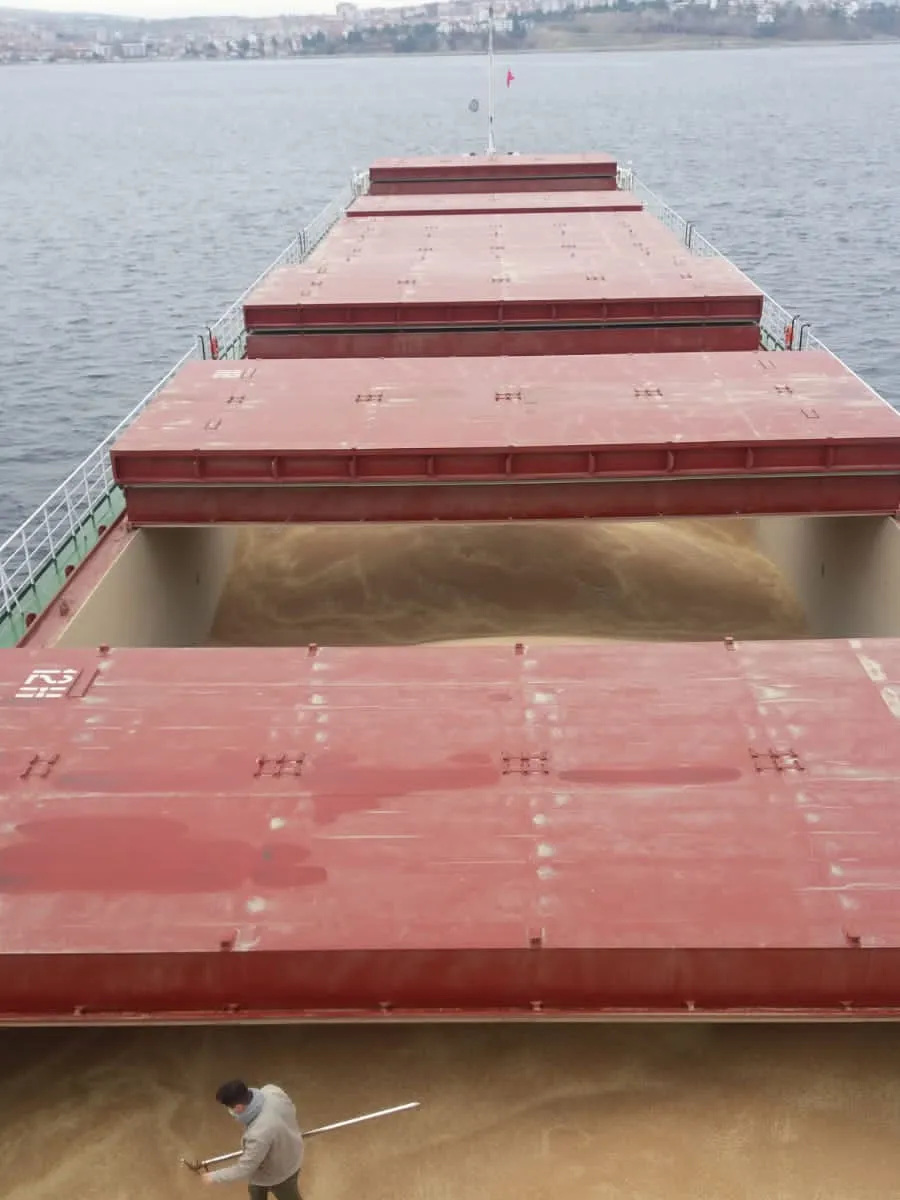
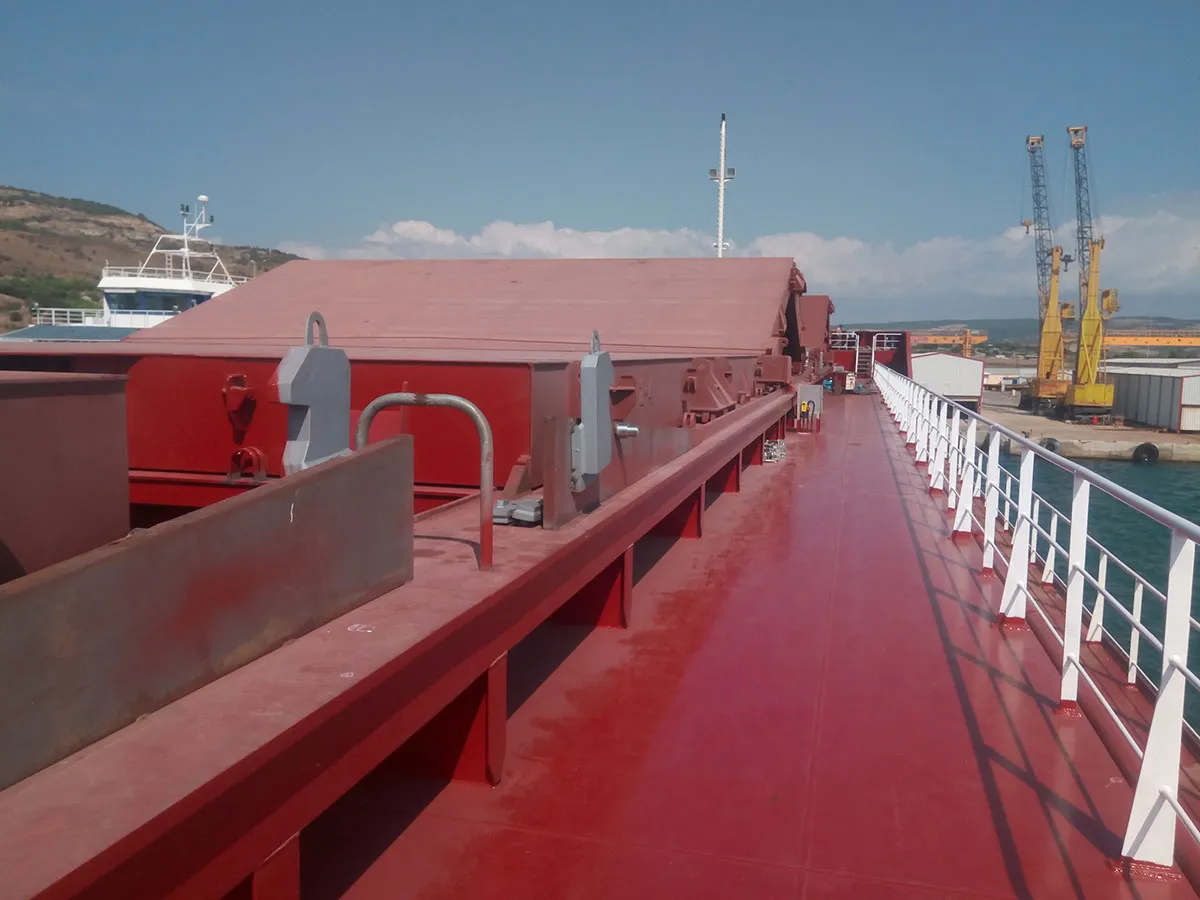
Quick answer: GÜRDESAN’s hatch covers and lifting systems comprise the steel cover systems that close the hold openings of dry cargo and bulk carriers, together with their opening and closing gear. The official website lists pontoon, single pull, rolling (chain-operated), folding and multi-folding type covers; for pontoon covers, a travelling gantry crane is built within the same group.
Why is the hatch cover critical equipment?
A hatch cover seals the cargo space against seawater ingress and contributes to the ship’s longitudinal strength. Poorly designed or neglected covers are among the leading causes of cargo damage and water ingress. Covers are therefore built within the framework of SOLAS, the Load Line rules and classification society approvals. GÜRDESAN states that it manufactures to ISO, DIN, BS and JIS standards and works with classification societies (ABS, DNV, GL, BV, RINA, TL, LR). For the company’s general profile, see the What is GÜRDESAN? file.
Cover types
| Type | Working principle | Typical use |
|---|---|---|
| Pontoon type | Independent panels lifted and stacked by crane | Container ships and bulk carriers |
| Single pull | Panels pulled by chain and stowed at the hatch end | General cargo ships |
| Rolling (chain-operated) | Panels slide sideways on rails | Large hatch openings |
| Folding | Panels folded by hydraulic cylinders | Dry cargo ships |
| Multi-folding | Multi-panel folding system | Long hatch openings |
Lifting systems and the gantry crane
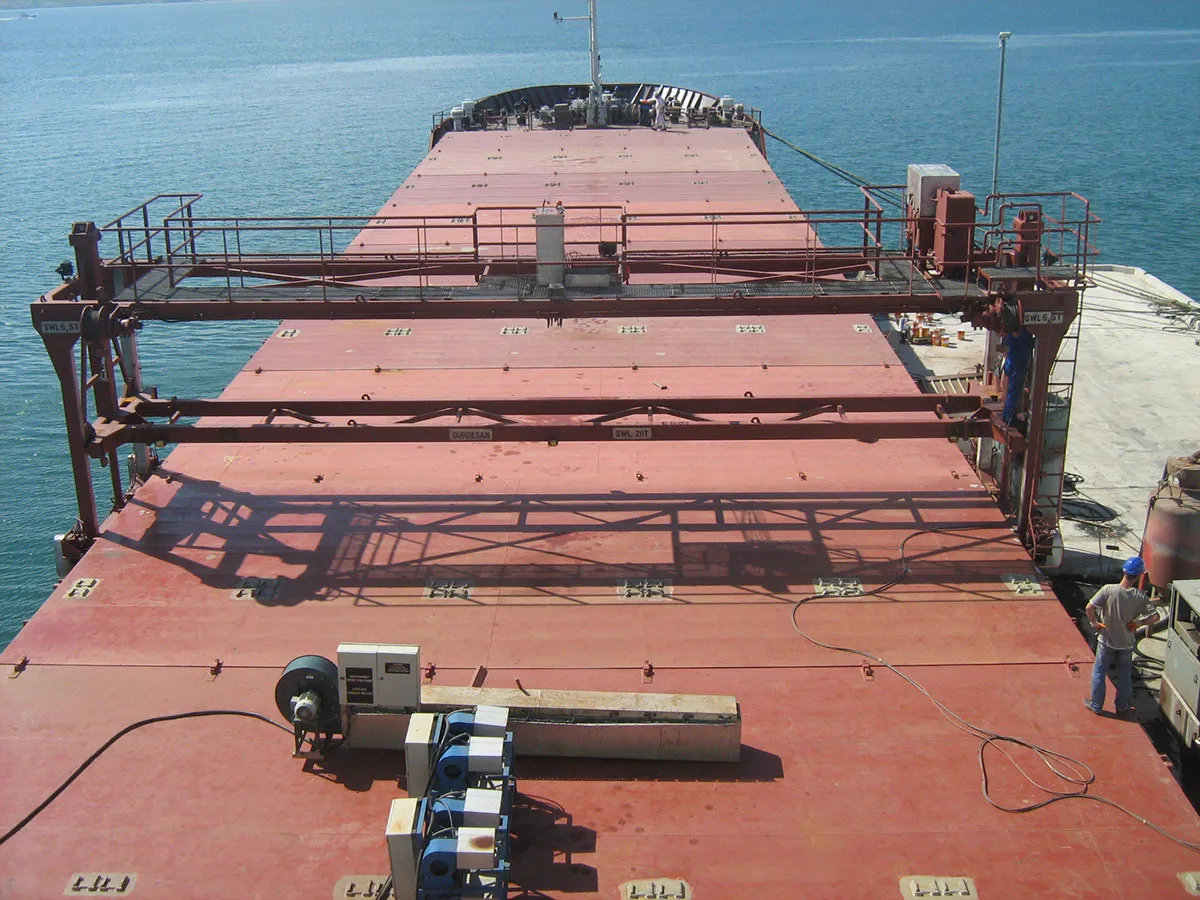
Because pontoon covers have no drive of their own, a travelling gantry crane is used to lift and stack the panels. GÜRDESAN builds this crane as part of the hatch cover group; the product shares its engineering base with the travelling gantry hatch cover crane in the deck cranes portfolio. The company’s SSB industry catalogue listing also includes items used in driving cover systems, such as hydraulic power units, hydraulic pistons and hydraulic submersible gates.
Production, testing and maintenance
Cover production runs through welded steel construction, machining and installation of the sealing elements; before delivery, watertightness is verified with the hose test. GÜRDESAN reports having completed repair and maintenance jobs numbering in the thousands since foundation; gasket renewal, panel fairing and hydraulic system overhauls on ships in service fall within this scope. On the military side, the catalogue listing also includes items linked to amphibious loading gear, such as the bow cap and tank and vehicle beaching gear; programme-level use has not been officially disclosed. The company’s verified military production is examined in the submarine projects file.
What determines the choice of cover type?
Cover type selection depends on the ship’s cargo type and deck arrangement. On container-carrying ships, the stacking load on top of the cover is decisive; pontoon covers are sized to carry that load, and lifting the panels by crane is integrated into the port operation. On bulk carriers without their own cranes, hydraulically driven folding covers come to the fore; the cover opens under the ship’s own power without port equipment. Rolling covers allow panels to be stowed sideways on very wide hatch openings. The second dimension of the choice is weight: the cover’s weight is deducted from the cargo the ship can carry, so manufacturers pursue panel designs that cut weight without sacrificing strength. The third dimension is the maintenance burden; gasket lines, wheel and rail systems and hydraulic cylinders demand periodic care, and cover tightness comes up at every cargo survey. GÜRDESAN’s production of both the covers and the lifting gear within the same group works in the buyer’s favour by concentrating design responsibility in one place; interface problems arising from cover-crane mismatch are resolved with a single contractor.
Frequently asked questions
Which hatch cover types does GÜRDESAN produce?
The official site lists pontoon, single pull, rolling (chain-operated), folding and multi-folding covers, plus a gantry crane for pontoon covers.
Which rules govern hatch cover production?
Covers are built within the framework of SOLAS and the Load Line rules, with classification society approval; GÜRDESAN states that production follows ISO, DIN, BS and JIS standards.
How is cover tightness tested?
The common method is the hose test: pressurised water is applied over the closed cover and the gasket line is checked for any water passing to the inside.
Does GÜRDESAN repair covers on ships in service?
Yes. The company states that it carries out cover overhauls within its repair and maintenance services and has completed maintenance jobs numbering in the thousands since foundation.
What are the size and tonnage limits of the covers?
Per-product size and tonnage tables have not been officially published; covers are dimensioned to the ship project.
Sources and verification note
Cover types and process information were taken from the official site category; test practices are described as standard industry procedure, and no numerical capacity claims were used. Accessed: August 13, 2026.
- https://www.gurdesan.com.tr/Kategori/Ambar-Kapaklari-ve-Kaldirma-Sistemleri
- https://www.gurdesan.com.tr/Kategori/Guverte-Kreynleri
- https://www.gurdesan.com.tr/Sayfa/Hakkimizda
- https://www.sahaistanbul.org.tr/firma/gurdesan-gemi-mak-san-tic-a-s