Kerch Bridge Arch Struck by Drone as Russia Claims Record Intercepts

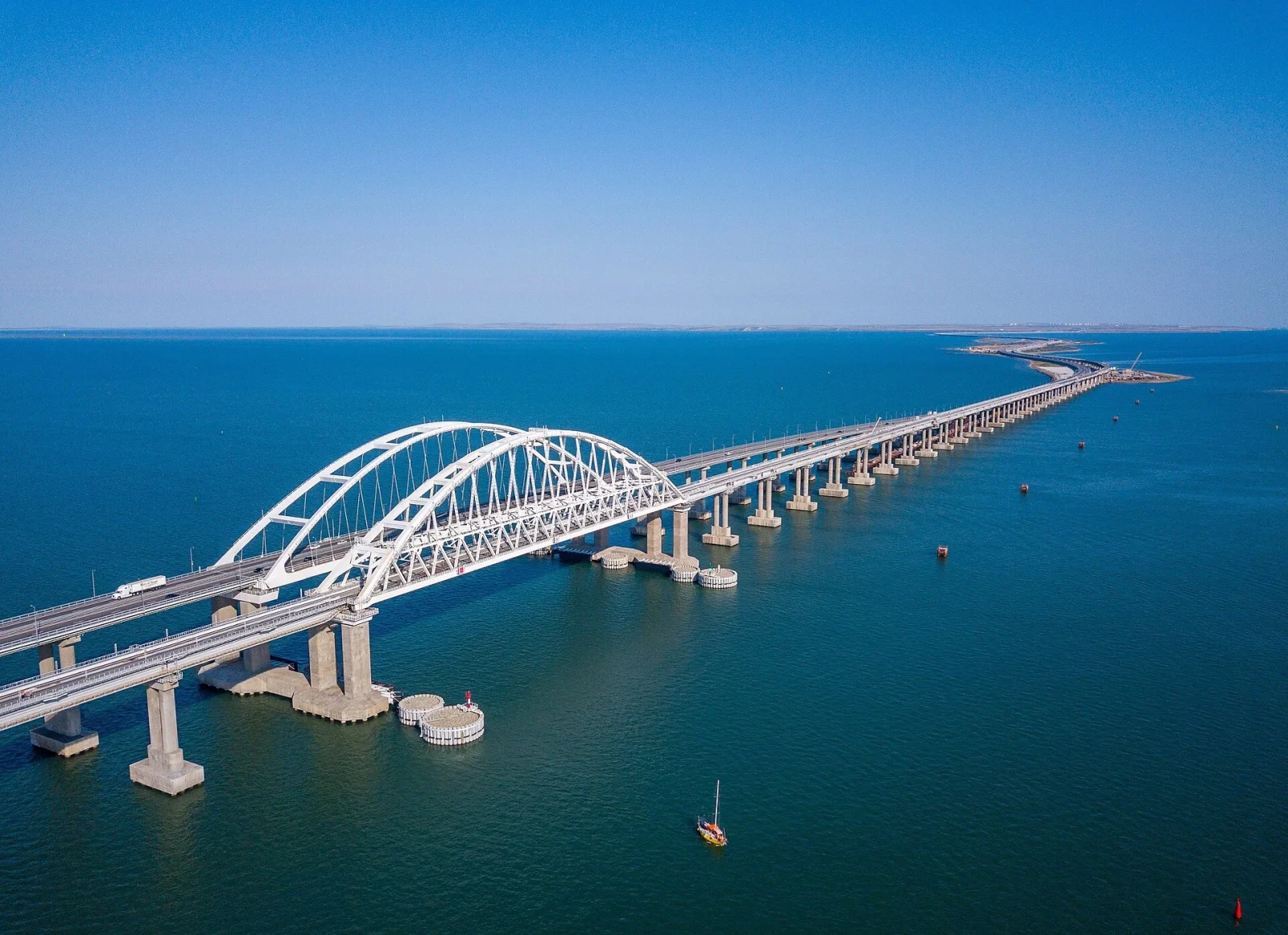
A drone struck the road arch of the Kerch (Crimean) Bridge, the structure linking occupied Crimea to Russia’s Krasnodar region, at around 5:38 a.m. local time on November 16, 2026. The attack was part of a large overnight Ukrainian drone wave and was confirmed by Russian-installed authorities on the peninsula.
Visible deformation appeared on the bridge’s main road span on the Kerch side, and satellite imagery showed damage around the arch. Early, unverified reports suggested the arch had tilted by roughly 15 degrees, but the full extent of the structural damage remains unclear. No casualties were reported.
Sergey Aksyonov, the Russian-installed head of occupied Crimea, confirmed the strike and announced temporary traffic restrictions. Kremlin spokesman Dmitry Peskov described the damage as “minor.” Russian authorities said traffic would resume once an inspection was completed, and state media later reported a one-way reopening by the afternoon, though the footage shown did not include the damaged arch or any vehicles crossing it. Roughly 2,000 vehicles were reportedly stranded on both sides of the strait, and rail services were delayed.
Russia’s Ministry of Defense said it intercepted or destroyed 1,336 Ukrainian drones overnight, a figure it described as exceeding its previous record of 1,254 set on October 29. Over a 24-hour period, the ministry claimed a total of 2,049 drones, four Flamingo cruise missiles and seven guided bombs were brought down. Moscow Mayor Sergei Sobyanin said roughly 600 drones had been aimed at the capital region, and fires were reported at industrial and energy sites, including in the Rostov region. Ukraine’s actual launch numbers were not independently confirmed.
The juxtaposition of a record interception claim with a successful strike on the bridge itself is a notable inconsistency. Analysts say it may point to limits in Russia’s air defence coverage, or to gaps in how resources are prioritised around the structure specifically.
The 19-kilometre bridge is both a prestige project closely associated with the Kremlin and a key logistics artery supplying Russian forces in Crimea. Taking it out of service, even partially, forces Russia to divert additional defensive resources while also directly affecting military logistics in the peninsula.
The bridge has been a recurring target since it opened in 2018. A truck bomb damaged the road span and ignited fuel tankers on a passing train in October 2022; Ukraine’s SBU later acknowledged its role in that attack. Sea Baby uncrewed surface vessels damaged the road section again in July 2023. In June 2025, the SBU said it detonated explosives equivalent to more than 1.1 metric tons of TNT beneath the bridge’s supports. After each incident, Russia has added further air defences, smoke screens and floating barriers around the structure.
The timing is also notable. The strike came days ahead of a planned trilateral meeting between Russian President Vladimir Putin, Chinese President Xi Jinping and US President Donald Trump, expected on the sidelines of the APEC summit in Shenzhen on November 19. US officials have reportedly said they do not expect the war in Ukraine to be on that meeting’s agenda.
Military analysts expect Ukraine to try to strike the same weakened point again. Russia’s quick, one-lane reopening is being read less as evidence of the bridge’s structural condition than as a show of confidence aimed at domestic and international audiences.
The strike also fits a broader pattern: Ukraine’s long-range drone campaign has scaled up considerably over the past year, moving from small, short-range raids to a sustained pressure campaign against Russian energy, fuel and logistics infrastructure deep inside the country. The record interception figure Russia announced the same night suggests this campaign’s overall volume continues to grow, even where individual strikes get through.
For Black Sea security more broadly, repeated strikes on the bridge underline how unresolved the conflict’s logistics dimension remains. Türkiye’s role under the Montreux Convention in regulating passage through the Turkish Straits, together with its direct stake in regional maritime security, keeps developments around the Kerch Strait on NATO’s eastern-flank watch list, well beyond their immediate military significance to the Russia-Ukraine war itself.
Sources:
- The War Zone (TWZ), “Russia’s Prized Kerch Bridge Struck In Ukrainian Drone Onslaught”, November 16, 2026 — https://www.twz.com/news-features/russias-prized-kerch-bridge-struck-in-ukrainian-drone-onslaught — Used as the main source for strike details and official statements.
- The Defense Post, “Ukraine Strikes Crimean Bridge as Russia Claims It Downed 1,336 Drones”, November 16, 2026 — Used to corroborate the Russian Ministry of Defence’s claimed overnight interception figures.