Benin’s Military Power: Which Armoured Vehicles, Guns and Boats Are in the Inventory? (2026)

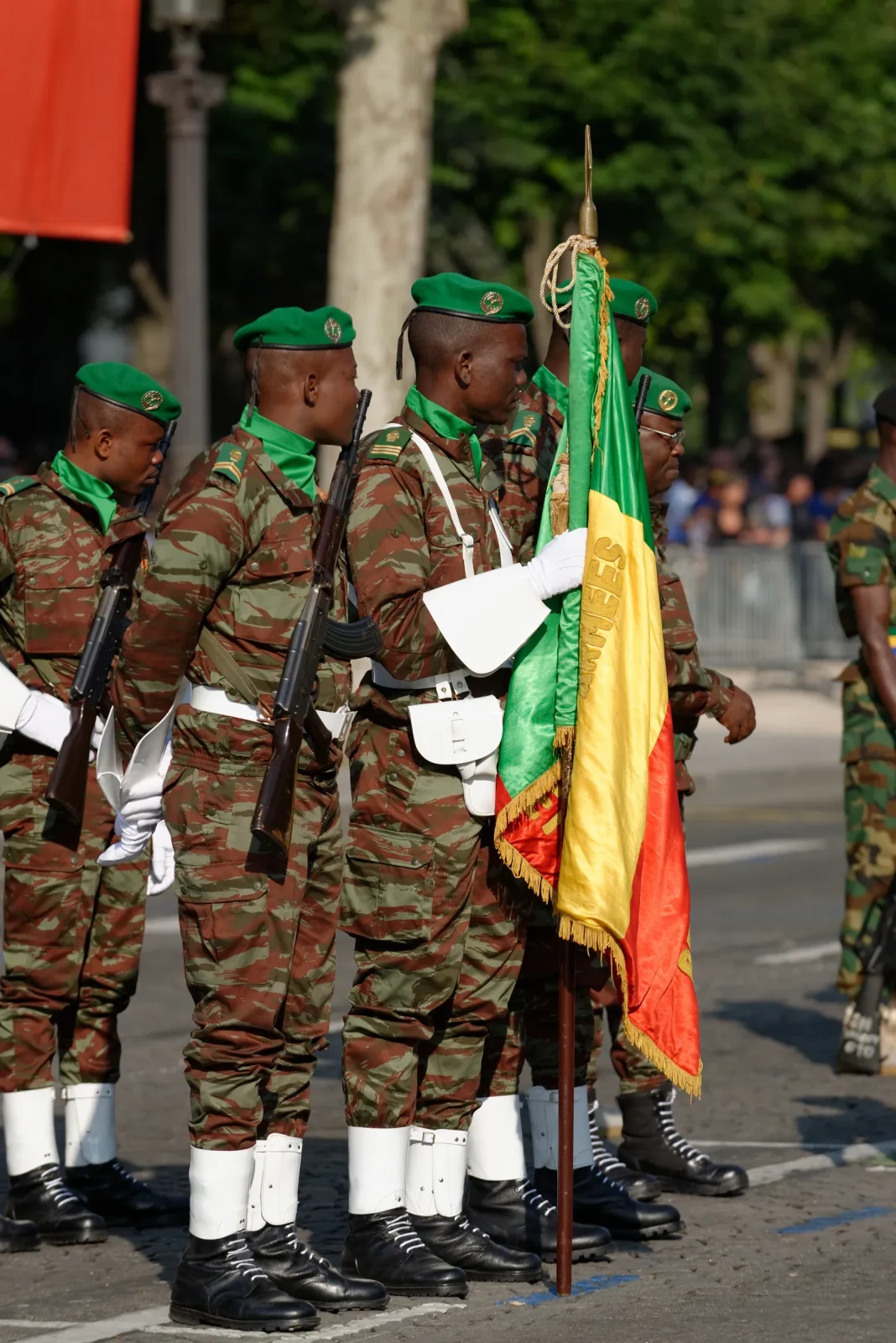
Benin’s military inventory describes a small West African army sitting directly in the path of jihadist pressure descending from the Sahel. The Benin Armed Forces (FAB) comprise an army, air force, navy and Republican Guard; the backbone of the inventory is light armour of Soviet, French, American and South African origin and 105 mm howitzers.
At a Glance
- Active personnel: About 4,750 personnel (Wikipedia/IISS); the army about 4,300 and the navy about 200, plus the Republican Guard
- Tanks: About 18 PT-76 light amphibious tanks (delivered by the USSR from 1982); current service status unclear
- Armoured vehicles: About 22 M113, 15 VAB, 10 Panhard VBL, 14 BRDM-2, 10 Casspir NG MRAPs and other light armour
- Military aircraft: No combat aircraft; a small transport and liaison fleet (historically An-26, Do-28, Twin Otter) whose current serviceability is unconfirmed
- Navy: About 200 personnel; two former Chinese patrol boats (Matelot Brice Kpomasse class)
- Defence budget: About US$73 million, roughly 1% of GDP (2011 figure; no current public figure)
Note: The inventory figures below are approximate values drawn from open sources such as Global Firepower, the IISS Military Balance and SIPRI.
About the Benin Armed Forces
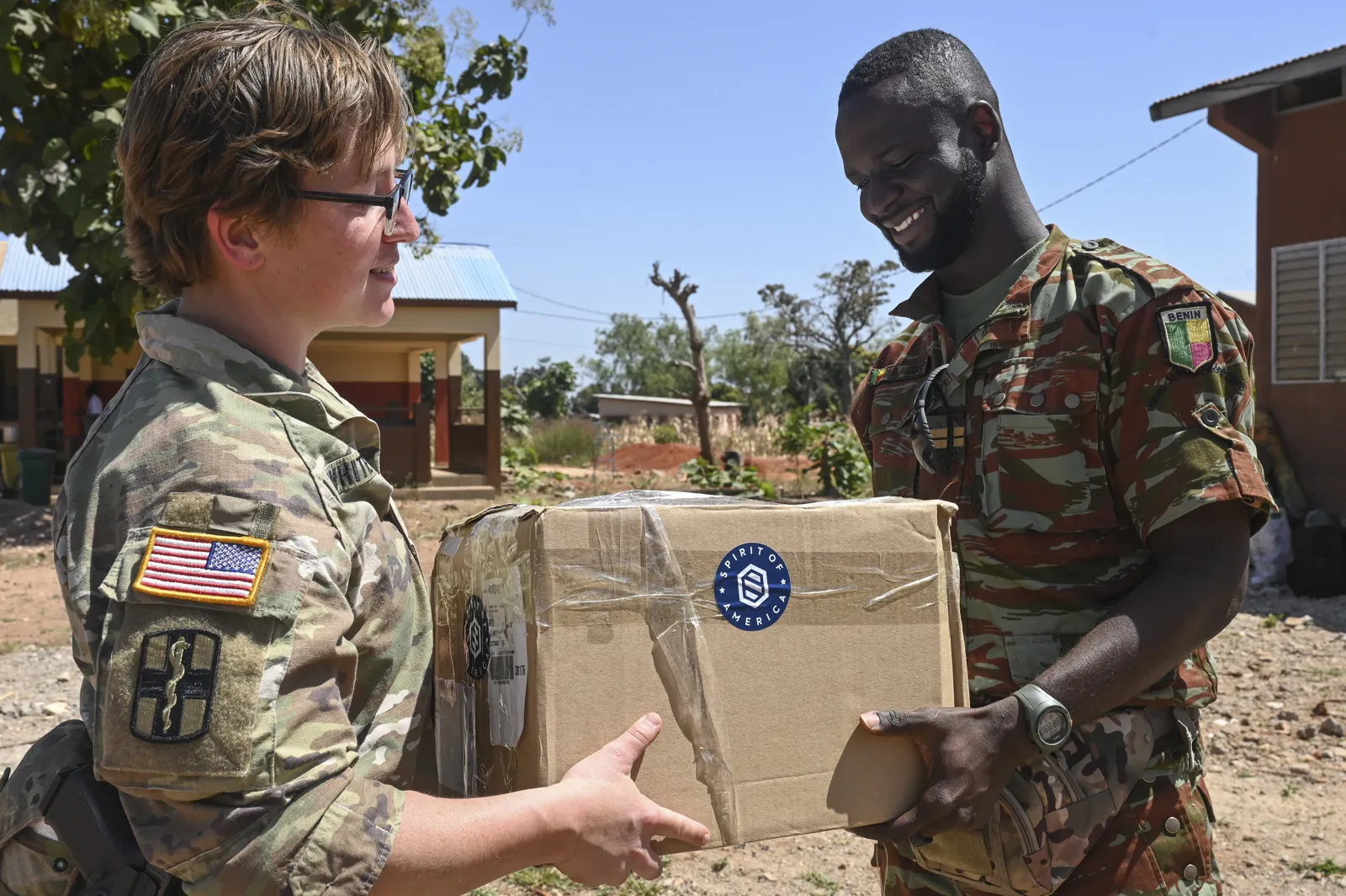
The Benin Armed Forces were founded with independence in 1960 and comprise the army, air force, navy and Republican Guard. The constitution of 11 December 1990 tasked them with territorial security and border vigilance; the gendarmerie was merged into the police in 2018. Belgium has for years run a cooperation programme with the Beninese army through training, coaching and donations of surplus equipment.
Total personnel number about 4,750, of which about 4,300 are in land forces and about 200 in the navy. The best-known defence budget figure dates from 2011: about US$73 million, roughly 1% of GDP; there is no current public figure. In 2022 the army set up a 3,000-strong northern task force to protect the border and has since added about 5,000 recruits to reinforce the north.
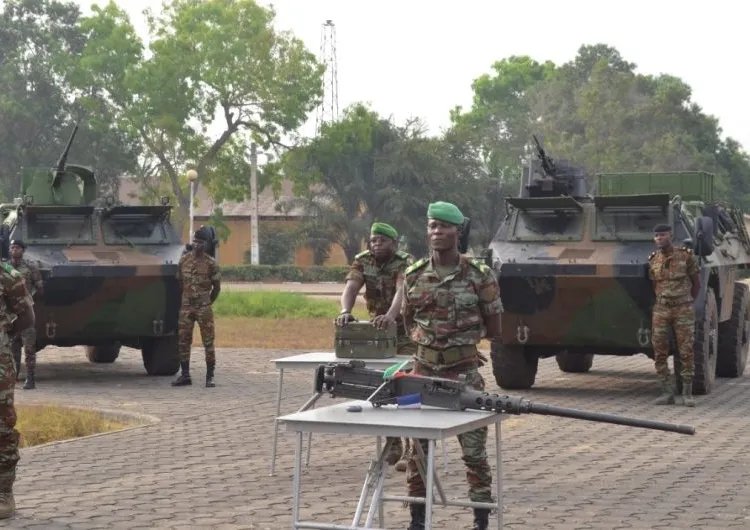
The land component includes a parachute commando battalion, a motorised intervention battalion, an armoured group, combined-arms battalions, and artillery, engineer, signal and logistics units. The armoured inventory consists of about 18 PT-76, 14 BRDM-2, 10 Panhard VBL, 9 Cayman, 7 M8 Greyhound, 3 Eland-90, 22 M113, 15 VAB, 2 ACMAT Bastion and 10 Casspir NG MRAPs. Artillery includes about 12 L118 (105 mm) and 4 M101A1 howitzers plus 81 mm and 86 mm mortars. Figures are approximate.
The air element has no combat aircraft. Transport and liaison aircraft such as the C-47, Do-28, DHC-6 Twin Otter and An-26 have been operated historically; current serviceability and numbers are not confirmed in open sources. Air surveillance and close air support against the northern threat are the most visible gap in the inventory.
The missile and air-defence layer is limited. Anti-tank capability rests on shoulder-fired weapons such as the LRAC F1 and RPG-7, and air defence on 9K32 Strela-2 MANPADS and 14.5 mm KPV machine guns. No guided anti-tank missile, anti-ship missile or medium-range surface-to-air missile is documented.
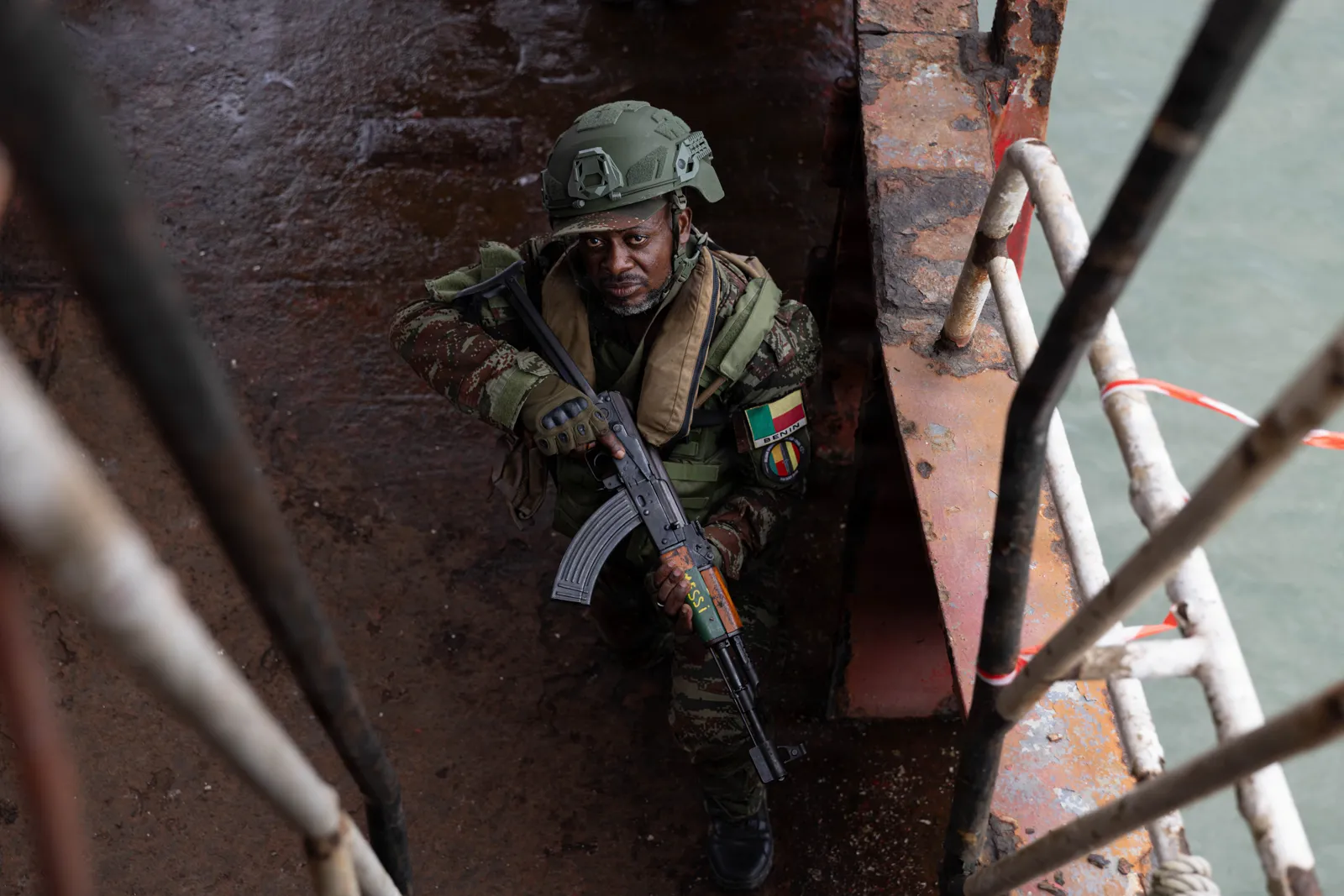
The navy has about 200 personnel, is based in Cotonou and is represented by two former Chinese patrol boats; counter-piracy and anti-smuggling in the Gulf of Guinea lean on US, French and Belgian support. Beninese special forces trained in ship clearing at Flintlock 26 in Côte d’Ivoire in April 2026. The picture shows that the country’s real security problem lies on its northern border rather than at sea.
The current security picture shapes how the inventory should be read: in April 2025 the government said 54 soldiers died in attacks on two military posts in the north (JNIM claimed 70); on 5 March 2026, 15 soldiers were killed at the Kofouno post in the Karimama area; and in May 2026 two further attacks hit the north. Attackers moving on motorcycles underline the need for mobility, surveillance and aerial reconnaissance. In October 2025 Benin signed a defence cooperation memorandum with the United Arab Emirates.
Land Forces Inventory
| System type | Est. quantity |
|---|---|
| Tanks | About 18 PT-76 (Soviet-built light amphibious); no modern main battle tank |
| Armoured personnel carriers | About 22 M113, 15 VAB (France), 2 ACMAT Bastion; 10 Casspir NG MRAPs |
| Scout cars | About 14 BRDM-2, 10 Panhard VBL, 9 Cayman, 7 M8 Greyhound and 3 Eland-90 |
| Artillery | About 12 L118 (105 mm) and 4 M101A1 howitzers; 81 mm and 86 mm mortars |
| Units | A parachute commando battalion, a motorised intervention battalion, an armoured group, combined-arms battalions, artillery, engineer, signal and logistics battalions |
Air Force Inventory
| Platform | Est. quantity |
|---|---|
| Combat aircraft | None; no combat aircraft has been operated since independence |
| Transport and liaison | Historically C-47s, Do-28s, a DHC-6 Twin Otter and An-26s; current serviceability and numbers are not confirmed in open sources |
| Helicopters | Early Agusta-Bell 47Gs; no confirmed military helicopter in current service |
| Northern operations and air support | Air support and surveillance needs against the jihadist threat in the north are high; no armed air platform is documented in the inventory in open sources |
Missile and Air-Defence Systems
| System | Type / Note |
|---|---|
| Anti-armour | LRAC F1 (83 mm) shoulder-fired anti-tank weapons and RPG-7s; no guided anti-tank missile is documented |
| Anti-ship | None |
| Air defence | Only shoulder-fired 9K32 Strela-2 MANPADS and 14.5 mm KPV heavy machine guns; no layered air defence |
Naval Power
| Class / Type | Est. quantity |
|---|---|
| Patrol craft | Two former Chinese patrol boats (Matelot Brice Kpomasse class); current service status unconfirmed |
| Personnel | About 200 personnel, based at the port of Cotonou |
| Maritime tasks | Counter-piracy and anti-smuggling in the Gulf of Guinea; Beninese special forces took part in ship-clearing drills at Flintlock 26 in Côte d’Ivoire in April 2026 |
| External support | The United States (AFRICOM, Flintlock), France and Belgium provide training and equipment support |
The Turkey Angle: Turkish Defence Industry
Open sources document no defence-industry contract or delivery between Türkiye and Benin. During Foreign Minister Mevlüt Çavuşoğlu’s June 2022 visit to Cotonou the two sides discussed strengthening cooperation in the defence industry and security, and Beninese press reported that the two countries were assessing defence-industry cooperation possibilities.
Benin’s current trainers and suppliers are the United States, France, Belgium, South Africa and, newly, the UAE. There is no Turkish-made platform in the inventory, so the Turkish link should be read as a potential field rather than a market claim.
Benin’s evident needs overlap with product groups that Turkish industry has proven in exports: tactical and armed UAVs against the asymmetric threat in the north, mine- and IED-protected armoured vehicles, light armour and reconnaissance systems. The TB2 experience in Burkina Faso, Mali and Niger and the Turkish armoured-vehicle presence in Côte d’Ivoire serve as regional precedents along the same Sahel-Gulf of Guinea axis.
Frequently Asked Questions
How many tanks does Benin have? About 18 PT-76 light amphibious tanks appear in records; these are old Soviet-built vehicles whose current service status is unclear. There is no modern main battle tank.
Does Benin have fighter jets? No. The air element has historically operated only transport and liaison aircraft; current serviceability is unconfirmed.
How many soldiers does Benin have? About 4,750 by approximate figures: roughly 4,300 in land forces and about 200 in the navy, plus the Republican Guard.
What ships does the Beninese Navy use? The navy of about 200 personnel is represented by two former Chinese patrol boats. There are no major warships or anti-ship missiles.
Is there defence cooperation between Türkiye and Benin? No contract or delivery is documented in open sources. In 2022 the two countries assessed defence-industry cooperation; needs in the north overlap with Turkish product groups such as UAVs, armoured vehicles and surveillance, which makes this a potential field.
Bottom Line
The Beninese inventory shows a small army resting on ageing Soviet- and French-origin light armour, 105 mm artillery and limited air defence, without combat aircraft or advanced surveillance. Jihadist pressure in the north makes these gaps visible. For Türkiye this is not a market claim but a potential field in UAVs, armoured vehicles and surveillance.