AT4 Anti-Tank Weapon: One Million Launchers in 15+ Armies — Technical Analysis and Combat Record

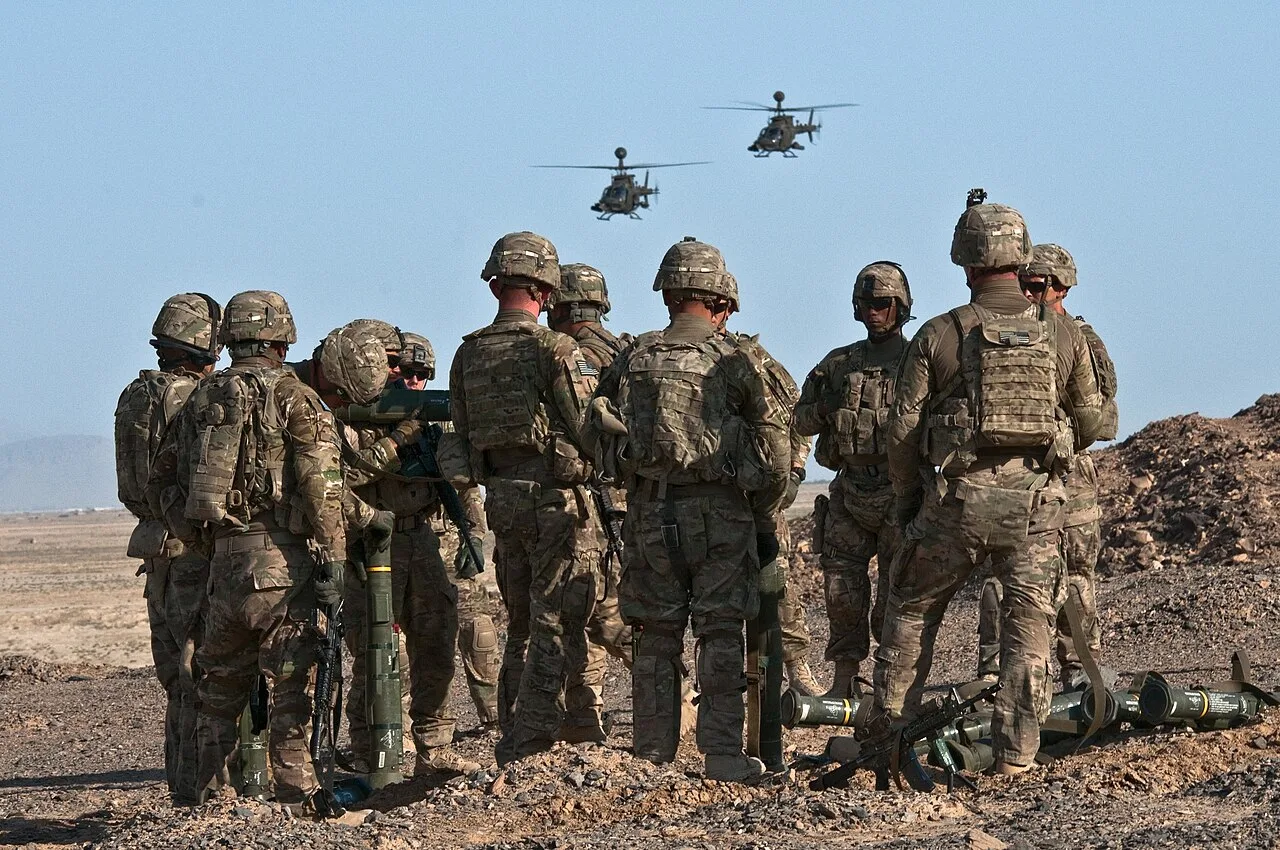
With over one million units delivered to more than 15 nations, the AT4 is the most widely deployed single-use anti-tank weapon in military service. Designed by Saab Bofors Dynamics and introduced in the 1980s to provide infantry units with an affordable, low-training-burden anti-armour option, the AT4 has been a US Army standard since the late 1980s and remains the primary light anti-armour weapon for dismounted forces in numerous NATO armies. Its confined-space variant, the AT4-CS, added the critical capability to fire from inside buildings — a requirement proven in urban operations from Mogadishu to Mosul.
Design Philosophy: Simplicity at Scale
The Carl-Gustaf’s reloadable design is operationally powerful but logistically demanding. When the Swedish Army needed a weapon it could issue to every infantryman at section level, it commissioned a simpler approach: a pre-loaded, single-use fibreglass tube that required no instruction beyond pointing and firing. The AT4 achieves this — it is factory-loaded, sealed against the elements and ready to fire without assembly. An operator who has never held the weapon can deliver an effective engagement after minimal instruction. This simplicity enables mass distribution at a cost of approximately $1,500 per unit, compared to $33,000 for NLAW or $240,000 for Javelin.
AT4-CS: Firing from Confined Spaces
The standard AT4 generates a significant rear-blast signature upon firing that makes indoor use lethal to the operator and any personnel behind the weapon. The AT4-CS (Confined Space) variant solves this through a salt-water counter-mass system: a container of water is ejected rearward at launch, neutralising the propellant gas in a reaction that produces steam rather than a blast wave. This allows the weapon to be fired from rooms, corridors, vehicle cabins and tunnels with a safe distance of only two metres behind the gunner. The US Army adopted the AT4-CS as standard following Afghanistan and Iraq operations that demonstrated the need for reliable indoor anti-armour capability.
Technical Specifications
| Parameter | AT4 Standard | AT4-CS (Confined Space) |
|---|---|---|
| Calibre | 84 mm | 84 mm |
| Weight | 6.7 kg | 8 kg |
| Length | 1,020 mm | 1,020 mm |
| Effective Range | 300 m | 250 m |
| Armour Penetration (HEAT) | > 420 mm RHA | > 420 mm RHA |
| Confined Space Use | No | Yes |
| Guidance | None | None |
| Reusable | No | No |
Operators
USA, Sweden, France, Germany, UK, Brazil, Argentina, Chile, Colombia, Denmark, Estonia, Greece, Iraq, Latvia, Lebanon, Lithuania, Malaysia, Netherlands, Taiwan, Venezuela and 15+ others.
Combat Record
US forces in Afghanistan standardised on the AT4-CS for urban operations against fortified positions and vehicles operating in confined environments. During the Iraq War, AT4 variants were used extensively against armoured vehicles, crew-served weapons and fortifications. AT4s and compatible munitions were included in anti-tank aid packages shipped to Ukraine, where they have been used against Russian armoured vehicles and fighting positions.
Strengths
- ~$1,500 unit cost enables mass distribution at infantry-section level
- Minimal training requirement — battlefield-ready in hours
- AT4-CS: safe to fire from inside buildings and vehicles
- NATO standard — broad logistics network across 30+ member states
Limitations
- Unguided — hit probability depends entirely on operator skill at range
- Single-use — every engagement consumes a complete system
- Standard HEAT warhead has limited effectiveness against ERA-equipped MBTs
- 300 m effective range — significantly shorter than guided alternatives
Why It Matters for Turkey
Turkey does not currently produce a domestic equivalent to the AT4-CS — a pre-loaded, confined-space capable single-use 84 mm launcher in series production. MKE is active in light weapons manufacturing, and ROKETSAN’s HAR (Light Anti-Tank Rocket) programme addresses this category but has not yet reached the scale deployment AT4 represents. For an army the size of Turkey’s, domestic production of a comparable weapon would reduce both procurement costs and supply-chain vulnerability in a sustained conflict scenario.
Bottom Line
The AT4 occupies a unique market position: too cheap and simple to be displaced by guided weapons at the section level, yet effective enough to matter against the light and medium armour threats infantry units regularly face. Its one million delivery milestone reflects a genuine capability gap it fills in armies that cannot afford to equip every rifleman with a Javelin. The AT4-CS variant’s indoor-fire capability has made it irreplaceable in urban operations — a domain that contemporary conflict has consistently elevated in importance.