Pentagon Locks In 10,000 Low-Cost Containerized Missiles With Anduril, Leidos and Others


The U.S. Department of Defense has signed framework agreements with Anduril, Leidos, CoAspire, and Zone 5 to field more than 10,000 low-cost containerized missiles over three years under the Low-Cost Containerized Munitions (LCCM) program. The assessment phase — purchasing test missiles from all four companies — began in June 2026.
The Missiles
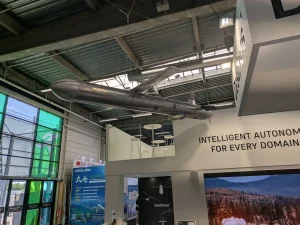
Anduril will supply the Army with a minimum of 1,000 surface-launched Barracuda-500M cruise missiles per year under its three-year agreement. Leidos has committed to 3,000 units over the same period. The containerized approach means missiles are housed in standard shipping containers, deployable on any flat-bed vehicle or cargo ship with no specialized infrastructure.
Why Containerized Weapons
Containerized missile systems offer strategic flexibility that conventional fixed launchers can’t match: they’re concealable aboard civilian vessels, easily transported through commercial logistics networks, and operable by small teams without dedicated support infrastructure. For the U.S. military’s distributed operations concept in the Pacific — where forces must survive and fight from dispersed island positions — these attributes are operationally critical.
The Pentagon also signed a separate agreement with Castelion covering hypersonic munitions in the same initiative, signaling the program extends beyond cruise missiles. DoD officials have framed LCCM as a deliberate shift away from dependence on high-cost single platforms toward a diverse, lower-cost munitions mix.
Sources: DefenseScoop (May 15, 2026); Breaking Defense; Military Times; The War Zone.