ASELSAN Sets Sights on Global Defence Leadership: 272 Export Contracts, $20 Billion Backlog


Turkey’s ASELSAN has outlined an ambitious trajectory for the coming decade. The company’s President and CEO Ahmet Akyol stated the vision plainly at a recent defence industry forum: to become “one of the strongest players in the global defence market and a key element of the regional security architecture.” As of 2025, the numbers behind that claim are difficult to dismiss.
ASELSAN closed the year with $4.5 billion in annual revenue and an order backlog exceeding $20 billion — providing solid visibility into its medium-term workload. In 2025 alone, the company signed 272 export contracts across 58 countries, with a combined value of $2 billion. The workforce stands at more than 14,000, over 10,000 of whom are engineers. In three years, the company added 5,500 new hires and expanded production capacity by 40 percent.
Poland: ASELSAN’s First Major NATO-Market Win
The standout deal from the year is the $410 million electronic warfare contract signed with Poland in December 2025. It represents one of the largest defence contracts between a Turkish company and an EU member state, and its significance extends beyond the financial figure.
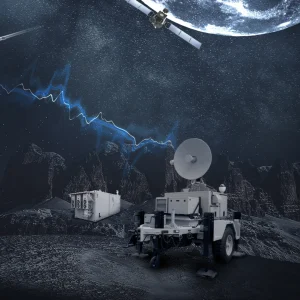
Poland has been one of the alliance’s most aggressive spenders since Russia’s full-scale invasion of Ukraine, pushing its defence budget above 4 percent of GDP. Electronic warfare capabilities, alongside long-range fires and modern radar infrastructure, sit near the top of Warsaw’s modernisation priorities. ASELSAN’s portfolio — which includes systems like KORAL that have seen operational use beyond test ranges — offered a capable and competitively priced option. The contract also marks ASELSAN’s entry into the EU-standard procurement process, which carries implications for future sales across the continent.
Air Defence, Counter-Drone, and Electronic Warfare
Akyol highlighted three product areas as driving the strongest international demand: air defence systems, counter-drone solutions, and electronic warfare. These happen to be three of the fastest-growing procurement segments in global defence right now, and Turkey has fielded combat-proven options in all three.
Domestically, ASELSAN plays a central role in Turkey’s “Steel Dome” layered air and missile defence programme, supplying radar systems, command-and-control architecture, and electronic warfare modules across its short-, medium-, and long-range layers. A number of these components have attracted export inquiries from Gulf and Middle Eastern clients, though no new contracts have been officially announced.
Oğulbey: A $1.5 Billion Bet on Future Capacity
The physical anchor of ASELSAN’s expansion strategy is the Oğulbey Technology Base. Planned across 6.5 million square metres, the campus will house 735,000 square metres of production and R&D facilities at a projected cost of $1.5 billion. When complete, it will represent one of Turkey’s largest single-site defence industrial complexes — and will directly determine how much ASELSAN can actually deliver against a growing international order book.
Five Decades in the Making
Founded in 1975 by the Turkish Armed Forces Foundation to produce communications equipment, ASELSAN has spent the past two decades transforming itself into a full-spectrum defence electronics company. Radars, electronic warfare systems, fire control, optronics, guided weapons, and command-and-control software now fill its catalogue. International analysts note that beyond product quality, ASELSAN’s willingness to offer technology transfer, co-production arrangements, and post-delivery support gives it an edge that larger Western companies rarely match — a factor that often proves decisive for mid-income buyer nations weighing their options.
Sources: Defence Industry Europe, “ASELSAN Becoming Global Defence Player and Pillar of Regional Security Architecture, Says Ahmet Akyol”, June 8-9, 2026 | ASELSAN Official Corporate Communications