Iran’s army and the Revolutionary Guards: what is the difference?

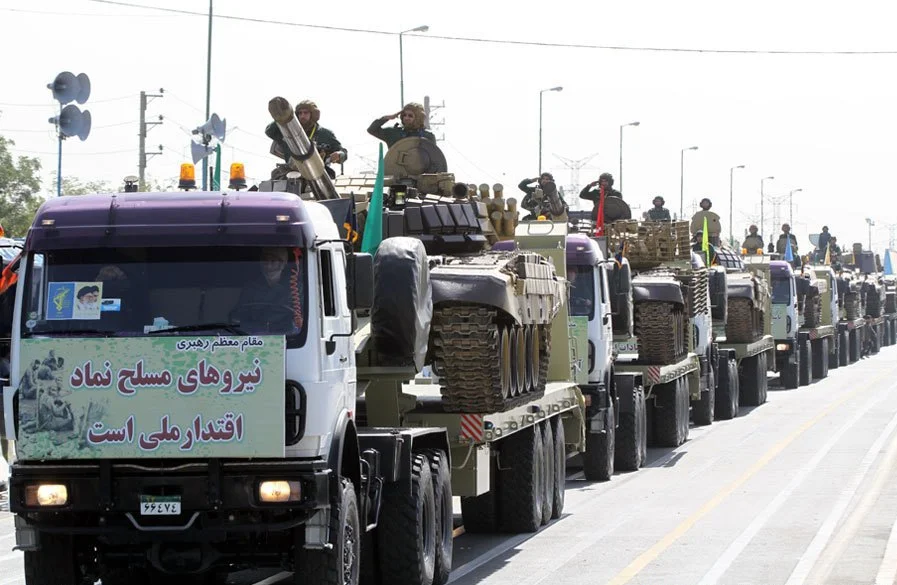
Iran’s constitution assigns national defence to the regular army and protection of the revolution to the Revolutionary Guards. Both answer at the top to the Supreme Leader.
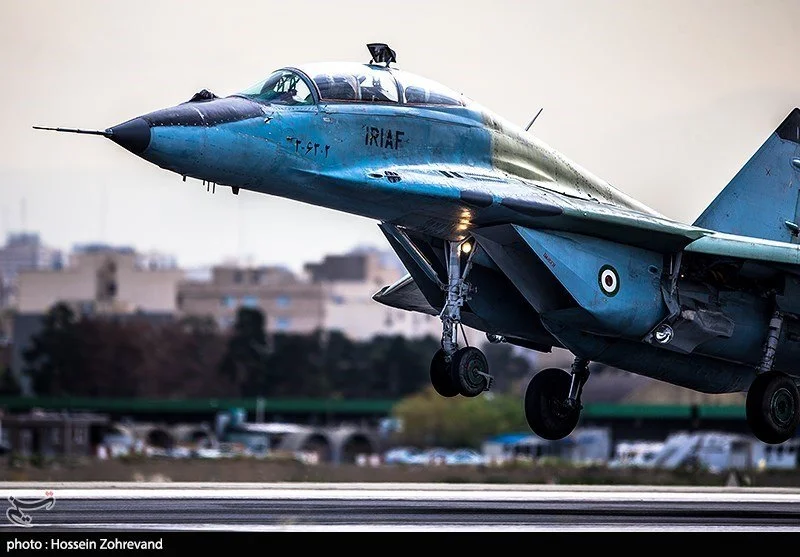
Short answer: The Artesh is Iran’s conventional national army, tasked with protecting the country’s territorial integrity and independence. The Islamic Revolutionary Guard Corps (IRGC, known in Persian as the Sepah) is a separate military and political organisation formed after the 1979 revolution to guard the revolution and its achievements. Ballistic missiles, the Quds Force and the Basij militia all sit with the IRGC.
Why does Iran have two militaries
The Artesh is older than the Islamic Republic: it was inherited from the imperial army of the Shah. After 1979 the new leadership viewed the old officer corps with suspicion. Purges removed thousands of officers, and by the time Iraq attacked in 1980 the army’s readiness had been weakened.
The war then forced the leadership to preserve the army and use it. The same war also accelerated the rise of the Revolutionary Guards as a parallel force loyal to the revolution rather than to the old order.
According to a study by the Combined Strategic Analysis Group (CSAG), the leadership did not disband the army but kept it under control. An ideological-political organisation inside military units provides religious instruction and political supervision. The result is an army strong enough to defend the state but restricted enough that it cannot gain independent political weight.
How the constitution divides the work
Article 143 of Iran’s constitution makes the army responsible for guarding the country’s independence, its territorial integrity and the order of the Islamic Republic. Article 150 provides that the Revolutionary Guards, established in the first days of the revolution, are to continue in their role of guarding the revolution and its achievements. It adds that their duties and areas of responsibility, in relation to the other armed forces, are to be set by law.
The two chains of command meet at the very top. Under Article 110, the Supreme Leader is commander-in-chief of the armed forces, and he appoints both the chief of the general staff and the commander-in-chief of the IRGC. Coordination between the two forces runs through the Armed Forces General Staff.
| Category | Artesh (army) | IRGC (Sepah) |
|---|---|---|
| Core mission | Territorial defence | Protecting the revolution and the system |
| Approximate strength | 420,000 | 190,000 (2024) |
| Branches | Ground, navy, air, air defence | Ground, navy, aerospace, Quds Force, Basij |
| Ballistic missiles | Not under its control | Aerospace Force |
| Sea zone | Gulf of Oman, Caspian | Persian Gulf |
Figures are open-source estimates; current post-war strength is unknown.
How reliable are the troop numbers
CSAG is a group of international officers within US Central Command. Its 2026 studies cite estimates of about 420,000 active personnel for the Artesh and about 190,000 for the IRGC as of 2024. The group notes that its views may not reflect the official position of the US command. Estimates for the Quds Force range from 5,000 to 15,000.
The figures for the Basij are far more scattered. A 2019 report by the US Defense Intelligence Agency estimated around 450,000 active reservists. Saeid Golkar, an academic specialist on the subject, puts total membership at about 1 million. Iranian officials have announced figures as high as 12.6 million. These numbers do not measure the same thing and should not be read as a single total.
Who controls the missiles and drones
This is where the clearest difference in power between the two organisations lies. Open-source assessments agree that Iran’s ballistic missile force belongs to the IRGC Aerospace Force. Operations abroad and ties with proxy forces are the responsibility of the Quds Force, while internal security and mobilisation fall to the Basij. The Artesh has more personnel, yet it runs none of these instruments.
At sea, the Gulf belongs to the Guards
Iran redistributed its naval areas of responsibility in 2007. The IRGC Navy was given the main responsibility for the Persian Gulf, while the regular navy took the Gulf of Oman and the Caspian Sea. The Strait of Hormuz remained an area of interest to both navies.
For outside observers, this matters: the arrangement leaves the most sensitive line of contact with the United States and the Gulf states to the Revolutionary Guards.
What the 2025 and 2026 wars changed
A CSAG assessment dated 30 June 2026 says the 12-day war of June 2025 and the US-Israeli campaign that began on 28 February 2026 did disproportionate damage to the Artesh’s conventional capabilities. Air defences, warships and air bases were hit hard.
The same study states that Supreme Leader Ali Khamenei and many senior commanders were killed in the first hours of the 2026 campaign, and that the weight of decision-making subsequently shifted towards security and military institutions.
These findings come from a military analysis group attached to one side of the war. Iran gives different accounts of its own losses, and it is not yet possible to measure the real post-war situation independently.
Conscription and terrorist designations
The Artesh relies largely on conscripts to fill its ranks. CSAG judges that because the army draws from a broad cross-section of society and is less ideological, the leadership is reluctant to use it in domestic unrest. Terms of service, exemptions and pay change from year to year and need to be checked separately against official sources.
The two forces also differ in legal status abroad. Canada added the IRGC to its list of terrorist entities in 2024. The Council of the European Union, following a political agreement on 29 January 2026, formally placed the IRGC on the EU terrorist list in February 2026. The decision freezes assets and prohibits making funds available to the organisation. The Artesh is not the subject of these listings.
Frequently asked questions
What does Sepah mean?
It is the Persian short name for the Revolutionary Guards. The full title translates as the Islamic Revolutionary Guard Corps.
Which force is larger?
The Artesh, according to open-source estimates. Strategic assets such as ballistic missiles and the Quds Force, however, are with the IRGC.
Is the Basij a separate army?
No. The Basij is a volunteer and reserve militia organisation subordinate to the IRGC.
Do the two forces have the same commander?
Each has its own commander, and both answer to the Supreme Leader as commander-in-chief. Because the command ranks changed repeatedly in 2025 and 2026, this guide does not name current office-holders.
Sources
- Constitution of the Islamic Republic of Iran, Articles 110, 143 and 150 (English translation)
- CSAG, Constrained Shield: Iran's Artesh (30 June 2026)
- CSAG study on the Basij paramilitary force (15 April 2026)
- Public Safety Canada, current list of terrorist entities
- Anadolu Agency on the EU Council listing decision (February 2026)
Related articles
- Why the Strait of Hormuz matters so much to world oil
- How big is Iran's missile and drone arsenal?
- Iran confirms missile expert Mehrdad Akhlaghi as defence minister
Last checked: 28 November 2026. Cover image: Mohammad Sadegh Heydari / CC BY 4.0 / Wikimedia Commons.