Lockheed Martin and US Department of War Sign Framework Deal to Accelerate AIM-260 JATM Production

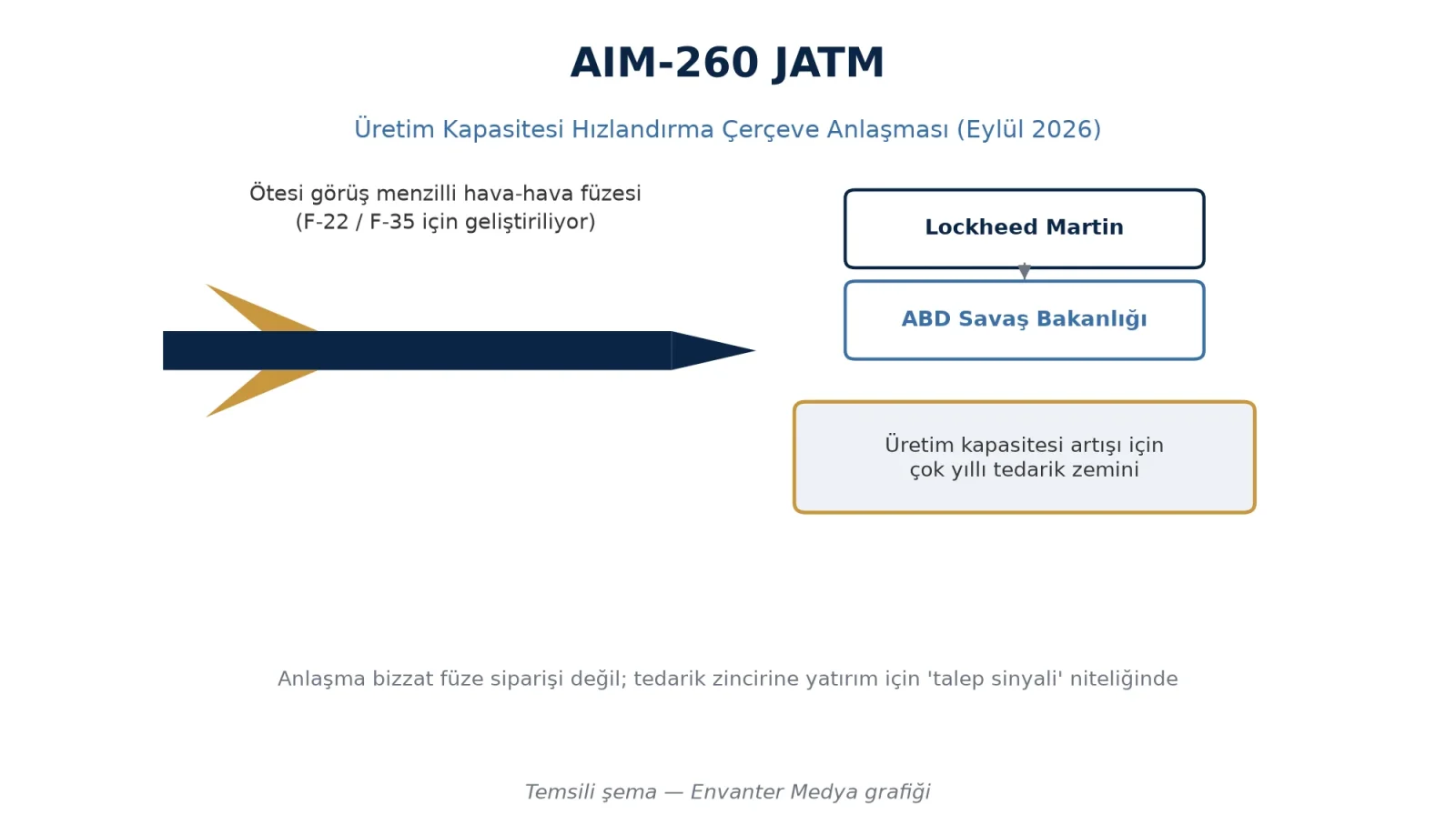
Lockheed Martin and the U.S. Department of War signed a framework agreement on 17 September 2026 aimed at substantially expanding production capacity for the AIM-260 Joint Advanced Tactical Missile (JATM), a next-generation air-to-air weapon. The agreement lays the groundwork for a future Multi-Year Procurement (MYP) contract.
At a Glance
- The framework agreement was signed 17 September 2026 between Lockheed Martin and the Department of War.
- It is not a missile order or contract, but a “demand signal” meant to justify investment in production capacity.
- The goal is to give Lockheed Martin and its suppliers confidence to invest in facilities, workforce and manufacturing efficiency.
- AIM-260 JATM is being developed for the U.S. Air Force and Navy, offering greater range and effectiveness than existing air-to-air weapons.
- Australia recently announced an investment of nearly $736 million to equip the Royal Australian Air Force with JATM.
What the Agreement Covers
Officials were explicit that the agreement itself is not a missile order. Instead, it provides Lockheed Martin and its supply chain with a long-term demand assurance intended to justify investment in additional manufacturing capacity, expanded workforce and production efficiencies. The framework is described as groundwork for a future Multi-Year Procurement contract that has not yet been finalised.
AIM-260 JATM remains in development, with the U.S. Air Force and Navy as its primary customers. Program officials describe it as the most sophisticated air dominance missile in development, intended to deter and defeat current and projected enemy air threats, with increased range and effectiveness compared to existing weapons. Over time, JATM is expected to succeed the AIM-120 AMRAAM family as the backbone of U.S. beyond-visual-range air combat capability.
The programme’s international dimension is also growing: Australia recently announced an investment of nearly $736 million to equip the Royal Australian Air Force with JATM, signalling that a close U.S. ally expects early access to the missile.
Why It Matters Regionally
Preparing AIM-260 for higher-volume production, built around a stated range and performance edge, suggests the technology gap in beyond-visual-range (BVR) air-to-air missiles could widen again over the coming decade. Turkey’s own BVR missile, Gökdoğan, and its short-range counterpart Bozdoğan have so far mainly been benchmarked against the AIM-120 AMRAAM and AIM-9X. A new U.S. capability threshold set by AIM-260 — in range and resistance to electronic warfare — could shift the reference point for Roketsan and TÜBİTAK SAGE’s future missile development roadmap. It also raises the range ambitions that may be revisited for the indigenous BVR weapon eventually integrated on the KAAN national fighter. Within NATO, the pace at which F-35 operators gain access to JATM could also influence how allies plan the modernisation of their existing AMRAAM stockpiles.
FAQ
Is this a direct missile order? No. Officials say it is not a contract or order, but a demand signal for production-capacity investment.
How does AIM-260 differ from AIM-120? Officials describe AIM-260 as offering increased range and effectiveness over existing air-to-air weapons.
Which countries have already shown interest? Australia announced an investment of nearly $736 million to equip the RAAF with JATM.
When might the Multi-Year Procurement contract be signed? No firm date has been announced; the framework agreement is meant to prepare the ground for it.