US Army Picks Six Contractors to Robotize the “Last Tactical Mile”

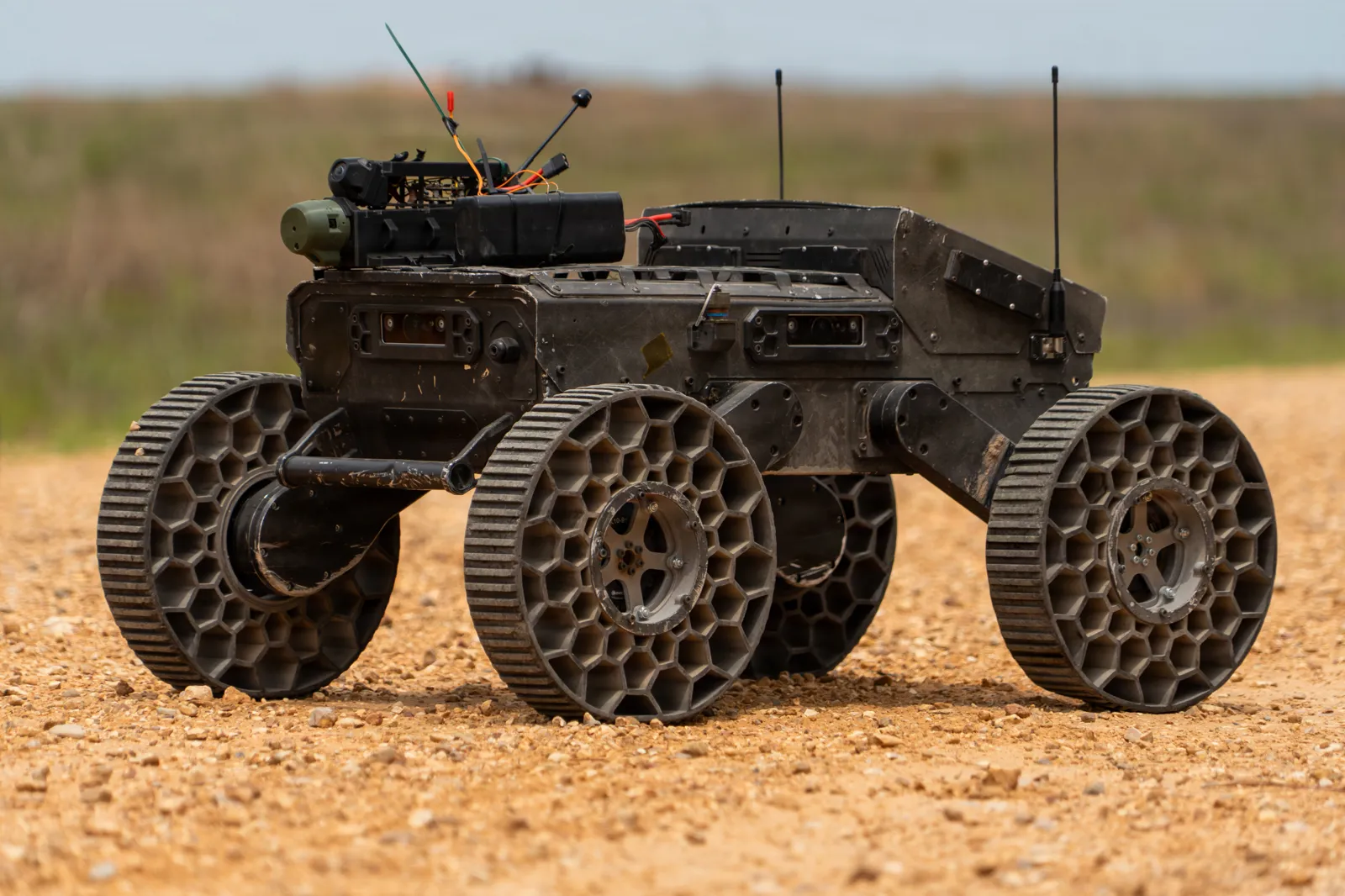
The US Army has selected six vendors to build production-ready prototypes of unmanned ground vehicles (UGVs) meant to cross the most dangerous stretch of the battlefield: the gap between rear support areas and forward-deployed troops, known in Army parlance as the “last tactical mile.” The Infantry Last Tactical Mile (ILTM) initiative has tapped Maren-Go, Overland AI, Forterra, Hendrick’s Motorsports, American Rheinmetall and HDT.
At a Glance
- Six vendors selected under the Army’s ILTM initiative: Maren-Go, Overland AI, Forterra, Hendrick’s Motorsports, American Rheinmetall, and HDT.
- Goal: shift resupply and casualty evacuation (CASEVAC) missions onto autonomous vehicles in the zone where soldier casualties are most likely.
- The push is driven largely by Ukraine’s battlefield experience — Ukrainian ground robots completed more than 9,000 frontline missions in March 2026 alone.
- Ukraine contracted 25,000 UGVs in the first half of 2026, more than double its total for all of 2025.
- The six vendors will deliver production-ready prototypes in the next phase; a final supplier will be chosen after field testing.
Background
The “last tactical mile” describes the final stretch of ground between supported units and the forward line of troops — a zone marked by persistent enemy surveillance and rapid, lethal fires. Enemy drones now track movement almost continuously, while artillery and snipers target any exposed soldier. Under those conditions, manned resupply and casualty evacuation runs have become increasingly costly in lives.
The urgency behind ILTM traces directly to Ukraine. Kyiv’s defense officials reported that unmanned ground robots completed more than 9,000 frontline missions in March 2026 alone, while Ukraine signed contracts for 25,000 UGVs across the first half of the year — more than double the total ordered in all of 2025. The US Army has effectively imported that lesson, standing up a robotics hub and soliciting dual-role platforms that can both resupply forward positions and evacuate wounded soldiers under fire.
Notably, the winning list includes Hendrick’s Motorsports, a name better known from auto racing than defense contracting — a sign the Pentagon is widening its unmanned-systems supplier base beyond the traditional defense industrial base. American Rheinmetall, meanwhile, had already signed a separate contract in early August to build hybrid-power logistics UGVs for the Army, and the ILTM award reinforces that momentum.
Regional Impact
Turkey’s defense industry is already an active player in ground robotics: FNSS and other domestic manufacturers field carrier and reconnaissance UGVs both in Turkish Armed Forces inventories and on export markets. The US Army formalizing the “last tactical mile” concept signals that global demand for this category is set to grow — a dynamic that cuts both ways for Turkish producers, bringing new competition alongside new export opportunities. The intensity of UGV use in Ukraine is also accelerating a doctrinal shift that Turkish planners are tracking closely: a growing share of resupply and evacuation missions moving onto unmanned platforms.
FAQ
What missions does ILTM target?
Resupply (logistics transport) and casualty evacuation (CASEVAC) in the last tactical mile, where the risk to soldiers is highest.
What stage are the selected companies at?
The six vendors are now building production-ready prototypes; a final supplier will be chosen after field trials.
Why has this programme gained urgency now?
The scale of UGV use in Ukraine, and the operational data it has generated, has directly shaped US Army doctrine and procurement priorities.