Best Turkish Defense Systems for Serbia: Geography, Needs and Technical Fit Analysis


Serbia is a landlocked country in the heart of the Balkans with a strong domestic defense industry and a multi-supplier procurement approach. It is bordered by eight neighbors; its defining geographic features are the Pannonian (Vojvodina) plain in the north, mountainous terrain in the south, the Danube and Sava river lines in the center, and the capital Belgrade. The military neutrality declared by parliamentary decision in 2007 steers the country toward national capability and a balanced supply line rather than alliance-based collective defense.
This analysis compiles Serbia’s geography, security environment, defense economics, current inventory and modernization needs strictly from publicly available sources, then evaluates which Turkish defense-industry solutions may be a technical fit for that profile. Because Serbia produces its own artillery, armored vehicles and UAVs, the contribution of foreign solutions is limited in some categories; this is stated honestly throughout the analysis. The aim is not to claim any sale will occur, but to map requirement against solution using open-source data.

Geography and Terrain
At roughly 88,361 km² (including Kosovo), Serbia is a mid-sized country in Southeastern Europe. The terrain begins in the north with the flat, agricultural plains of the Pannonian Basin (Vojvodina); moving south the relief rises and mountainous, forested highlands become dominant. The Danube and Sava rivers form the main water lines in the north, with Belgrade sitting at their confluence. The climate is temperate continental, with warm summers and cold winters.
The country has no sea access, so classic maritime-security needs are limited and defense investment shifts toward land, air, river and border surveillance. The open northern plains suit wheeled and tracked armored vehicles and mobile artillery, while the mountainous south raises the priority of highly mobile platforms, reconnaissance and electro-optical surveillance. River lines require separate planning for crossing control and persistent surveillance.
| Geographic factor | Characteristic | Defense implication |
|---|---|---|
| Northern terrain | Pannonian plain, flat farmland | Suited to wheeled/tracked armor and mobile artillery |
| Southern terrain | Mountainous, forested, rugged | Reconnaissance, electro-optics and mobile systems |
| Rivers | Danube, Sava | Crossing control, surveillance, recce |
| Border | 8 neighboring countries | Long-range ISR and radar surveillance |
| Sea | None (landlocked) | Low need for naval platforms |
Security Environment and Doctrine
Serbia’s defense approach rests on the principle of military neutrality declared by parliamentary decision in 2007. The country is not a NATO member; it maintains limited cooperation with NATO under the Partnership for Peace while also being an EU candidate. This dual position means the country is not part of any alliance’s shared air-defense umbrella, so early warning, airspace surveillance and air defense must be provided by national means.
The doctrine is built on a balanced, multi-vector supply line: Russian-origin systems in the past, and in recent years diversification toward China (air defense and drones) and the West (combat-aircraft discussions with France). This multi-supplier approach reduces single-source dependence but adds complexity in logistics and integration. Hybrid threats — drone incursions, electronic interference, border incidents — feature on the technical agenda as in many European countries. In this environment, counter-drone (C-UAS), electronic warfare, electro-optical surveillance and command-and-control capabilities are technically high-priority. This analysis is limited strictly to the technical and geographic frame and contains no political or geopolitical assessment.
Defense Budget, Inventory and Domestic Industry
According to open sources, the Serbian Armed Forces have around 28,000 active personnel. Defense spending is cited at roughly 2% of GDP; however, exact figures vary by source and the numbers here should be treated as unconfirmed estimates. The country’s most distinctive feature is its strong, well-established domestic defense industry.
The domestic industry, led by Yugoimport SDPR, produces the Nora B-52 self-propelled and towed artillery systems, various rocket and munitions families, the Lazar armored personnel carrier and unmanned aerial vehicles such as the Pegaz and Vrabac. This production base markedly reduces import needs in artillery, armored vehicles and some UAV classes. The inventory also includes Soviet/Russian-legacy platforms and, more recently, Chinese-origin FK-3/HQ-22 air-defense systems and CH-92A-class drones; combat-aircraft (Rafale) procurement with France came onto the agenda in 2024.
| Domain | Current state | Foreign-solution fit |
|---|---|---|
| Artillery | Strong domestic (Nora B-52 etc.) | Low — local counterpart exists |
| Armored vehicles | Domestic (Lazar) + legacy platforms | Low–medium — local production present |
| UAV | Domestic (Pegaz, Vrabac) + China (CH-92A) | Medium — niche in specific classes |
| Air defense | China (FK-3) + legacy systems | Medium — layered structure continues |
| C-UAS / EW | Partial, developing | Medium–high — technical niche open |
| Naval | River elements only | Low — landlocked |
Modernization Needs and Technical Priorities
Serbia’s modernization line advances by selectively adding foreign procurement on top of a strong domestic industrial base. Because military neutrality is preserved, modernization is shaped around national capability building and diversified procurement rather than alliance integration. In artillery and armored vehicles, where domestic production is strong, outward orientation is limited; the technical contribution of foreign solutions therefore concentrates in the advanced-technology niches where local gaps exist.
Within this frame, the standout technical priorities are: (1) radar and command-and-control (C2) integration for airspace awareness; (2) counter-drone (C-UAS) and electronic warfare against hybrid threats; (3) electro-optical systems and specific ISR UAV classes for border and critical-facility surveillance; (4) unifying the existing multi-supplier inventory under a common command-and-control layer. Because artillery, basic armored vehicles and some tactical UAV needs are largely met by domestic production, foreign-solution fit in these areas is low. Since many Turkish systems are designed with NATO/STANAG interfaces, they offer technical compatibility for integration and joint training.
| Priority area | Technical need | Domestic coverage |
|---|---|---|
| C-UAS / counter-drone | Low/slow target detection and neutralization | Partial — niche open |
| Electronic warfare | Radar/comms jamming, protection | Partial |
| Electro-optical / ISR | Border and facility surveillance | Partial — niche in specific classes |
| Command-and-control | Multi-supplier inventory integration | Developing |
| Artillery / armor | Firepower, mobility | High — domestic strong |
Turkish Defense Solutions: Technical Fit
The assessment below summarizes the open-source technical fit of Turkish systems against Serbia’s requirement profile (strong domestic industry, multi-supplier inventory, landlocked geography, hybrid threats). Because Serbia has strong domestic production in artillery, armored vehicles and some UAV classes, the contribution of foreign solutions in those categories is assessed as honestly limited; the technical niche lies mainly in counter-drone, electronic warfare, electro-optics and command-and-control. This is not a procurement recommendation.
| System | Role | Key feature | Assessment |
|---|---|---|---|
| Counter-drone systems (C-UAS) | Low/slow target defense | Detection + soft/hard-kill integration | Strong niche where the local gap is open |
| KORAL / EW systems | Electronic warfare | Radar jamming, protection | High technical value against hybrid threats |
| ASELSAN electro-optics | Border / facility surveillance | Thermal, day-night reconnaissance towers | Suited to long borders and mountainous terrain |
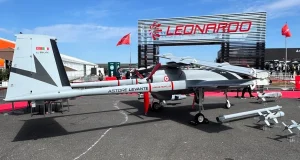
| ANKA | MALE ISR | High altitude, wide coverage, SATCOM | Possible upper-class niche despite local Pegaz |
| Bayraktar TB2 | Tactical ISR | Long endurance, low operating cost | Fit limited by existing local tactical UAV |
| RETINAR / radar | Border / air surveillance | Fixed-mobile radar, tower integration | Valuable for surveillance fed into a C2 layer |
| Command-and-control (C2) | Inventory integration | Multi-source sensor fusion | Technical value for unifying a mixed inventory |
Turkish system – local/foreign counterpart – shared mission
| Turkish system | Local/foreign counterpart | Shared mission area |
|---|---|---|
| Bayraktar TB2 | Pegaz (local) / CH-92A (China) | Tactical ISR — strong local counterpart |
| ANKA | Limited local MALE / CH class | Upper-class MALE ISR |
| ASELSAN C-UAS | Partial local / Western systems | Counter-drone — technical niche open |
| PARS 4×4 | Lazar (local) / Patria | Wheeled armor — local counterpart exists |
Ten-criteria suitability scoring
Scores are an open-source technical assessment on a 1–10 scale, not a precise performance measurement. The “Overall fit” column is honestly kept lower in categories where Serbia has a local counterpart.
| System | Terrain | Climate | Mobility | Maint. | Training | NATO fit | Modular | Versatility | Local overlap | Overall fit |
|---|---|---|---|---|---|---|---|---|---|---|
| Counter-drone (C-UAS) | 8 | 8 | 8 | 7 | 7 | 8 | 8 | 8 | 3 | 8.0 |
| KORAL / EW | 8 | 8 | 7 | 7 | 6 | 7 | 8 | 8 | 4 | 7.6 |
| ASELSAN electro-optics | 9 | 8 | 8 | 8 | 7 | 7 | 8 | 8 | 5 | 7.5 |
| ANKA | 8 | 8 | 8 | 7 | 7 | 8 | 8 | 8 | 5 | 7.2 |
| RETINAR / radar | 8 | 8 | 7 | 7 | 7 | 8 | 8 | 7 | 6 | 7.1 |
| Bayraktar TB2 | 8 | 8 | 9 | 8 | 8 | 8 | 7 | 8 | 3 | 6.3 |
| PARS 4×4 | 8 | 8 | 8 | 7 | 7 | 7 | 8 | 7 | 3 | 6.0 |
In short, the highest technical fit for Serbia lies in the advanced-technology niches where local gaps exist: counter-drone (C-UAS), electronic warfare, electro-optical surveillance and command-and-control integration. In areas with strong domestic production such as artillery, basic armored vehicles and tactical UAVs, the contribution of foreign solutions is low. Because the country is landlocked, naval platforms are a low priority.

Frequently Asked Questions
Is Serbia a NATO member?
No. Serbia is not a NATO member; it declared military neutrality by parliamentary decision in 2007. It maintains limited cooperation with NATO under the Partnership for Peace and is also an EU candidate.
Does Serbia have sea access?
No. Serbia is landlocked, with only the Danube and Sava river lines. Its maritime-security needs are therefore limited and its defense priority shifts to land, air and border surveillance.
How strong is Serbia’s domestic defense industry?
According to open sources, it is strong. Led by Yugoimport SDPR, it produces Nora artillery systems, rocket and munitions families, the Lazar armored vehicle and UAVs such as the Pegaz and Vrabac, which reduces import needs in categories like artillery and armored vehicles.
Which Turkish solutions fit Serbia’s needs better?
The advanced-technology niches where domestic production is weaker: counter-drone (C-UAS), electronic warfare, electro-optical surveillance, specific ISR UAV classes and command-and-control integration stand out technically. Fit in artillery and basic armored vehicles is low.
Is this analysis a sales forecast?
No. The content is purely an open-source technical assessment; it makes no claim about any sale, agreement or negotiation and uses no sales language.
Why does Serbia have a multi-supplier inventory?
Under its military-neutrality doctrine, the country has acquired systems from different suppliers to reduce single-source dependence; the inventory combines domestic production, Russian legacy, Chinese-origin systems and discussions with the West.
Are Turkish systems NATO-standard compatible?
Many Turkish defense systems are designed with NATO/STANAG interfaces, which is a technical advantage for integration and joint training within a multi-supplier inventory.
Why are naval platforms a low priority for Serbia?
Because the country has no coastline, classic maritime security and naval-platform needs are limited; only limited river-oriented elements apply, and investment goes to the land and air axes.
Bottom Line
Serbia’s open-source requirement profile is shaped around two core facts: a strong, well-established domestic defense industry and a multi-supplier inventory. These two elements limit the technical contribution of foreign solutions in artillery, basic armored vehicles and some tactical UAV classes. The highest technical fit of Turkish systems becomes clear in the advanced-technology niches where local gaps exist: counter-drone (C-UAS), electronic warfare, electro-optical/ISR surveillance, and a command-and-control layer to unify a multi-source inventory. Because the country is landlocked, naval systems fall outside scope.
This assessment contains no forecast about any sale, agreement or political decision; it maps requirement against solution using publicly available technical data only, honestly accounting for the strength of the domestic industry. Later files in this series will examine Serbia’s counter-drone, electronic-warfare, UAV and electro-optical needs in dedicated depth.
Related Analysis
Sources
- Serbian Ministry of Defence — Serbian Armed Forces official information (mod.gov.rs)
- IISS The Military Balance — Serbia section (force structure and inventory)
- SIPRI — military expenditure and arms transfers database
- Yugoimport SDPR — domestic systems product information (Nora, Lazar, Pegaz, Vrabac)
- European Union — Serbia enlargement reports
- Manufacturer technical brochures (Baykar, ASELSAN, ROKETSAN, FNSS, Otokar, Nurol Makina)
- NATO — Partnership for Peace and Serbia cooperation documents