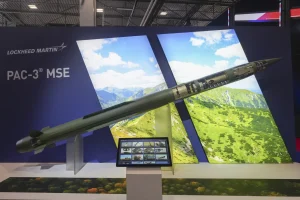






Pentagon signs seven-year deals to triple PAC-3 and quadruple THAAD interceptor output

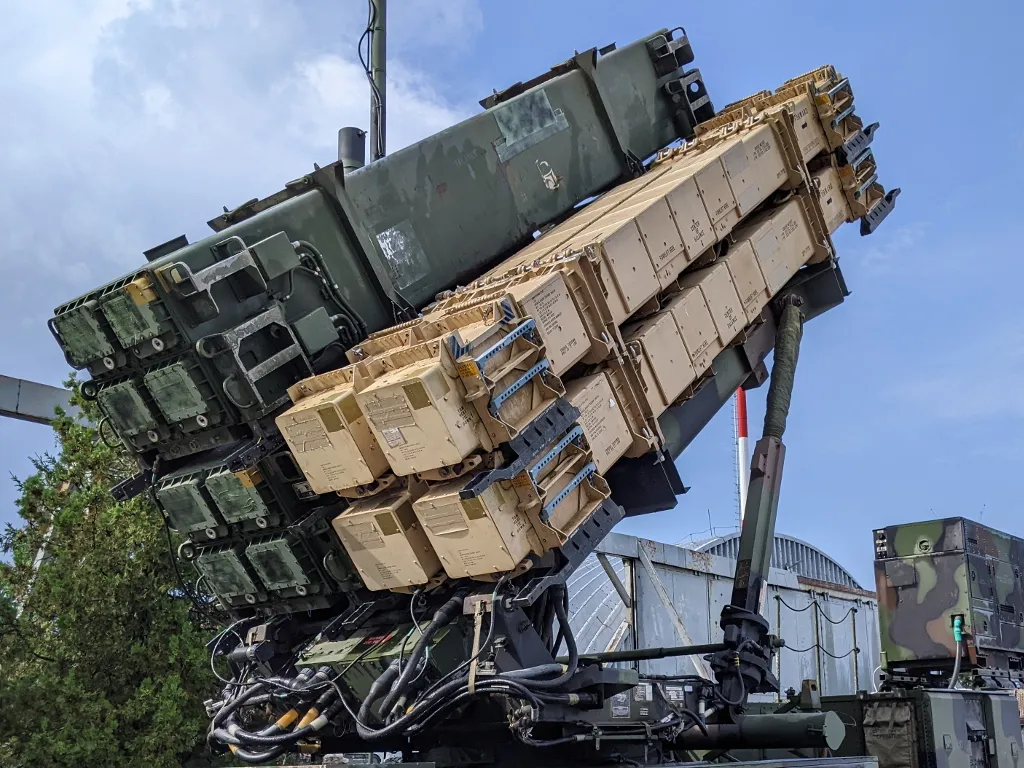
The US Department of War has signed two framework agreements aimed at permanently enlarging interceptor production capacity for air and missile defence. Announced on 31 August 2026, the seven-year deals were struck with General Dynamics Ordnance and Tactical Systems and with Lockheed Martin.
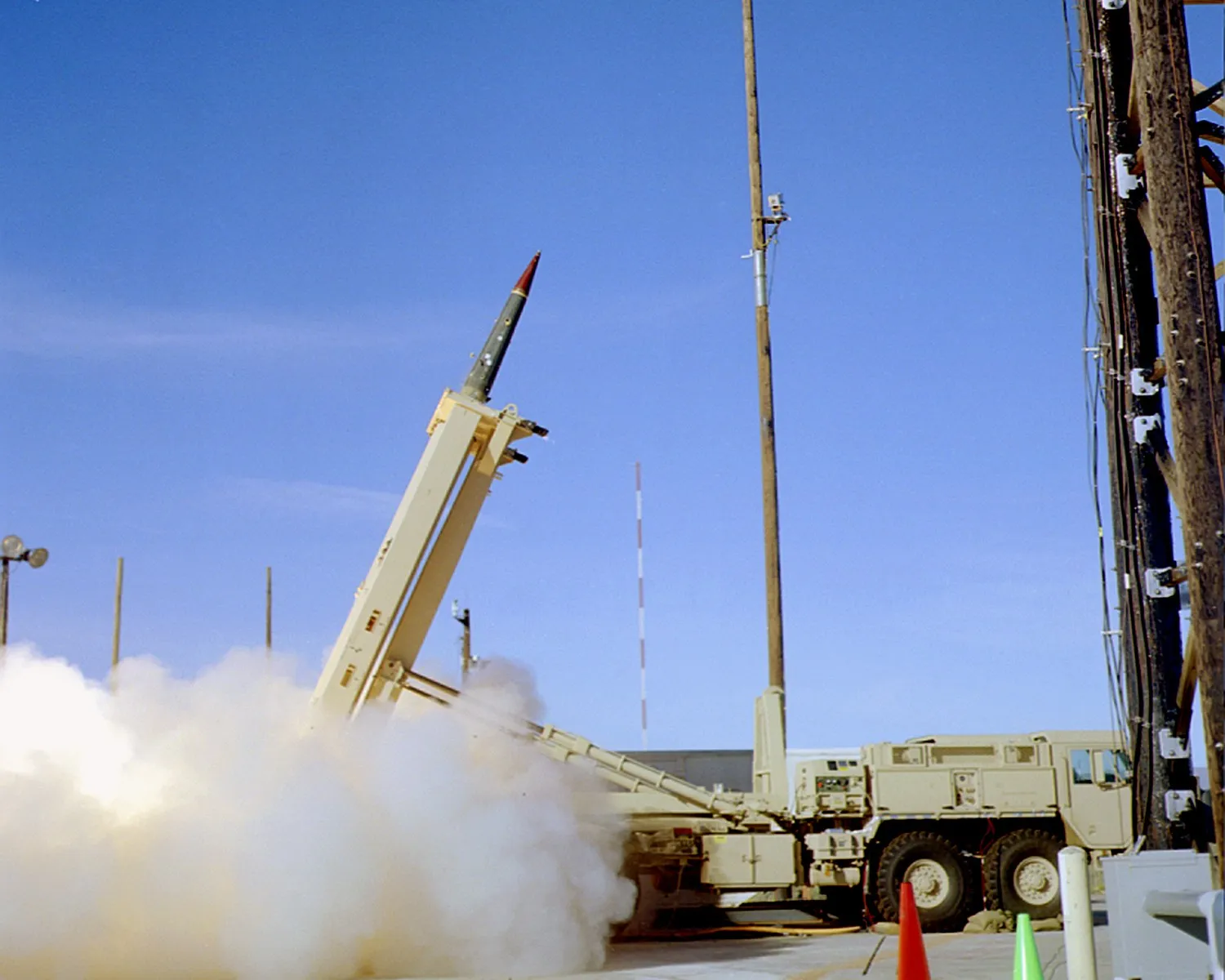
The targets are stated plainly: triple current production of the PAC-3 MSE, the newest interceptor in the Patriot family, and quadruple output of the THAAD interceptor.
Subcomponents, not final assembly
The agreements do not cover whole-round assembly. They target the specific subcomponents that create bottlenecks. The announcement names motor cases, seeker housings, midsections and shroud deployment systems.
That detail is the substance of the story. In a modern interceptor, production tempo is rarely set by the final assembly line. It is set by long-lead items — forged motor cases, precision optical windows, solid-propellant composites. Without capacity growth in those parts, accelerating final assembly achieves very little.
“Cutting red tape”
Michael P. Duffey, speaking for the department, framed the rationale directly: “General Dynamics and Lockheed Martin have answered the call. We are cutting red tape, shortening timelines, and rapidly scaling our manufacturing capacity.”
Both deals are structured as multiyear procurement framework agreements. Under that model the government guarantees minimum annual quantities, which lets a contractor plan workforce, raw material and facility investment without being hostage to single-year budget uncertainty.
The department also noted that funding remains subject to annual congressional appropriations. The framework establishes intent and capacity commitment; actual payments still clear year by year.
Why now
The decision follows three years of rapid drawdown in US interceptor stocks. Patriot rounds transferred to Ukraine, along with engagements against ballistic missile and drone threats across the Red Sea and the wider Middle East, have driven consumption far above what peacetime production planning assumed.
The fourfold THAAD target is the more remarkable of the two. THAAD is a comparatively narrow system, designed to intercept ballistic missiles outside the atmosphere and during terminal re-entry, and its production numbers have historically been kept modest relative to the Patriot family. Quadrupling that line suggests Washington now treats the medium-range ballistic threat as persistent rather than exceptional.
These are not the department’s first moves this year either. Earlier agreements with L3Harris covered propulsion — solid rocket motors — for both PAC-3 MSE and THAAD. The new deals complete the same supply chain on the airframe and seeker side.
What tripling actually requires
Tripling or quadrupling interceptor output is easy to announce and hard to execute. Production cycles from order to delivery typically run beyond two years, and most of that time sits in subcomponent supply rather than assembly.
The effect is therefore delayed. Agreements signed now imply visible stock recovery from 2028 onwards. The seven-year term is calibrated to exactly that reality: facility investment, workforce training and qualified-supplier certification cannot be financed on annual contracts.
There is a cost dimension as well. The best-documented benefit of multiyear procurement is unit price reduction. Guaranteed volume allows bulk raw material purchasing, uninterrupted line operation and fixed costs spread across more units. Previous US multiyear munitions programmes have reported double-digit percentage savings per unit.
Implications for NATO — and for Ankara
The expansion has direct consequences for NATO’s integrated air and missile defence. Patriot is the backbone system across much of the alliance, in service with Germany, the Netherlands, Spain, Greece, Poland and Romania. Shorter interceptor lead times give European batteries room to build magazine depth.
PAC-3 MSE also has a wide export base beyond NATO, including Japan, South Korea, Qatar and the United Arab Emirates. THAAD’s user group is smaller, with Saudi Arabia and the UAE among the states that have procured the system. Line congestion had been stretching delivery schedules for these export orders; added capacity should ease that.
Turkey reads the development from a different position. It is not a Patriot operator, pursuing long-range air defence through the Siper programme and medium-to-low altitude coverage through the Hisar family. But a global expansion in interceptor manufacturing tightens competition for the same inputs — solid rocket motor components, seeker detectors, high-strength composites — and shifts pricing in export markets. For Turkish producers working to localise precisely those items, that competitive pressure is the more relevant consequence.
Sources
- US Department of War press release, 31 August 2026 — agreement structure, production targets, subcomponent list and the Duffey quotation. Official primary source.
- Defence Industry Europe and EDR Magazine, 1 September 2026 — details on the seven-year multiyear procurement framework.
- Defense Daily, 1 September 2026 — scope of General Dynamics’ subcomponent work.