US Approves $294M Aircraft Defense Sale to Netherlands: 16 Infrared Countermeasures, 38 Radar Warning Receivers Set for Delivery

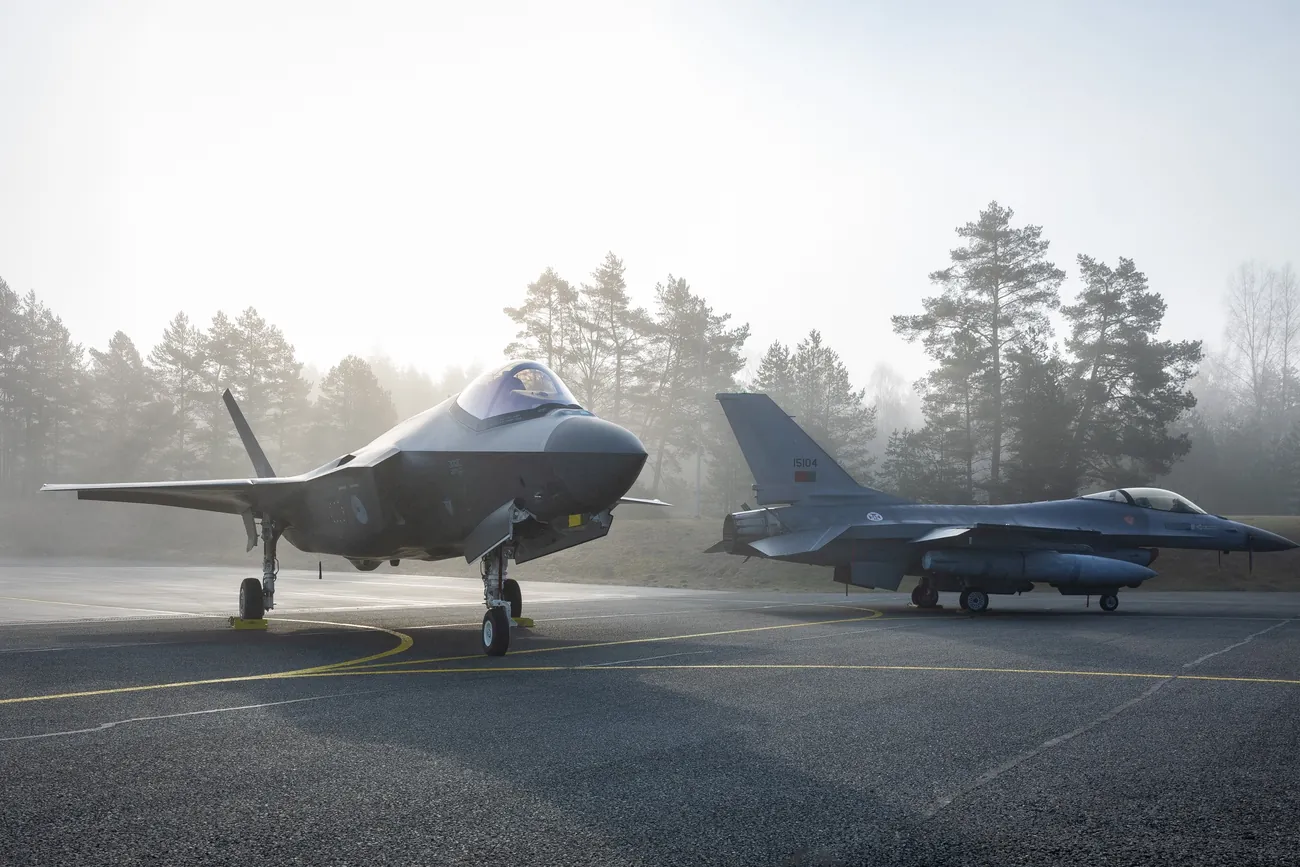
The US State Department has approved a possible Foreign Military Sale to the Netherlands worth an estimated $294 million, covering infrared countermeasure systems and radar warning equipment for crewed aircraft. The package was notified to Congress through the Defense Security Cooperation Agency (DSCA), the standard first step before any such sale can proceed toward a formal contract.
At the core of the package are 16 OT-228/U Common Infrared Countermeasure (CIRCM) systems and 38 AN/APR-39E(V)2 radar warning receivers. The notification also includes technical assistance, engineering support, training, transportation and logistics support tied to the equipment.
The two systems serve distinct but complementary roles. CIRCM is designed to defend aircraft against heat-seeking missiles by disrupting their infrared tracking, while the AN/APR-39E(V)2 alerts flight crews when their aircraft has been detected by radar, giving pilots time to react to the threat.
Northrop Grumman’s facility in Rolling Meadows, Illinois, is named as the principal contractor for the sale. According to the DSCA notification, implementation of the sale will not require the assignment of additional US government or contractor representatives to the Netherlands, suggesting the work can be absorbed within existing support arrangements.
The approval, reported by The Defense Post on October 21, 2026, fits into a broader pattern of recent Dutch defense procurement. The Netherlands had already expanded its CITADEL air defense program with Kongsberg in a deal worth roughly $155 million.
Around the same period, the Netherlands signed a letter of intent with Sweden for the Saab-built GlobalEye airborne early warning aircraft, and separately reached a framework agreement with Saab for Barracuda mobile camouflage systems. Taken together, these moves point to a Dutch effort to strengthen air defense and electronic warfare capability across several fronts at once, rather than through a single program.
Measured against those other deals, the newly approved package is notably larger: at roughly $294 million, it is close to double the value of the CITADEL expansion. That gap suggests crewed-aircraft survivability equipment has taken a comparatively large share of the Netherlands’ 2026 defense spending on air power.
It is worth noting that a DSCA notification does not constitute a finalized contract. It marks the point at which the US government formally informs Congress of a possible sale; final terms, delivery schedules and exact quantities can still be adjusted before a contract is signed, and a formal congressional review period must pass first.
As a NATO member, the Netherlands continues to build capability in step with the alliance’s broader focus on collective air defense and electronic warfare resilience. Investments of this kind in infrared countermeasures and radar warning systems are generally aimed at improving the survivability of crewed aircraft platforms against increasingly sophisticated air defense systems.
CIRCM, developed by Northrop Grumman, is a laser-based infrared countermeasure technology already fielded by the US Army and several NATO allies. The system activates automatically when missile-approach sensors detect an incoming threat, working to defeat the heat-seeking guidance of an attacking missile.
The AN/APR-39E(V)2 radar warning receiver, for its part, detects radar emissions directed at an aircraft and provides visual and audible alerts to the crew. This gives pilots the information needed to select an appropriate evasive maneuver or countermeasure depending on the type and bearing of the threat.
Neither the DSCA notification nor the reporting on it specifies which aircraft type in the Dutch inventory will carry the new equipment. Several aircraft types operated by the Netherlands could plausibly be fitted with this class of defensive system, but no specific platform has been confirmed.
With this latest approval, Dutch defense acquisition activity has shown a clear uptick through 2026. The CITADEL expansion, the GlobalEye letter of intent, the Barracuda framework agreement, and now the CIRCM and radar warning receiver package together suggest the Netherlands is pursuing simultaneous upgrades across air defense and electronic warfare rather than treating them as separate tracks.
Packages of this kind, cleared through the US Foreign Military Sales process, are typically understood as part of a buyer country’s effort to modernize existing inventory against a shifting threat environment. The Dutch move aligns with a broader pattern among NATO members on the alliance’s northern and eastern flanks to reinforce the electronic warfare resilience of their air forces.
Sources
– The Defense Post, “US Approves $294M Aircraft Defense Systems Sale to Netherlands,” by Giulia Bernacchi, October 21, 2026, https://thedefensepost.com/2026/10/21/us-aircraft-defense-sale-netherlands/ — Primary source for the sale’s scope, system details, contractor information and surrounding context.