France and UAE Sign Rafale F5 Agreement on 20 October: Programme Set to Formally Launch by Year-End

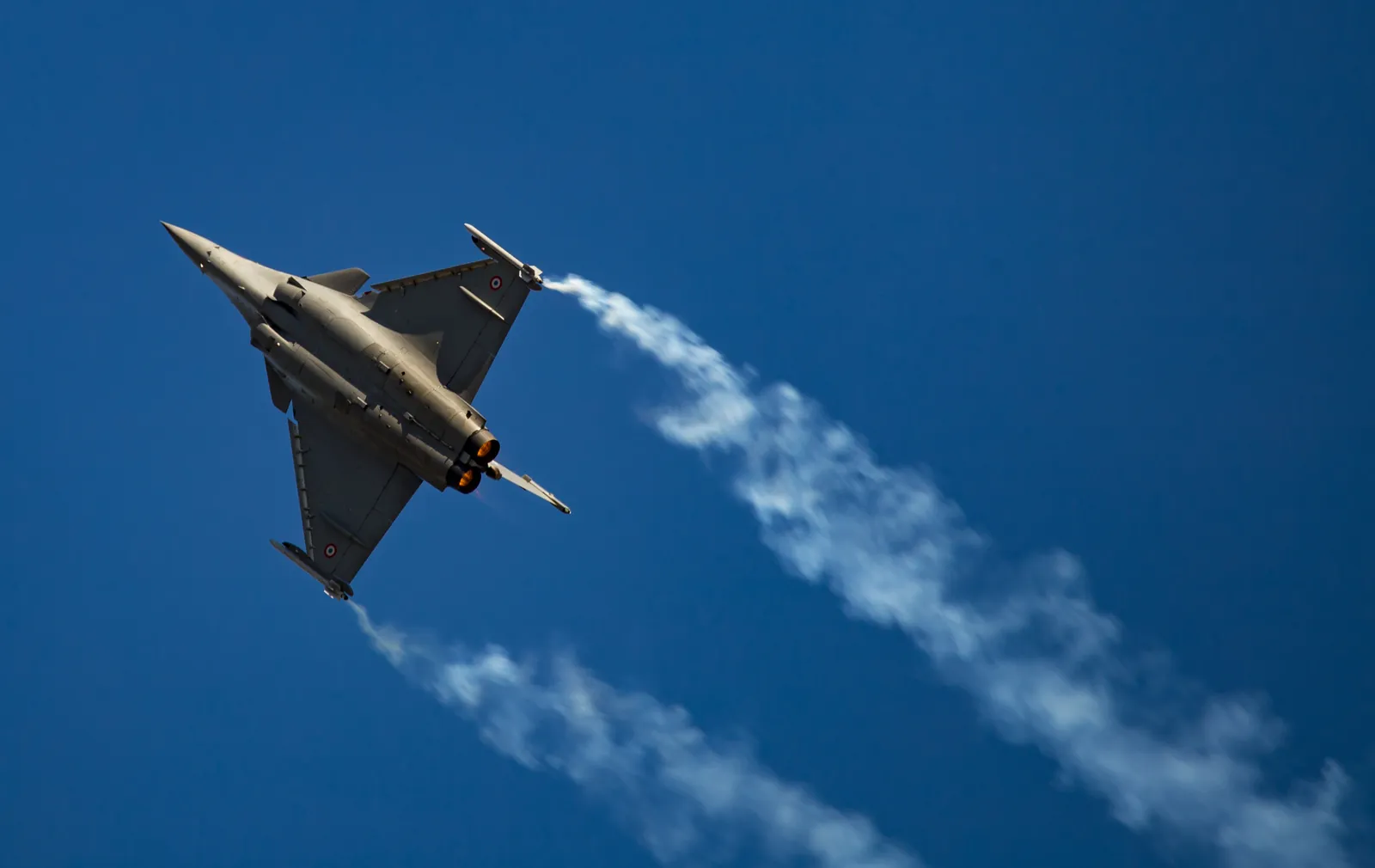
France and the United Arab Emirates (UAE) have signed an intergovernmental agreement aimed at deepening cooperation on the development of the next-generation Rafale F5 fighter jet. The signing took place on 20 October, during a visit by French President Emmanuel Macron to Abu Dhabi.
The agreement follows the revival of talks that had been interrupted over disagreements on financing terms and access to sensitive technologies. Alongside the main document, the two governments signed a Strategic Defence Partnership Framework and a separate implementation agreement covering industrial cooperation.
The UAE had previously been considering a contribution of up to roughly 3.5 billion euros toward the programme, but that commitment stalled amid disputes over funding conditions and technology transfer. Whether this new signing restores that contribution at the same scale remains unconfirmed. The talks appear to be moving in that direction, but no firm, publicly disclosed financial commitment has accompanied this agreement so far.
The Rafale F5 standard is being designed to bring improvements over the current F4 configuration in collaborative combat capability, sensors, electronic warfare systems and communications. One of its defining features is that it is being built to operate alongside a future unmanned combat air system (UCAS), with an architecture meant to support data-sharing and joint targeting between the crewed aircraft and unmanned platforms.
France’s General Directorate for Armament (DGA) had already awarded preparatory contracts for the F5 standard to Dassault Aviation, MBDA, Safran and Thales. Those four companies are positioned as the programme’s main contractors, covering the airframe, weapons, engine, and sensor and communication systems respectively. The official development programme is expected to launch at the end of 2026, and this intergovernmental framework removes one source of uncertainty around that timeline.
The UAE’s relationship with the Rafale is not new. In 2021 the country signed a deal to purchase 80 Rafale jets in the F4 configuration, a contract that stands among the largest export deals in French defence industry history. The framework signed this week will help determine how that existing fleet relationship evolves toward the F5 standard, and how deeply the UAE will be involved in the development process itself.
Reporting on the agreement notes that no details have yet been disclosed on the economic terms, the industrial workshare between French and Emirati firms, or the precise level of UAE participation in development work. For that reason, the signed texts appear to function as a framework rather than a finalised commercial package, with concrete figures and commitments likely to emerge in the coming months.
From Paris’s perspective, bringing in a Gulf partner to help fund the F5 standard also reflects a broader effort to spread the programme’s development cost beyond France’s own defence budget, at a time when requirements for the new standard keep expanding. For Abu Dhabi, a deeper industrial role would mark a shift from simply operating the aircraft, as it has since 2021, toward participating more directly in shaping a future version of it.
The Rafale F5 is being positioned as a bridging step in France’s transition toward next-generation combat architectures, ahead of the longer-term Future Combat Air System effort. Pursuing this programme jointly with a regional partner like the UAE also aligns with France’s broader effort to sustain its defence-industrial presence in the Gulf. At a time when several manufacturers compete for fighter contracts in the region, this new framework between Paris and Abu Dhabi marks a step that broadens the scope of their bilateral defence relationship, even as many of its operational and financial specifics remain to be clarified.
Sources
- Infodefensa, “Francia y Emiratos refuerzan su alianza de defensa con un acuerdo sobre el Rafale F5 de nueva generación”, Ángel Luis de Santos, 22 October 2026. https://www.infodefensa.com/texto-diario/mostrar/6061498/ (Primary source for the agreement’s content, parties involved and programme timeline.)