Baykar’s KEMANKEŞ 2: A Ground-Launched Mini Cruise Missile with 150 km Reach
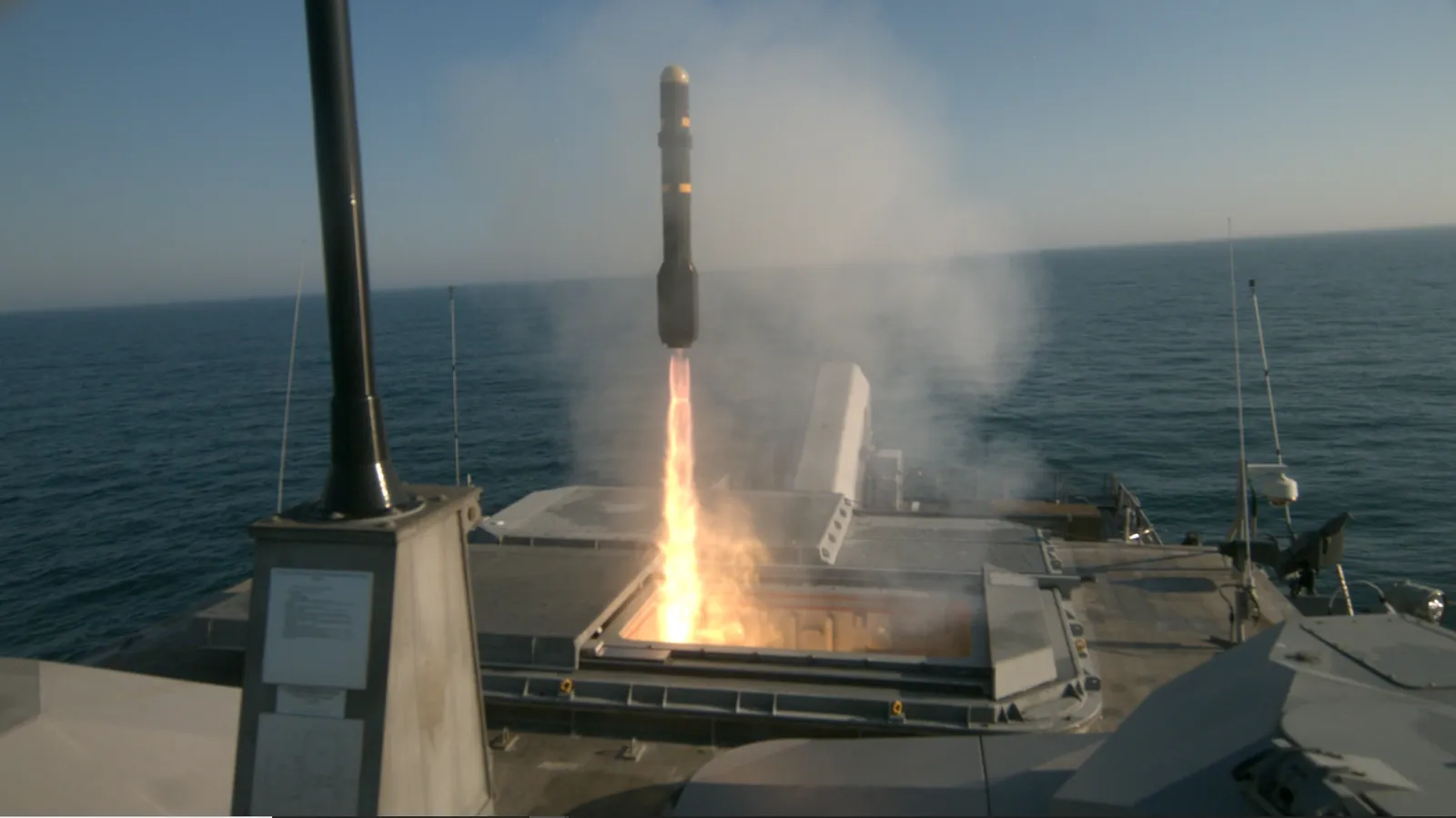
Where KEMANKEŞ 1 is optimized for air-launch from Baykar’s drone fleet, KEMANKEŞ 2 adds a crucial dimension: the ability to launch from the ground on pickup trucks or mobile platforms. At 150 km range with a 20-kg payload, it brings strategic precision-strike capability to ground forces without any aircraft in the equation.
| Specification | Value |
|---|---|
| Max Takeoff Weight | 75 kg |
| Payload | 20 kg |
| Endurance | 30 minutes |
| Max Speed | 160 KIAS |
| Cruise Speed | 130 KIAS |
| Operational Range | 150 km |
| Communication Range | 80+ km |
| Service Ceiling | 10,000 ft |
| Engine | Jet engine |
| Launch Method | RATO or vehicle-based mobile launch |
| Wingspan | 1.35 m |
| Length | 2.47 m |
| Anti-Jamming | Built-in anti-jamming system |
| Guidance | AI EO or GNSS terminal guidance |
Ground Launch Changes the Equation
KEMANKEŞ 2’s Rocket-Assisted Takeoff (RATO) capability means a light truck carries a 150-km precision strike option without airport infrastructure, airspace deconfliction, or drone support. In dispersed force operations — the kind that increasingly characterize conflicts in contested terrain — this allows battalion and brigade-level commanders to strike rear-area targets independently. The target need not be visible; it needs to be within 150 km and in the missile’s growing target library.
Heavier Payload, Harder Targets
The jump from KEMANKEŞ 1’s 10-kg payload to KEMANKEŞ 2’s 20 kg doubles available warhead mass. This matters against hardened targets: command-and-control nodes, logistics hubs, fuel and ammunition storage facilities, and radar installations. The same AI-guided precision that defines the series applies here, but the delivered kinetic energy is substantially higher, expanding the target set the system can reliably defeat.
Anti-Jamming: A Resilience Guarantee
KEMANKEŞ 2 integrates a built-in anti-jamming system — a direct response to lessons learned watching adversaries disrupt GPS-guided munitions in contested electromagnetic environments. The system combines GPS with EO terminal guidance, switching between them based on jamming environment. An adversary that successfully jams the GPS link still faces an optically-guided missile completing its terminal approach with AI-assisted target recognition.
The Bigger Picture
KEMANKEŞ 2 completes a strike ecosystem: Baykar’s drones handle ISR and target designation; KEMANKEŞ handles the kinetic delivery from distances that keep platforms safe. Combined with air-launched KEMANKEŞ 1, the package gives operators a layered standoff strike architecture that covers ranges from 100 to 150 km across multiple launch domains. For customers already operating TB2 or AKINCI, adding KEMANKEŞ 2 to ground units creates a joint fires capability with minimal additional training or logistics overhead.