
F-35C completes first deck trials aboard a Ford-class carrier

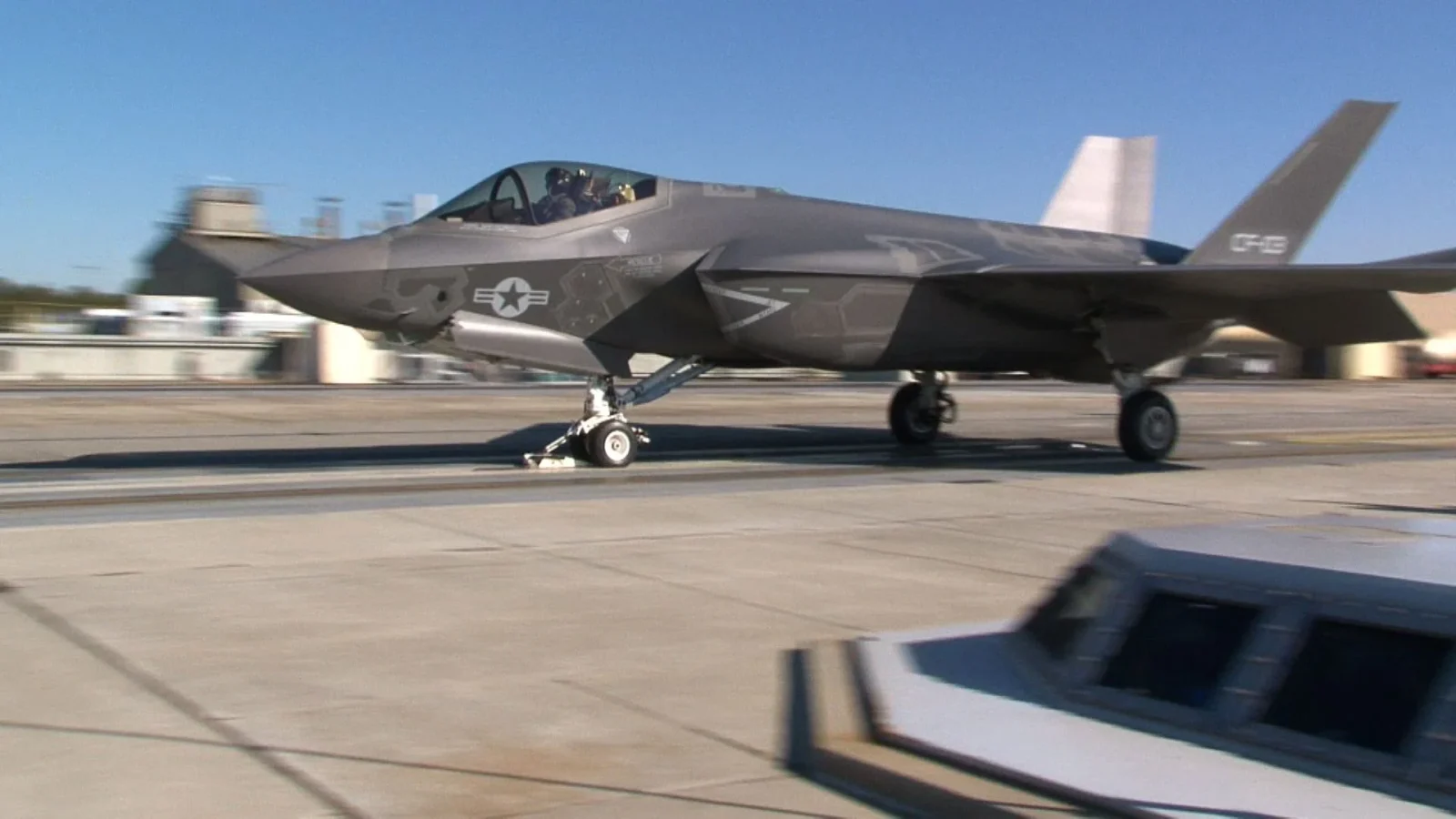
An F-35C Lightning II assigned to Air Test and Evaluation Squadron 23 (VX-23), the “Salty Dogs,” completed the first recovery and catapult launch of the type aboard the still-under-construction Ford-class carrier USS John F. Kennedy (CVN-79) on October 13 and 14. Lockheed Martin confirmed the milestone in a press release published on November 19.
The jet landed aboard the carrier in the Western Atlantic on October 13 and launched again the next day using the ship’s Electromagnetic Aircraft Launch System (EMALS). According to Lockheed Martin, it marked the first time an F-35C has landed on and launched from a Ford-class carrier. The trials were carried out with support from the F-35 Integrated Test Force, based at Naval Air Warfare Center Aircraft Division (NAWCAD) at Patuxent River.
The F-35C is the Navy’s carrier variant of the Lightning II family, built with larger wings and a reinforced undercarriage for catapult launches and arrested landings. Until now, the type had only operated from the older Nimitz-class carriers; no Ford-class ship had a flight deck infrastructure certified for F-35C operations.
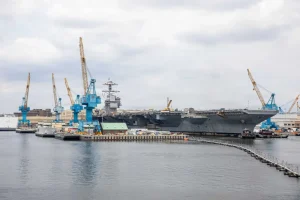
The lead ship of the class, USS Gerald R. Ford (CVN-78), entered service without the full infrastructure needed to support F-35C operations, with those upgrades deferred to a later modernization period. Ford’s air wing today still flies F/A-18E/F Super Hornets. Kennedy, the second Ford-class ship, left Newport News Shipbuilding on September 29 and moved to Norfolk after receiving preliminary technical acceptance; the Navy’s fleet delivery date for the carrier is set for spring 2027.
Lockheed Martin said the purpose of the trials, part of Kennedy’s Aircraft Compatibility Testing (ACT) program, was to confirm the ship could safely recover and launch the F-35C. The data collected is intended to lay the groundwork for eventually certifying Ford itself for the same mission.
Why it matters for a mixed carrier fleet
Until Kennedy’s trials, F-35C operations were confined to Nimitz-class carriers such as USS Carl Vinson and USS Abraham Lincoln, ships based on a design dating back to the 1970s. The Ford class was built around newer EMALS and Advanced Arresting Gear (AAG) systems, but whether those systems would work reliably with the F-35C’s specific weight, approach speed and data-link requirements still had to be proven at sea. Kennedy’s trials were the first step in that verification.
The Navy’s shipbuilding plan calls for four more Ford-class carriers, each intended to be delivered already compatible with the F-35C. Because the lead ship will only gain that capability later, the fleet will operate with a mixed carrier air wing structure well into the 2030s, with some decks flying fifth-generation F-35Cs while others remain dependent on fourth-generation Super Hornets.
Beyond launch and recovery, the VX-23 team also assessed data exchange between the F-35C, the ship’s radar, landing aids and flight deck crew during the trials — information the Navy says is needed to catch integration issues before Kennedy’s delivery.
Sources
- Lockheed Martin, “F-35C Lightning II Completes First Launch and Recovery Aboard a Gerald R. Ford-Class Aircraft Carrier,” November 19, 2026 — news.lockheedmartin.com (primary source; dates, unit, scope)
- USNI News, “F-35C Lands on New Navy Aircraft Carrier Class for First Time,” October 14, 2026 — news.usni.org (unit confirmation)
- The Aviationist, “F-35C Lands for the First Time on a Ford-Class Aircraft Carrier,” October 14, 2026 — theaviationist.com (photo credit, technical context)