
Who owns Roketsan: is it a state-owned company?

Roketsan is primarily owned by the Turkish Armed Forces Foundation (TSKGV), which directly holds 55% of the shares. ASELSAN and MKE each own 15%, VakıfBank holds 10%, and 5% is held by other shareholders. Thus, the company is under the control of a state fund and is not publicly traded.
| Roketsan Ownership — Briefly | |
|---|---|
| Full Name | Roketsan Roket Sanayii ve Ticaret A.Ş. |
| Main Owner | TSKGV Foundation — 55% |
| Other Shareholders | ASELSAN 15%, MKE 15%, VakıfBank 10% |
| Organizational Form | Joint Stock Company (A.Ş.), TSKGV Foundation structure |
| Listing | Not traded on the Istanbul Stock Exchange (BIST) |
| Headquarters | Ankara (Elmadağ; Lalahan, Kırıkkale) |
| CEO | Murad Ikindji |
| Founded | June 14, 1988, Ankara |
Who owns Roketsan?
The direct answer to the question is: the controlling stake of Roketsan — 55% of the shares — belongs to the Turkish Armed Forces Foundation (Turkish: Türk Silahlı Kuvvetlerini Güçlendirme Vakfı, abbreviated as TSKGV). This is a state foundation established to support and finance the national defense industry.
The remaining shares are distributed among other enterprises and structures closely related to Turkey’s defense sector: 15% belongs to the company ASELSAN and the state concern MKE (Mechanical and Chemical Industry), 10% to the state VakıfBank, and another 5% is held by other stakeholders. It is important to understand that ASELSAN itself, the largest Turkish manufacturer of electronics for defense, is also controlled by the TSKGV fund. This means that actual control over Roketsan is concentrated in the hands of the fund even more than the figure of 55% suggests.
The full legal name of the company is Roketsan Roket Sanayii ve Ticaret A.Ş., which means joint-stock company (Turkish: Anonim Şirket, A.Ş.). However, its shares are not traded on the open market: it is a closed structure that falls within the perimeter of the TSKGV fund.
Another important nuance concerns the very concept of “owner.” When it comes to Roketsan, the word “owner” does not refer to an individual or a business group, but to a national defense institution. No individual has a personal stake in the company — all capital belongs to the fund, state enterprises, and the state bank. Therefore, it is more accurate to speak not of an “owner” in the everyday sense, but of a system of state control distributed among several interconnected structures.
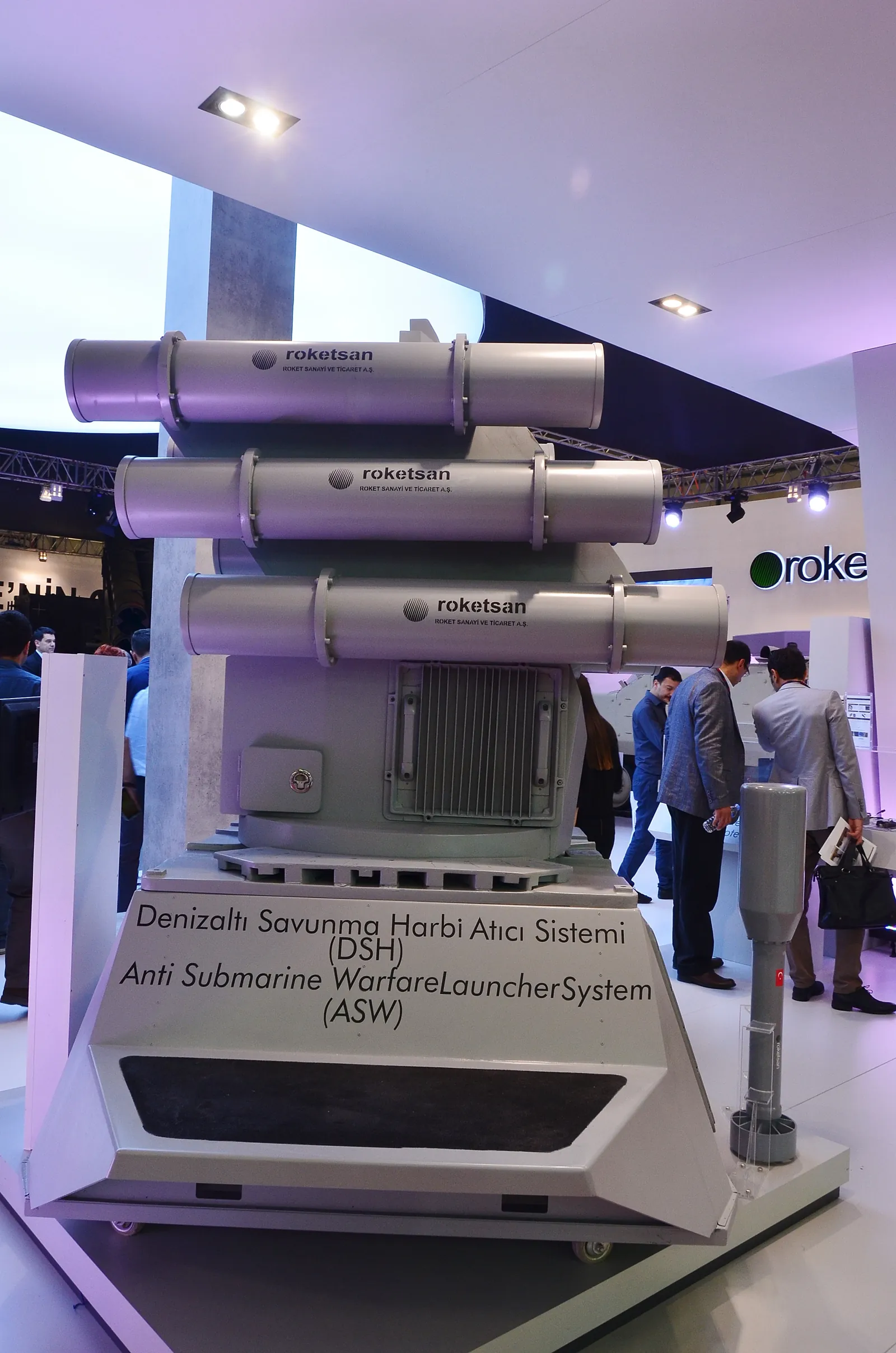
How the ownership structure is arranged
The ownership structure of Roketsan reflects a model characteristic of strategic defense enterprises in Turkey: key stakes are concentrated in the state fund and related organizations, with no private or foreign portfolio investors in the capital. Below is the distribution of shares among shareholders.
Note that the three largest participants — TSKGV, ASELSAN, and MKE — together hold 85% of the capital, and all of them belong to the state or state-controlled sector. This configuration ensures complete national control over the development and production of missile armaments — an area that Turkey considers critically important for its security and sovereignty.
Each of the shareholders plays its role in this scheme. The TSKGV fund acts as the main owner and guarantor that the enterprise operates in the interests of national defense. ASELSAN, responsible for electronics, radar, and guidance systems, provides the technological link between the “brains” and the “body” of the weapon. MKE contributes from the perspective of traditional ammunition, propellants, and explosives production. Finally, the involvement of VakıfBank adds financial leverage from the state banking sector. As a result, all key competencies necessary for a closed-loop missile development cycle are gathered within a single shareholder structure.
The absence of private funds, foreign conglomerates, or stock market investors from the list of shareholders is not a coincidence but a deliberate policy. It is fundamentally important for the state that control over the manufacturer of ballistic missiles, air defense systems, and precision munitions cannot be transferred to external players under any circumstances. Therefore, the shares remain secured with the fund and its associated structures, and their sale on the open market is not provided for.
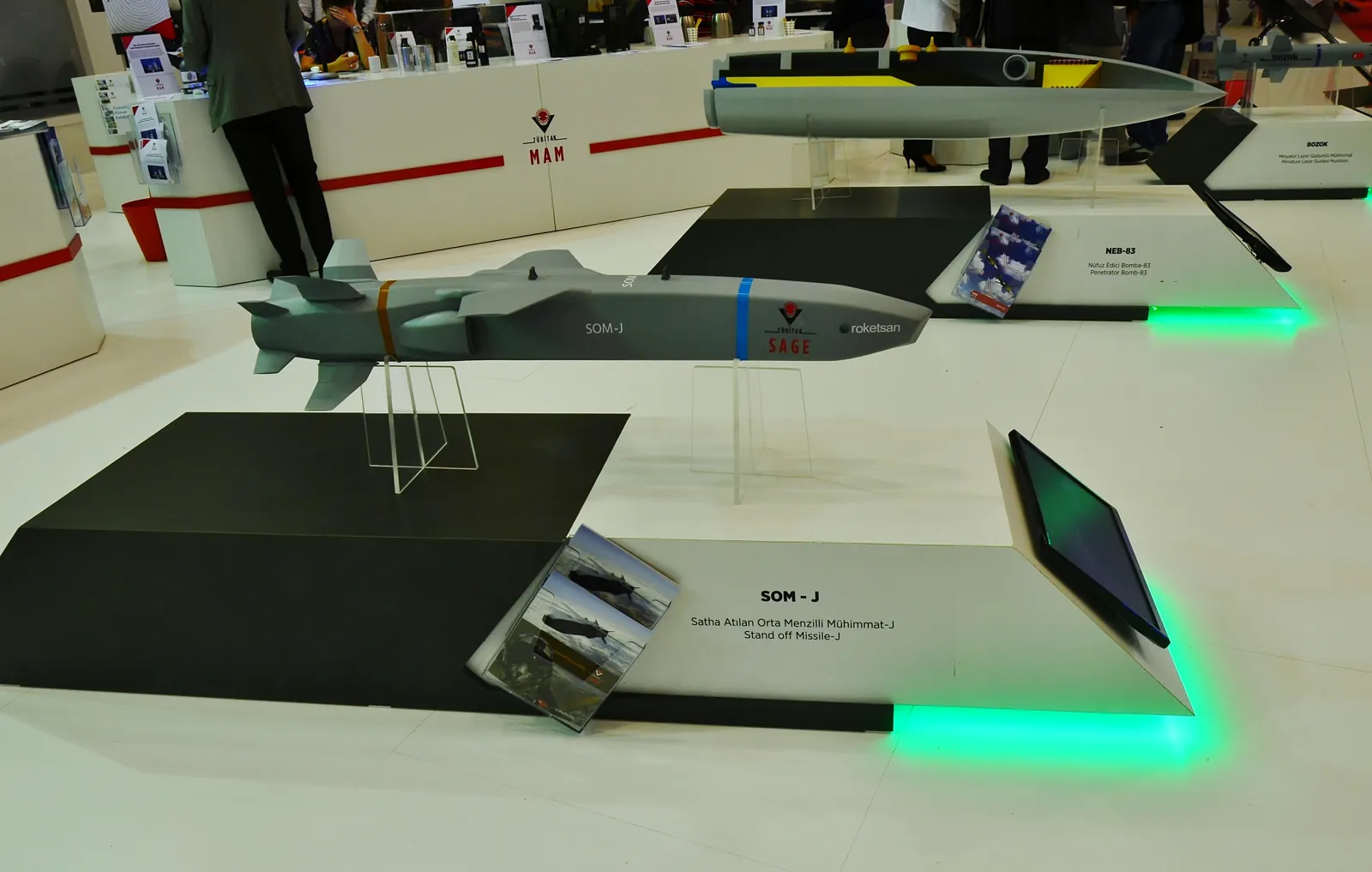
What is TSKGV?
TSKGV is the Turkish Armed Forces Foundation. It was established to accumulate funds for the development of the national defense industry and to reduce the country’s dependence on imported weapons. The foundation acts as a parent structure for a number of leading Turkish defense companies.
In addition to the controlling stake in Roketsan, the fund also owns significant shares in other systemically important enterprises in the industry — in particular, in ASELSAN (electronics, radars, communication systems) and in several related companies. Thanks to this model, the profits of defense enterprises and strategic decisions remain within the national framework, rather than going to private or foreign investors.
The fund was established back in the late 1980s — during the same period when the foundations of the modern Turkish defense industry were being laid. The establishment of Roketsan in 1988 by the decision of the Executive Committee of the defense industry and the subsequent transfer of control to the TSKGV fund were parts of a unified strategy: Turkey aimed to develop its own missile development school and stop relying on foreign supplies. Over the decades, this model has proven its viability — today, Roketsan is among the systemically important enterprises in the industry and ranks 71st in the Defense News Top 100 for 2025.
It is the affiliation with the TSKGV fund that defines Roketsan’s special status: it is neither a government ministry nor a classic state-owned enterprise, but also not a private company in the conventional sense. Formally, it is a joint-stock company controlled by a state fund — a hybrid form widely used in the Turkish defense industry.
This model gives the company a dual advantage. On one hand, it maintains the flexibility of a commercial enterprise: it can independently conclude export contracts, conduct research and development, hire engineers, and build production chains. On the other hand, strategic control remains with the state through the fund, which ensures that the company’s activities align with national security interests. The profits generated by Roketsan are largely reinvested in the industry — for new developments and capacity expansion, rather than being distributed among external shareholders.
A clear example of this logic is the new production facilities opened in April 2026 in Lalahane (rocket integration) and Kırıkkale (rocket fuel production). The total investment exceeded $1 billion, and the capacity for rocket production is planned to increase by about five times. Such large-scale investments in a strategic sector are largely possible precisely because of the ownership structure, where decisions are made based on long-term national priorities rather than the expectations of stock market investors regarding short-term returns.
Is it a state-owned company and is it traded on the stock exchange?
In essence, Roketsan is a state-controlled company: the overwhelming majority of its capital belongs to the TSKGV fund and state-related enterprises (ASELSAN, MKE, VakıfBank). There are no private or foreign strategic investors in its capital.
As for the stock exchange, the answer is clear: Roketsan is not listed on the Istanbul Stock Exchange (Borsa İstanbul, BIST) and is not a public company. It is impossible to purchase its shares on the open market — they are not freely traded. This distinguishes Roketsan from some other Turkish defense enterprises: for example, ASELSAN shares are traded on the exchange, although control over it is also retained by the TSKGV fund. In other words, there is no equality between the concepts of “state-owned” and “traded on the stock exchange”: a company can be state-owned and still have a stock listing, while Roketsan represents the opposite case — state control without public share trading.
The reason for such closed ownership is related to the nature of the products. Missile weapons, ballistic systems, and air defense systems fall into the most sensitive categories. The state is interested in keeping the ownership structure of such an enterprise stable, and in not disclosing information about orders, technologies, and financial flows to the extent required for public companies. Closed ownership allows for maintaining confidentiality and not being dependent on market conditions when making strategic decisions.
It is worth adding that all of the company’s revenue is generated from the sale of defense products. By the end of 2025, the turnover, according to CEO Murat İkincji, exceeded 2 billion dollars, and the total order portfolio, taking into account new contracts, reached approximately 10 billion dollars. However, these figures do not turn the company into a public joint-stock company: it remains a closed structure within the fund. The financial results of individual transactions and the exact terms of contracts are not officially disclosed.
The distribution of shares is based on the official data regarding the ownership structure of Roketsan. The information on turnover for 2025 is based on statements from the company’s management and will be clarified after the publication of the audited annual report. Specific terms of contracts that are not officially confirmed are indicated with the phrase “not disclosed officially”.
Frequently Asked Questions
Who owns Roketsan?
The controlling stake (55%) belongs to the Turkish Armed Forces Foundation (TSKGV). The remaining shares are distributed among ASELSAN (15%), MKE (15%), VakıfBank (10%), and other holders (5%). The company is controlled by the state fund.
Is it a state-owned company?
Yes, in essence, Roketsan is a state-controlled company. The majority of its capital is owned by the TSKGV fund and state-related enterprises — ASELSAN, MKE, and VakıfBank. There are no private or foreign strategic investors in its capital.
Can you buy Roketsan shares on the stock exchange?
No. Roketsan is not traded on the Istanbul Stock Exchange (BIST) and is not a public company. Its shares are not publicly traded, so it is impossible to purchase them on the open market.
What is TSKGV?
TSKGV is the Turkish Armed Forces Foundation. A state fund established to finance and develop the national defense industry. It serves as the parent structure for Roketsan, ASELSAN, and several other defense companies.
What is ASELSAN’s share in Roketsan?
ASELSAN owns 15% of the shares in Roketsan. Moreover, ASELSAN itself is also controlled by the TSKGV fund, so the actual control of the fund over Roketsan is even higher than the direct share of 55% indicates.
Is Roketsan a private company?
Formally, it is a joint-stock company (A.Ş.), but it is neither a private nor a public company in the conventional sense. It is a closed structure controlled by the state fund TSKGV, and its shares are not traded on the open market.
Sources
- Official website of Roketsan — roketsan.com.tr
- TSKGV Fund — tskgv.org.tr
- Defense News Top 100 (2025)
- Anadolu Agency (AA), Daily Sabah