What Is Missile Defense? Stopping the Unstoppable

# What Is Missile Defense? Stopping the Unstoppable
Quick answer: Missile defense is the system of radars and interceptor missiles designed to destroy incoming enemy missiles — ballistic, cruise, hypersonic, or rocket — before they hit their targets. It’s like trying to shoot a bullet with another bullet, except both bullets are bigger, faster, and smarter.
Why Missile Defense Is So Hard
To stop a ballistic missile, you must:
- Detect something the size of a refrigerator at 1,000+ km
- Track it as it moves at Mach 7–24
- Predict where it will be in seconds
- Launch an interceptor that can also go that fast
- Hit it with centimeter-level accuracy at hypersonic closing speeds
- Do it all in the 5–30 minutes total flight time
Each step costs millions of dollars and decades of R&D. This is why only a few countries have credible missile defense.
The Three Phases of Ballistic Missile Flight
Defenders can shoot at three different points:
| Phase | Where | Time | Difficulty |
|---|---|---|---|
| Boost | Right after launch | 1–5 min | Easy to see (rocket plume), but you must be very close to the launch site |
| Midcourse | In space, coasting | 5–25 min | Long time window, but in space; needs space-capable interceptors |
| Terminal | Falling on target | 30 sec–2 min | Last chance; defender must already have interceptor ready |
Modern systems try to defend in multiple phases.
Major Missile Defense Systems
USA
- GMD (Ground-based Midcourse Defense) — only US system for ICBMs; 44 interceptors in Alaska/California
- Aegis BMD — ship-launched SM-3 missiles, also Aegis Ashore in Romania/Poland
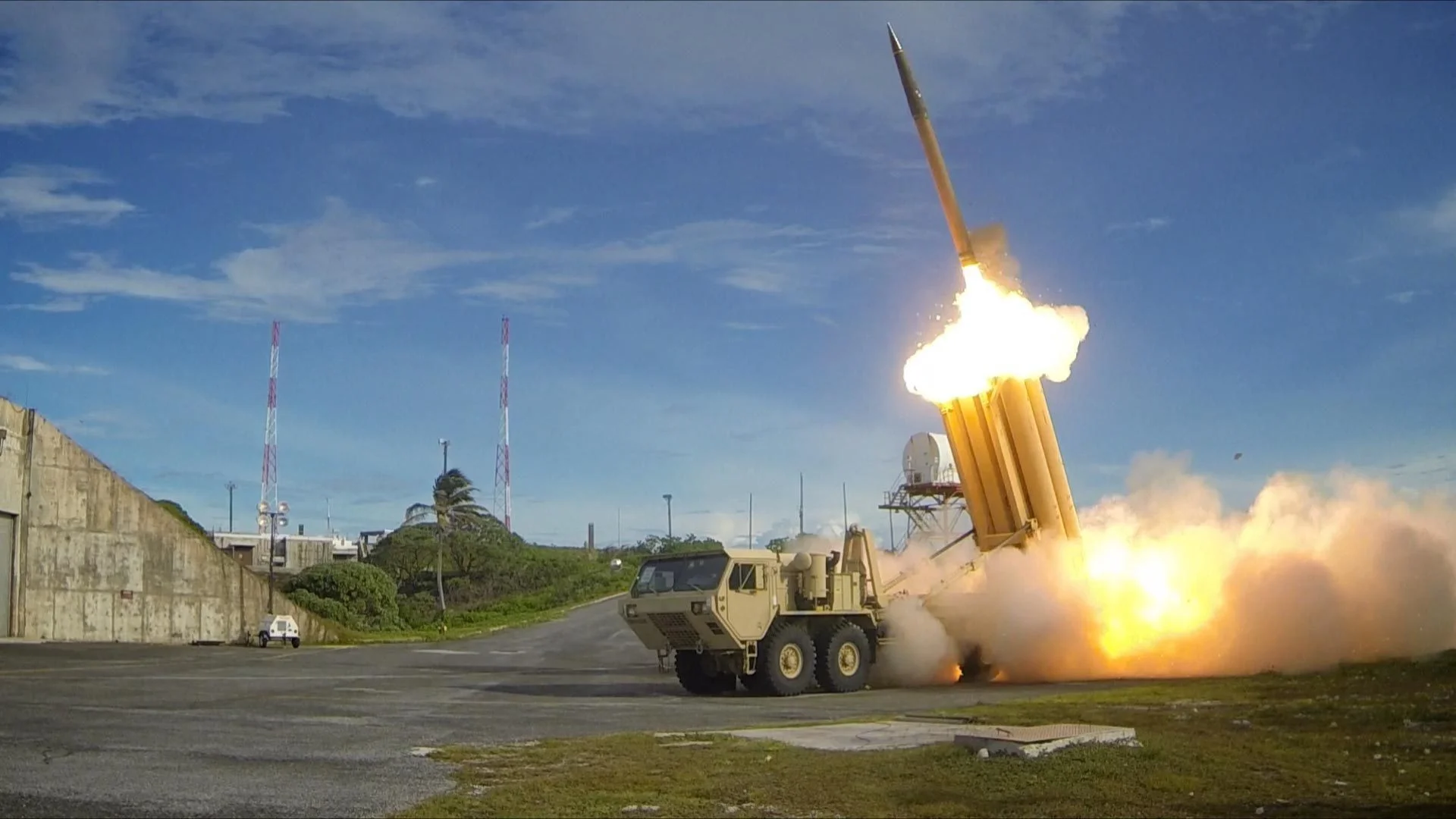
- THAAD — Terminal-phase, exo-atmospheric interceptor
- Patriot PAC-3 — Terminal interceptor for SRBMs
Israel
- Arrow-2 — terminal phase
- Arrow-3 — exo-atmospheric midcourse
- David’s Sling — medium range
- Iron Dome — rocket/short-range mortar interceptor
Russia
- S-400 / S-500 — long range
- A-135 / A-235 — Moscow ABM system
- Nudol — anti-satellite/anti-ballistic
China
- HQ-19 — anti-ballistic missile
- HQ-29 — anti-ICBM (developmental)
- Midcourse defense tests since 2010
NATO Europe
- Aster-30 Block 2 BMD (SAMP/T NG)
- Aegis Ashore in Poland and Romania
Türkiye — Steel Dome (Çelik Kubbe)
- SİPER — long-range
- HISAR family — short/medium
- GÖKBERK — laser-based defense
How Iron Dome Works (Famous Example)
Iron Dome is Israel’s short-range missile defense against unguided rockets (Qassam, Katyusha). It became world-famous after 2011.
- 1. Radar (EL/M-2084) detects rocket launch
- 2. Computer predicts impact point in 1–2 seconds
- 3. If impact will hit populated/important area → launch interceptor (Tamir missile)
- 4. If impact will be in empty field → don’t waste an interceptor
- 5. Tamir intercepts and explodes with fragmentation warhead
This selective interception keeps cost manageable.
Effectiveness: ~85–90% against threats it engages. Cost: $50,000 per Tamir vs. $300 per Qassam — economically the attacker still wins.
How GMD (USA) Works (vs ICBMs)
- 1. DSP / SBIRS satellites detect ICBM launch (heat plume)
- 2. Sea-based and ground radars (UEWR, SBX) track
- 3. Aegis or GMD command decides
- 4. GBI interceptor launches from Alaska or California
- 5. Kill Vehicle separates in space
- 6. Hits warhead with kinetic energy (no explosive)
Test record: ~50% success rate in scripted tests. Real-world untested.
What Missile Defense Cannot (Currently) Stop
- Hypersonic glide vehicles (HGVs) — too fast, maneuvering, wrong altitude band
- Mass salvos — a few interceptors vs many missiles = saturation
- MIRV warheads — one missile carrying 10 warheads
- Submarine-launched ballistic missiles (SLBMs) — short warning time
- Decoys and penetration aids — confuse interceptors in midcourse
This is why even with the world’s best defenses, you can’t reliably stop a full nuclear exchange.
The Famous “Bullet vs Bullet” Comparison
Many people say missile defense is like “hitting a bullet with a bullet at supersonic speed.” This is approximately accurate:
- An ICBM warhead moves at Mach 20 (24,000 km/h)
- An interceptor must arrive at a known point in space within milliseconds
- Position accuracy required: ~5 cm at 100+ km
- Closing speed: Mach 30+ (combined)
Each interception is a small miracle of physics.
Saturation Attack — The Defender’s Nightmare
If an attacker fires 30 missiles in a salvo and a defender has only 20 interceptors, 10 missiles will hit. Russia and China both design their nuclear forces around this idea — overwhelm defenses with sheer numbers.
This is also why MIRV warheads exist — one missile = 10 warheads = 10× the cost for defenders.
Recent Major Engagements
- Saudi Arabia (2018+) — Patriot interceptions of Houthi missiles
- Israel (2023+) — Iron Dome / David’s Sling / Arrow against Hamas, Hezbollah, Iran
- April 2024 — Iran-Israel — Israel’s multi-layer defense + allied interceptors (US, UK, French jets) defeated ~99% of a salvo of 100+ ballistic missiles and 170+ drones
- October 2024 — Iran-Israel — Larger Iranian attack, mixed results
- 2022+ Ukraine — Patriot intercepted Kinzhal hypersonic missiles claimed Mach 10
These show modern multi-layer defense works against many but not all threats.
A Kid-Friendly Analogy
Imagine someone throws a tennis ball at you from across a field. You have a baseball glove and a pitching machine that you can aim.
Now imagine the tennis ball is fired from a rocket at Mach 15. You only have 30 seconds. You must aim your pitching machine to fire a baseball that intercepts the tennis ball in mid-air.
That’s missile defense. Hard? Yes. But increasingly possible with modern radar, computers, and missiles.
The Hypersonic Challenge
Hypersonic glide vehicles fly at altitudes too high for SAMs but too low for exo-atmospheric interceptors. They also maneuver. Current missile defense cannot reliably engage them.
The solutions in development:
- Glide Phase Interceptor (GPI) — USA
- S-500 Prometheus — Russia
- HQ-29 / HQ-19 — China
- Space-based sensors — see hypersonic threats from above
The Strategic Stability Debate
Missile defense isn’t just technical — it’s geopolitical:
- If one side has perfect missile defense, they might “feel safe enough to launch first”
- This destabilizes deterrence
- Russia/China see US missile defense in Europe as a threat
- USA sees Russian/Chinese ABM as the same
This is why missile defense has been one of the most controversial arms control issues for decades.
Image Suggestions
- 1. Featured: Iron Dome interceptor in flight
- 2. Ballistic missile phases diagram (boost → midcourse → terminal)
- 3. THAAD launch
- 4. Bullet-vs-bullet artist concept
- 5. Israeli multi-layer Iron Dome + David’s Sling + Arrow chart
Related Articles
- What is a ballistic missile?
- What is an ICBM?
- What is the Iron Dome?
- What is hypersonic glide vehicle?
- What is the S-400?