Fighter Jet Generations — 1st to 6th Gen Explained

# Fighter Jet Generations — 1st to 6th Gen Explained
Quick answer: Fighter jets are sorted into “generations” based on technology — engines, weapons, radar, stealth, and electronics. We’ve gone from 1st-gen jets in WWII to 5th-gen stealth fighters today, with 6th-gen AI-assisted fighters in development. Each jump usually means a complete change in how air combat works.
The 6 Generations at a Glance
| Generation | Years | Key Tech | Examples |
|---|---|---|---|
| 1st | 1945–55 | Pure jet engine, guns only | Me 262, F-86, MiG-15 |
| 2nd | 1955–60 | Afterburner, early missiles, supersonic | F-104, MiG-19, MiG-21 |
| 3rd | 1960–70 | Multi-role, BVR missiles, look-down radar | F-4 Phantom, MiG-23, Mirage III |
| 4th | 1970–90 | Fly-by-wire, agile maneuver, advanced electronics | F-15, F-16, F/A-18, MiG-29, Su-27, Mirage 2000 |
| 4.5th | 1990–2010 | AESA radar, datalinks, some stealth shaping | Eurofighter, Rafale, Su-35, JF-17, Gripen E, F-15EX |
| 5th | 2005–now | Stealth, AESA, internal weapons, sensor fusion | F-22, F-35, J-20, Su-57, KAAN (under development) |
| 6th | 2030+ | Optionally unmanned, AI co-pilot, drone teams | NGAD (USA), GCAP/Tempest (UK/Japan/Italy), FCAS (Eur), KAAN-2 |
1st Generation — The Jet Age Begins
After WWII, propellers gave way to jet engines. The German Me 262 (1944) was the first operational jet fighter. The Korean War saw the iconic dogfights of the F-86 Sabre vs MiG-15.
These planes:
- Used machine guns and cannons (no missiles)
- Had simple straight or slightly swept wings
- No radar in fighters
- Subsonic or barely supersonic
2nd Generation — Supersonic and Missiles
The 1950s brought afterburning engines and the first air-to-air missiles. The F-104 Starfighter, MiG-21, and Mirage III could exceed Mach 2.
Key innovations:
- Afterburner
- Early radar in some fighters
- Heat-seeking missiles (AIM-9 Sidewinder, K-13)
- Delta or swept wings
3rd Generation — Multi-Role Specialists
The 1960s saw fighters that could do both air combat and ground attack. Iconic: F-4 Phantom II, MiG-23, Mirage F1.
Innovations:
- Look-down radar (see targets against the ground)
- Beyond-visual-range missiles (early)
- Carry both bombs and missiles
- Bigger payload, longer range
Vietnam War proved the F-4 needed a gun — early dogma “missiles will replace guns” was wrong.
4th Generation — The Modern Workhorse
The 1970s introduced fly-by-wire (FBW) flight controls, allowing aerodynamically unstable but extremely agile designs. The F-16 was the first FBW fighter — without computers it wouldn’t fly.
Famous 4th-gen fighters:
- F-15 Eagle — undefeated in air-to-air combat
- F-16 Fighting Falcon — most-produced 4th-gen, ~4,500 built
- F/A-18 Hornet — naval workhorse
- MiG-29 Fulcrum — Soviet F-16 equivalent
- Su-27 Flanker — long-range air superiority
- Mirage 2000 — French multirole
4.5 Generation — Half-Step to Stealth
In the 1990s–2000s, upgrades added AESA radar, advanced electronic warfare, datalinks, and some shaping to reduce radar signature.
Famous 4.5-gen:
- Eurofighter Typhoon (UK/Germany/Italy/Spain)
- Rafale (France)
- Su-35S (Russia)
- Gripen E/F (Sweden)
- JF-17 Block III (Pakistan/China)
- F-15EX Eagle II (USA)
- F-16 Block 70/72 (modern Vipers)
5th Generation — Full Stealth
This is the current top tier. To be 5th-gen, a fighter must have:
- Low observability (stealth) in shape, materials, and coatings
- Internal weapons bays (external weapons spoil stealth)
- AESA radar with LPI (Low Probability of Intercept)
- Sensor fusion — combines radar, IRST, EW into one picture for the pilot
- Supercruise (sustained Mach 1+ without afterburner) — F-22 has it, F-35 doesn’t
- Advanced helmet with target tracking
The world’s 5th-gen fleet:
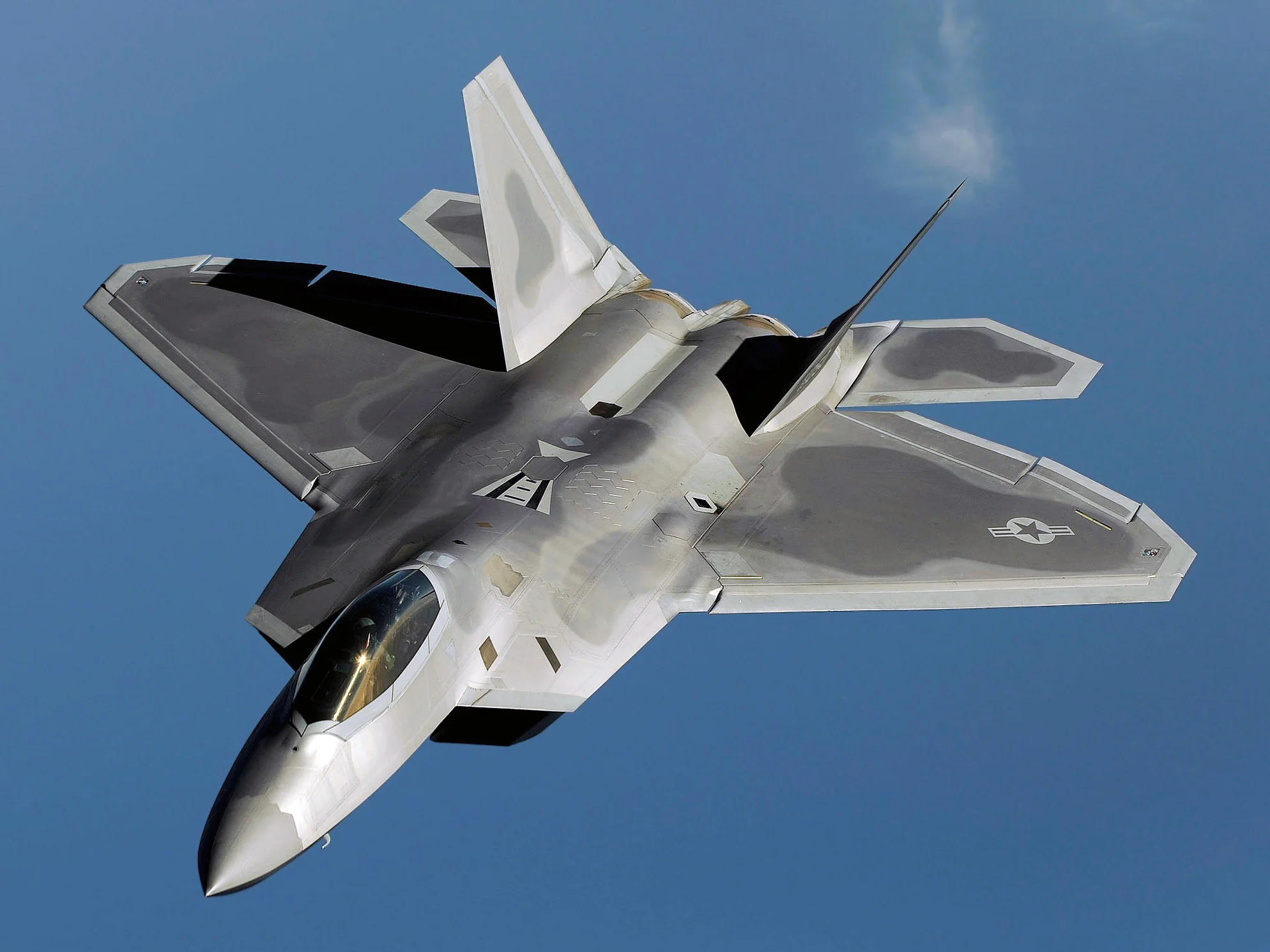
- F-22 Raptor (USA, 187 built, no exports)
- F-35 Lightning II (USA, 1,000+ built, many allies including Türkiye removed in 2019)
- J-20 “Mighty Dragon” (China, 200+)
- Su-57 Felon (Russia, ~20)
- KAAN (Türkiye, in development, first flight 2024)
- AMCA (India, prototype)
- KF-21 Boramae (South Korea, 4.5-gen with 5th-gen growth)
6th Generation — The Future
6th-gen fighters are in development and will arrive in the 2030s. Expected features:
- Optionally manned (can fly with or without pilot)
- AI co-pilot (“Loyal Wingman” drones flying with manned jets)
- Directed energy weapons (lasers)
- Adaptive engines (vary bypass ratio in flight)
- Even more extreme stealth (broadband, all-aspect)
- Cloud connectivity to entire battlefield
Programs:
- NGAD (USA) — F-22 replacement, contract awarded to Boeing 2025
- GCAP / Tempest (UK + Italy + Japan)
- FCAS (France + Germany + Spain)
- MiG-41 PAK DP (Russia, claimed Mach 4+)
- KAAN-2 (Türkiye, planned)
- CCA (Collaborative Combat Aircraft) — AI drone wingmen
Why “Generation” Matters
A 5th-gen fighter can usually see a 4th-gen fighter first, fire first, and never be seen until missiles are inbound. In simulations and exercises, F-22 and F-35 routinely score 10:1 or higher against 4th-gen aircraft.
This makes generation a huge factor in military strategy. Countries without 5th-gen access are racing to acquire them.
A Kid-Friendly Analogy
Think of fighter generations like phones:
- 1st gen: rotary phone (basic but functional)
- 2nd gen: push-button phone (faster)
- 3rd gen: cordless phone (more freedom)
- 4th gen: flip phone (digital, networked)
- 4.5 gen: smartphone (touchscreen, connected)
- 5th gen: invisible smartphone with built-in AI (can be hidden, very smart)
- 6th gen: smartphone with a hologram assistant that fights for you
Image Suggestions
- 1. Featured: F-22 Raptor top-down profile
- 2. Side-by-side of all 6 generations
- 3. F-86 vs MiG-15 historical Korean War
- 4. KAAN first flight 2024 photo
- 5. NGAD artist concept (sleek tailless design)
Related Articles
- What is stealth technology?
- What is AESA radar?
- What is the F-35?
- What is KAAN? (Türkiye)
- What is sensor fusion?