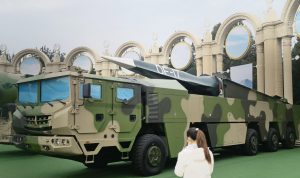
What is a Ballistic Missile? How It Works and Which Countries Have Them

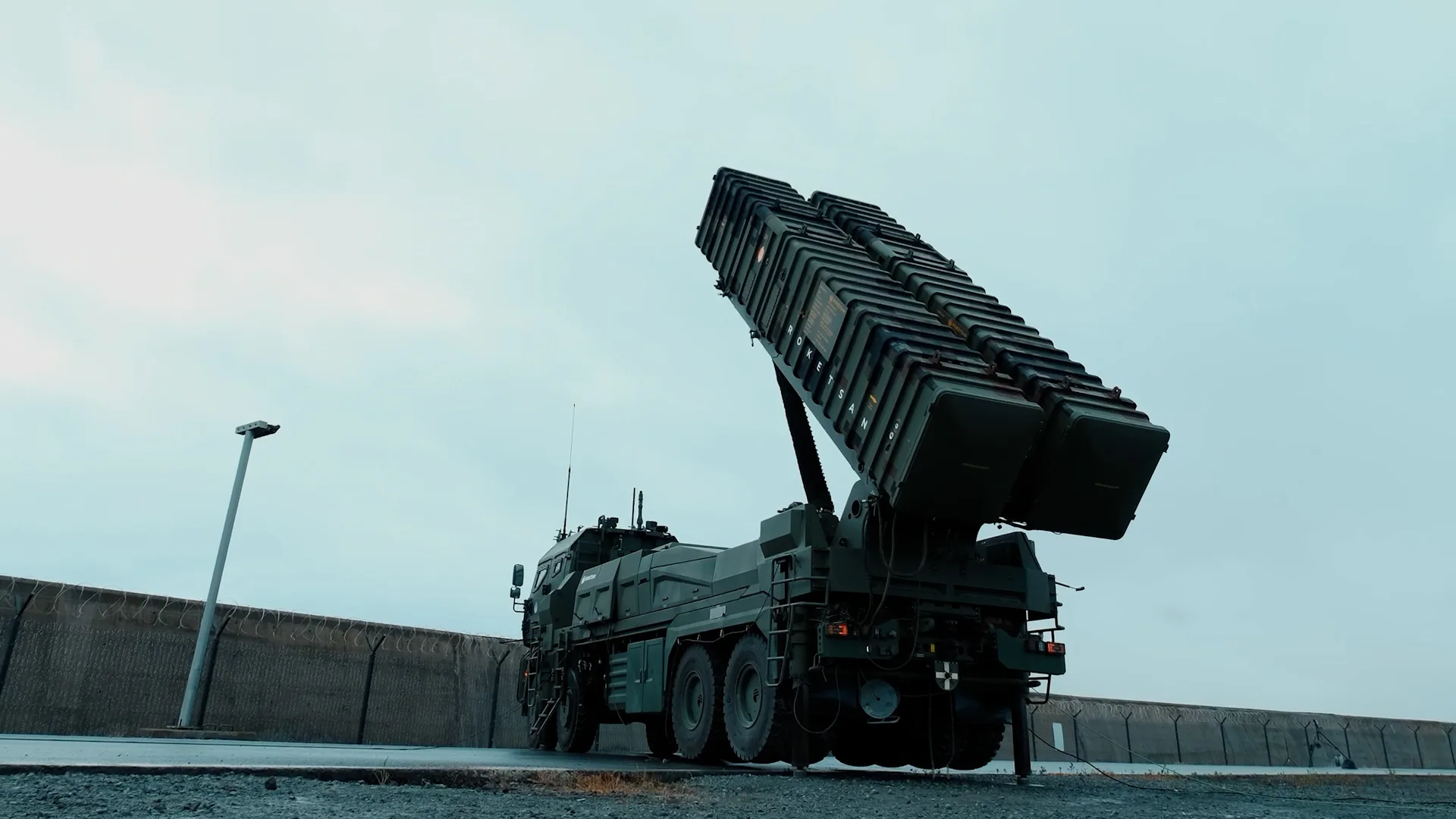
Ballistic missiles are long-range strike systems that accelerate with rocket motors to a certain altitude, then shut down their engines and travel mostly under gravity along a “ballistic” trajectory toward the target. They can carry conventional (classical) or nuclear warheads. The term “ballistic” describes how the missile behaves like a “projectile” during much of its flight.
How do ballistic missiles work?
Ballistic-missile flight typically has three main phases:
1) Boost phase
- Rocket motors fire.
- The missile accelerates and gains altitude.
- Typically lasts on the order of minutes.
2) Midcourse phase
- Engines shut down (or stages separate).
- The missile (and/or warhead) follows a ballistic path outside the atmosphere or in the upper atmosphere.
- This is the longest portion of flight.
- In some systems, warhead separation and countermeasures deploy during this phase.
3) Terminal phase
- The warhead re-enters the atmosphere.
- It descends toward the target at very high speed.
- This is the critical phase for defense systems because reaction time is very short.
How fast does a ballistic missile travel?
- Short-Range Ballistic Missiles (SRBM): can reach roughly 3,500–5,000 km/h.
- Intercontinental Ballistic Missiles (ICBM): can approach 24,000 km/h in terminal phase (several km per second).
How much damage does a ballistic missile cause?
The size of the damage depends most on the warhead:
- Nuclear warhead: wide-area destruction + heat/shock wave + radiation effects.
- Conventional warhead: a more limited area but with high explosive power and accuracy, can neutralize critical targets (bases, command centers, runways, radars, etc.).
Types of ballistic missiles
SRBM – Short range (≈ 300–1,000 km)
Regional conflicts, cross-border strike capability.
MRBM – Medium range (≈ 1,000–3,500 km)
Deterrence and strategic pressure across a wider geography.
ICBM – Intercontinental (≥ 5,500 km)
Global deterrence; usually a nuclear role.
SLBM – Submarine-launched ballistic missile
A critical leg of nuclear deterrence due to stealth and “second-strike” capability.
Difference between a ballistic missile and a “regular” missile
In everyday usage, “regular missile” often refers to a cruise missile:
- Ballistic missile: short rocket-powered boost, then a ballistic trajectory.
- Cruise missile: powered throughout flight, generally at lower altitude, can maneuver along the route.
In short: Ballistic = very fast / high-altitude profile, Cruise = low-altitude / more maneuverable profile.
Does Turkey have ballistic missiles?
Turkey is known to have short-range ballistic missile capability. The most widely cited example is ROKETSAN BORA. Public information on medium- and long-range programs is limited and varies by project.
Which countries have ballistic missiles?
Countries with ballistic-missile capabilities can be grouped into:
(1) Intercontinental/nuclear deterrence capacity; (2) Regional short- to medium-range capability.
Frequently cited ballistic-missile holders include:
- USA, Russia, China, India, North Korea, France, United Kingdom
- Iran, Israel, Pakistan, Turkey (particularly in short- and medium-range classes)