Britain Fits the DragonFire Laser to Type 45 Destroyers: £10-a-Shot Drone Defence

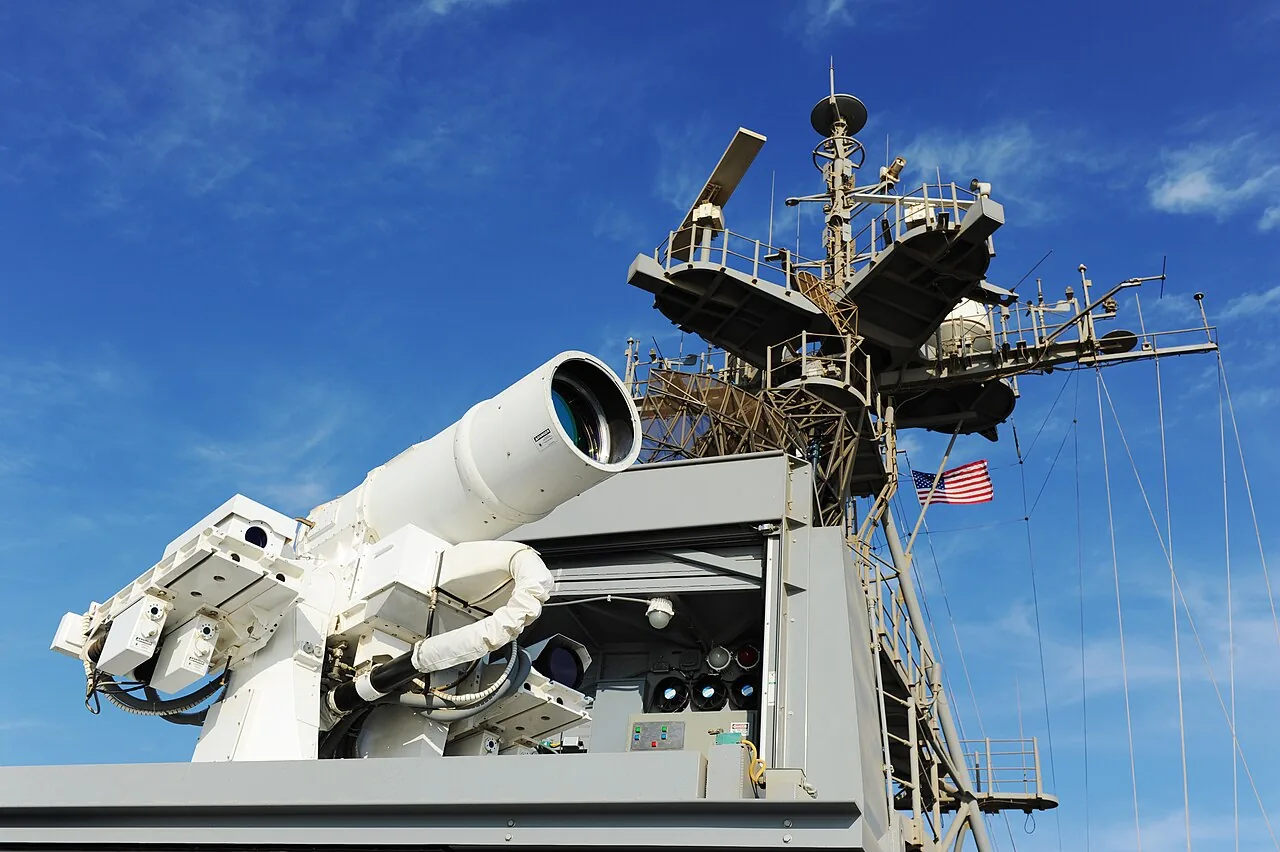
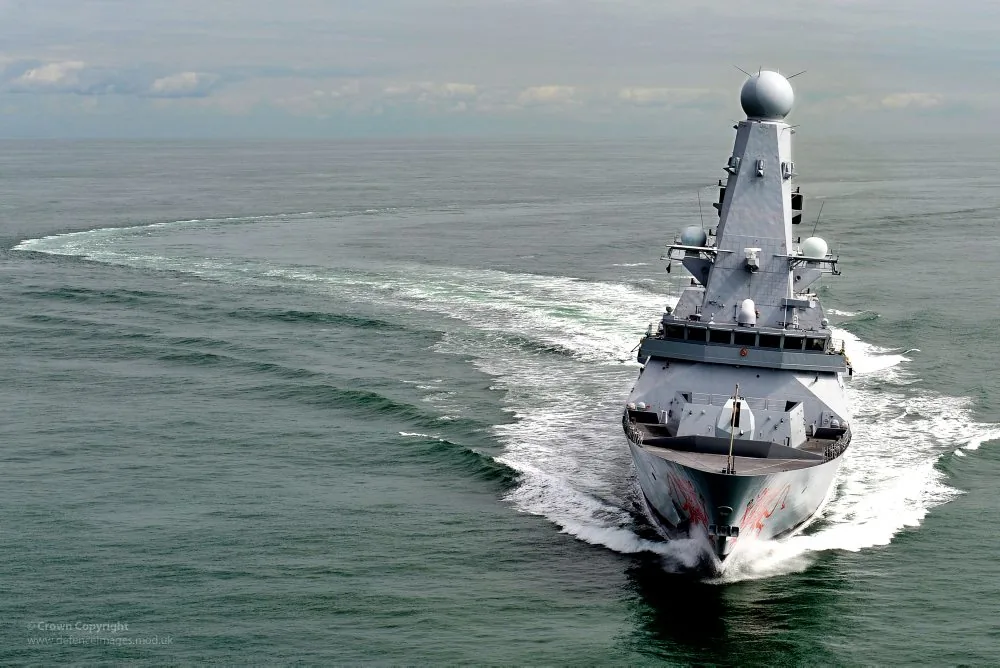
Against the drone threat, a light-speed, low-cost alternative to expensive missiles is arriving. According to Breaking Defense’s 24 June 2026 report, UK industry is working to miniaturize the DragonFire laser to fit a ship, aiming to install it on a Type 45 destroyer by the end of 2027.
If achieved, Britain will be the first European NATO nation to operationally deploy a high-energy laser weapon. As Army Recognition reported, the move follows Defence Minister Lord Coaker’s March 2026 decision to accelerate the programme by five years.
Background: Light Instead of Ammunition
In 2025 live-fire trials at the Hebrides range in Scotland, DragonFire tracked and destroyed drones flying at over 650 km/h and scored direct hits on moving targets up to one kilometre away. The system is in the 50-kilowatt class, with each shot costing about £10 (≈$13).
According to Naval Technology, the programme rests on a £316 million production contract awarded to MBDA UK in November 2025 for the first two systems. The UK arms of QinetiQ and Leonardo are also involved. The laser’s real appeal is reducing reliance on Aster missile stocks by adding a short-range layer that can fire repeatedly without running out of ammunition.
Inside the System and the Miniaturization Effort
The current report focuses on shrinking the system so it can be integrated on a ship. QinetiQ’s James Anderson said the manufacture of the beam itself is being reconsidered to reduce size further. Leonardo’s Graeme McNaught leads the electro-optic, infrared and laser-direction work. Keeping the system reliable in maritime conditions is critical.
DragonFire is positioned as a complement to kinetic weapons in a layered defence — handling threats across long patrols without depleting munitions thanks to its very low cost per shot. At least two destroyers will be equipped following the successful 2025 firings.
| Item | Detail |
|---|---|
| System | DragonFire high-energy laser |
| Power class | 50 kW |
| Cost per shot | Under £10 (~$13) |
| Target | Class 1-2 drones (650 km/h+, ~1 km) |
| Platform | Type 45 (Daring-class) destroyer |
| Contract | MBDA UK, £316M (Nov 2025) |
| First ship | End-2027 |
| Trials | Hebrides range (2025) |
Regional Context: The Economics of the Laser
The core problem in modern air defence is cost asymmetry: when a few-thousand-dollar drone is shot down by a million-dollar missile, the defender loses economically. The laser flips that equation; cutting cost per shot to a few dollars provides a sustainable defence against drone swarms.
That is why the U.S. (ship lasers), Israel (Iron Beam) and European states are investing fast in directed-energy weapons. DragonFire reaching the Type 45 signals that, at sea, the laser is no longer an experiment but an operational layer.
Why It Matters for Türkiye
Türkiye is one of the few countries fielding a combat laser weapon. ASELSAN’s ALKA uses both laser and radio-frequency directed energy against drones and improvised explosives, and is among the first Turkish directed-energy systems reported to have downed a UAV in the field. GÖKBERK was unveiled as a mobile laser air-defence system integrated on a tracked vehicle.
DragonFire’s logic — very low cost per shot, a counter-drone focus, reducing reliance on missile stocks — is exactly the path Türkiye follows with ALKA and GÖKBERK. Türkiye has made the capability operational on land; the next step is to bring the same laser defence to naval platforms (MİLGEM, TF-2000). The directed-energy layer of the Steel Dome concept targets precisely this gap.
The real strategic advantage, again, is production sovereignty: developing laser components, beam control and integration indigenously means not depending on others in a crisis. Türkiye’s directed-energy work on the ASELSAN–Roketsan axis gives it an early, independent position in this weapon class.
Frequently Asked Questions
When and on which ship will DragonFire be fitted?
Is the cost per shot really £10?
What can DragonFire hit?
Does Türkiye have an equivalent?
Conclusion
DragonFire reaching the Type 45 shows naval defence entering the operational era of the laser. Türkiye has already fielded a directed-energy weapon on land with ALKA and GÖKBERK; bringing the same capability to naval platforms by indigenous means would deliver both a cost advantage and supply sovereignty.
Sources
- Breaking Defense — “UK industry team looks to miniaturize DragonFire laser for Type 45 destroyer debut” (24 Haziran 2026)
- Army Recognition — “UK confirms DragonFire laser weapon deployment on Type 45 air defense destroyers by 2027”
- Navy Lookout — “Contract to deliver first laser weapons for the Royal Navy agreed”
- Naval Technology — “MBDA wins £316m contract to supply DragonFire to Royal Navy”