From Seabed to Orbit: Saab’s Mangrove Completes NATO Underwater Network Phase 1 as Iceye Bids About €2 Billion for Avio

Two European industrial moves this month span the full vertical range of modern defence. A Saab-led consortium called MANGROVE has completed the first phase of NATO’s Allied Underwater Battlespace Mission Network, and Finnish radar-satellite company ICEYE has made a takeover offer of about €2 billion for Avio, the Italian maker of the Vega rocket and solid rocket motors.
MANGROVE and NATO’s undersea network
Saab announced on November 17 that MANGROVE had delivered phase one of the Allied Underwater Battlespace Mission Network (AUWB-MN). Over the past year, the consortium developed the architecture, technologies and governance that would allow allied navies to share data from submarines, ships, seabed sensors and uncrewed underwater vehicles in a common network. It also set up a test and reference environment for the next stage. The architecture is due to be presented in July 2027 during NATO’s Task Force X-Arctic exercise.
The programme responds to a practical problem. Undersea surveillance in NATO is fragmented across national systems, classification levels and incompatible data formats. Since the 2022 Nord Stream explosions and repeated damage to Baltic cables and pipelines, allies have prioritised protection of critical seabed infrastructure, and that requires sharing sensor information quickly.
ICEYE’s bid for Avio
ICEYE, which operates one of the world’s largest constellations of synthetic aperture radar (SAR) satellites, has offered around €2 billion for Avio. The Finnish company has said it would invest an additional €1 billion in Italy over five years and continue Avio’s planned investments in the United States, where Avio is preparing to produce solid rocket motors. Reports differ on the exact announcement date, and analysts note that even if Avio’s board accepts, the deal would take a long time to complete. Because Avio is a strategic defence and space supplier, any acquisition would require Italian government approval under its “golden power” rules.
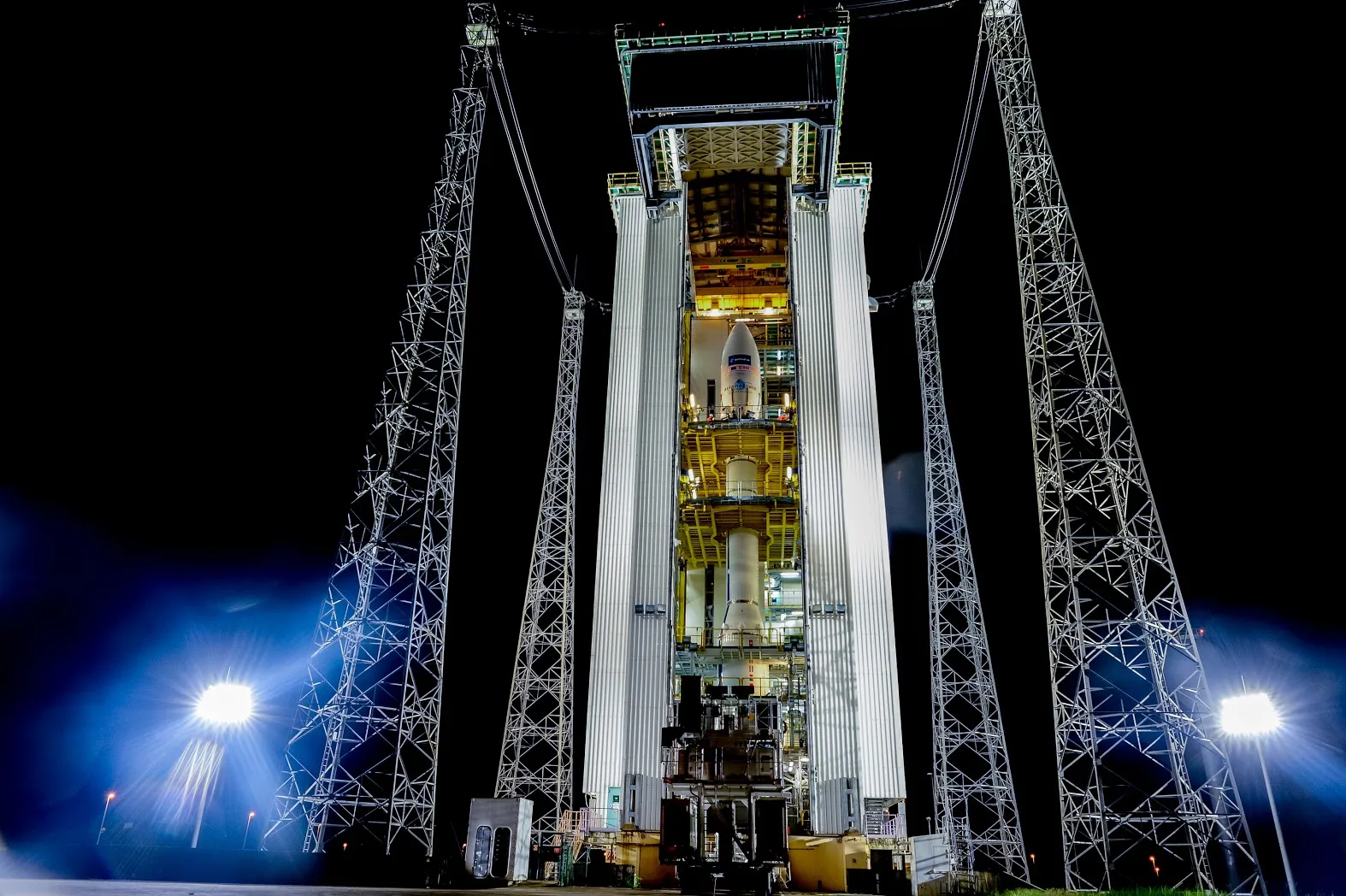
Avio builds the Vega and Vega-C small launchers and the P120C solid rocket motor used on both Vega-C and Ariane 6. Its propulsion expertise also matters for missiles, as European demand for interceptors and tactical rockets climbs.
| Development | Lead company | Status |
|---|---|---|
| AUWB-MN phase 1 | Saab (MANGROVE consortium) | Completed; next showcase July 2027 |
| Takeover offer for Avio | ICEYE | About €2bn offer; approvals pending |
Why the two stories connect
Both reflect Europe’s effort to control the sensors and infrastructure on which its security depends. Under the sea, that means networked detection of submarines and saboteurs. In space, it means owning the satellites, launchers and data that support targeting and situational awareness. ICEYE’s SAR satellites, which see through cloud and at night, have been widely used by Ukraine. Combining them with a European launch provider would create a vertically integrated space company of a kind Europe has lacked, though competition and sovereignty concerns will be tested.
Analysis: consolidation with a security logic
European defence spending growth is encouraging cross-border deals that would have been unthinkable a decade ago. A Finnish company acquiring an Italian launcher maker tests whether governments will accept consolidation in the name of scale, or protect national champions. For NATO, MANGROVE’s progress is a sign that the alliance’s innovation and capability programmes can move faster when industry consortia lead. Turkey, with its own expanding naval and space industries, is likely to watch both the network standards and the consolidation trend closely.
FAQ
What is AUWB-MN?
NATO’s planned Allied Underwater Battlespace Mission Network for sharing undersea sensor data among allies.
Has ICEYE completed the Avio purchase?
No. It has made an offer; board and government approvals are still required.