Russia Bans Seven Executives From Five UK Defense Firms


Russia’s Foreign Ministry has imposed an entry ban on seven executives tied to five UK-based defence companies, announced on October 30. The move extends Moscow’s growing list of sanctions targeting Western defence firms supplying Ukraine.
The named individuals are: Alex Head (CEO), George Zambellas (chairman) and Kev Oliver (chief military adviser) of drone-engine maker Rotron Aerospace; Neil Appleton, executive director of heavy-lift drone maker Malloy Aeronautics; Robert Gascoyne, chief executive of MGI Engineering; Paul Webb, director and co-founder of reconnaissance-drone maker Tekever UK; and Julian Cracknell, chief technology and information officer at BAE Systems.
Rotron singled out
The Russian ministry’s statement identified Rotron Aerospace as part of the “Brakestop” programme, which it described as aimed at developing long-range missiles. Moscow said the listed firms supply weapons and technology that let Ukrainian forces strike targets deep inside Russian territory, singling out British missile and drone deliveries and the systems that support them.
The ministry framed the ban as a response to continued UK military assistance to Kyiv and said it would keep expanding the list over what it called hostile British government policy. It argued that defence spending should instead go toward civilian services and domestic needs — a position Russia has repeated in earlier sanction rounds.
How this was confirmed
The report was first carried by Anadolu Agency and picked up by The Defense Post. A separate report citing Russian state agency TASS independently confirmed the same seven names and five companies.
What the other firms do
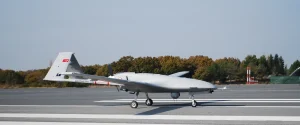
Tekever UK, also named on the list, builds reconnaissance drones and has previously supplied systems to US Special Operations Command; its technology has also been linked to frontline surveillance support in Ukraine. Malloy Aeronautics is known for heavy-lift drones used in battlefield logistics. MGI Engineering is a lower-profile engineering and subsystems firm; the ministry’s statement did not specify which product triggered its inclusion, making its listing less transparent than the others.
Part of a wider pattern
Russia has periodically expanded its UK entry-ban list since 2022, previously adding journalists, senior military officers including a former Chief of the Defence Staff, and representatives of private security firms training Ukrainian troops. Each round has been accompanied by the same justification — retaliation for what Moscow calls hostile UK policy.
This round is notable for consisting entirely of defence-industry executives rather than political or military figures, signalling that Moscow’s targeting has shifted toward the leadership of companies at the head of the supply chain. BAE Systems’ inclusion, via a single named executive rather than the whole company, follows a pattern from earlier rounds when senior BAE figures were also listed. The practical effect of the ban is limited, since none of the named executives have publicly stated travel plans to Russia, but it functions as a diplomatic signal aimed at companies feeding Ukraine’s war effort — a reminder, in a conflict now well into its third year, that Western defence-industry leadership has itself become a target of Russian sanctions pressure.
Sources
The Defense Post (via Anadolu Agency), “Russia Bars Some UK-Based Defense Firms Executives Over Ukraine Aid,” October 30, 2026. Source — list of names, Russian Foreign Ministry statement and context.
Caspian Post (via TASS), “Russia Imposes Entry Ban on Seven UK Defense Industry Executives,” October 30, 2026. Source — independent confirmation of the names and companies.