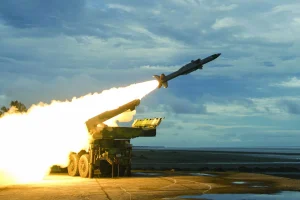
ROKETSAN R&D Projects: Hypersonics, Lasers and Space Work


ROKETSAN’s research and development projects cluster around five lines of effort: the transition of its cruise missiles to the domestic KTJ turbojet family, the TAYFUN Block-4 hypersonic programme, the ALKA directed-energy weapon, sounding rockets and micro-satellite launch work, and composite and propellant technology. Roughly 2,000 R&D staff carry these projects.
| ROKETSAN R&D Projects — At a Glance | |
|---|---|
| Company | ROKETSAN Roket Sanayii ve Ticaret A.Ş. |
| R&D staff | ~2,000 (of ~5,000 employees) |
| Propulsion | KTJ turbojet family (Kale cooperation) — ATMACA and ÇAKIR |
| Hypersonics | TAYFUN Block-4 (unveiled 23 July 2025) |
| Directed energy | ALKA — laser hard kill + electromagnetic soft kill |
| Space | Sounding rockets, micro-satellite launch studies |
| Propellant/composites | Kırıkkale propellant plant (April 2026) |
| CEO/GM | Murat İkinci |
Where is ROKETSAN’s R&D effort actually going?
A separate article covers ROKETSAN’s R&D capability — its workforce, test infrastructure and competence areas. This one looks at what that capability is being spent on: the concrete projects. About 2,000 of the company’s roughly 5,000 employees work in R&D, and their output falls into five interlocking lines: cruise-missile propulsion, hypersonic systems, directed-energy weapons, space and launch work, and composite-propellant technology.
What ties these lines together is export sensitivity. A cruise missile’s turbojet, the thermal-protection materials on a hypersonic vehicle and the beam source of a high-power laser are not items a country can simply buy on the open market. ROKETSAN’s project portfolio is therefore shaped less by product marketing than by technology acquisition and localisation — closing the gaps that an embargo could otherwise exploit.
Propulsion: the KTJ turbojet transition
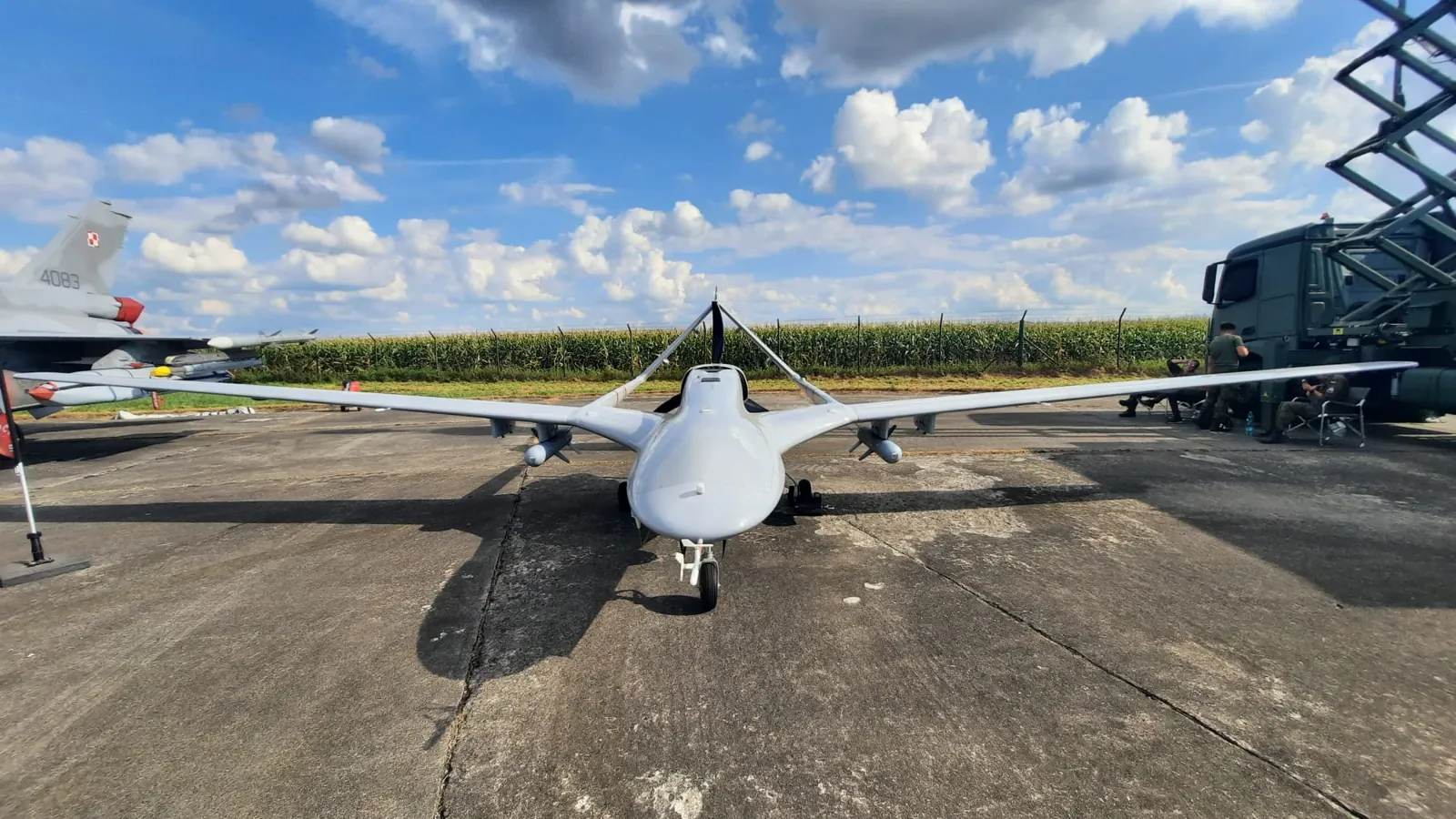
In a cruise missile, the turbojet engine sets both range and cruise speed. Early production batches of the ATMACA anti-ship missile flew on the French Microturbo TRI-40; the missile now flies on the domestic KTJ turbojet developed within Türkiye’s Kale group. The smaller ÇAKIR cruise missile was designed from the outset around the KTJ-1750 from the same family. The engines are Kale’s work, but airframe-engine integration, the fuel system and flight testing sit with ROKETSAN.
The strategic payoff is threefold:
- Embargo resistance: a cruise-missile line dependent on imported turbojets can be halted by a single export decision; a domestic engine removes that lever.
- Freedom to build variants: derivatives such as the land-attack Kara ATMACA (400+ km demonstrated in 2025) and the submarine-launched AKATA can proceed without foreign engine approvals.
- Cost and schedule control: production tempo no longer depends on a foreign supplier’s delivery calendar.
On the solid-propellant side, the composite solid rocket motors of the TAYFUN, SİPER and HİSAR families are products of ROKETSAN’s own propulsion R&D.
The table below summarises ROKETSAN’s R&D project lines with a concrete example for each. Programme budgets and some technical values have not been officially disclosed.
Hypersonics and directed energy: TAYFUN Block-4 and ALKA
The most ambitious item in the portfolio is TAYFUN Block-4, a hypersonic missile effort unveiled on 23 July 2025. For the baseline TAYFUN, ROKETSAN officially states a range of 280+ km, while independent assessments put it near 800 km — a gap driven by MTCR sensitivity, so both figures should be read together. For Block-4, independent estimates of 1,000-1,500 km circulate but remain officially unconfirmed. The hypersonic effort bundles several research problems into one programme: thermal-protection materials, guidance at extreme speed and new-generation solid rocket motors.
In directed energy, ALKA — unveiled in 2019, with a serial-production decision in 2021 — is a hybrid system: electromagnetic jamming for soft kill, a laser for hard kill against drones, drone swarms, IEDs and floating mines. Sources conflict on laser power, quoting tiers from 2.5 kW up to 20 kW; no single official figure has been released. The system tracks with 8 mm precision at 1,000 m and appeared at IDEF 2025 on an FNSS KAPLAN tracked chassis as the ALKA-KAPLAN HYBRID. Claims of combat use in Libya in 2019 have only limited independent confirmation.
Space work and composite-propellant technology
ROKETSAN’s official activity areas also include sounding rockets and micro-satellite launch studies. Sounding rockets carry payloads into the upper atmosphere, serving both scientific experiments and the validation of launch technologies; the micro-satellite work aims to turn that experience into a capability for placing small satellites into orbit. Programme timelines and technical details have not been officially disclosed, but the effort overlaps directly with the company’s solid-propellant expertise from ballistic missiles.
Underpinning every line is composite and propellant technology. Composite structures keep missiles light; propellant chemistry sets range and shelf life. The Kırıkkale propellant plant and the Lalahan missile integration facility, opened in April 2026 with a combined investment above $1 billion, target roughly a fivefold increase in missile production capacity — and the same infrastructure supports the development and testing of new propellant formulations. The ~2,000-strong R&D workforce works across all five lines simultaneously, moving technology from one project to the next.
Project information here is based on official ROKETSAN statements and open sources. For TAYFUN, the official range (280+ km) and independent estimates (~800 km; 1,000-1,500 km for Block-4) are given side by side. ALKA’s laser power, the space programme timeline and project budgets have not been officially disclosed.
Frequently Asked Questions
What are ROKETSAN’s main R&D projects?
Five lines stand out: the KTJ turbojet transition for cruise missiles, the TAYFUN Block-4 hypersonic effort, the ALKA directed-energy weapon, sounding rockets with micro-satellite launch studies, and composite-propellant technology.
What is TAYFUN Block-4?
A hypersonic missile effort unveiled on 23 July 2025. Independent estimates suggest a 1,000-1,500 km range; these figures are not officially confirmed.
Why does the KTJ turbojet project matter?
ATMACA moved from the French Microturbo TRI-40 to the domestic Kale KTJ, and ÇAKIR was designed around the KTJ-1750. The switch frees cruise-missile production from foreign engine supply.
How does ALKA work?
ALKA is a hybrid directed-energy system: electromagnetic jamming for soft kill and a laser for hard kill. Sources conflict on laser power and no official figure has been released.
What is ROKETSAN doing in space?
It develops sounding rockets and runs studies towards a micro-satellite launch capability; programme timelines have not been officially disclosed.
How many people work on these projects?
About 2,000 of ROKETSAN’s roughly 5,000 employees are R&D staff, working across all project lines simultaneously.
Sources
- ROKETSAN official — roketsan.com.tr
- ROKETSAN ALKA product page — roketsan.com.tr
- Defense News — Top 100 Defense Companies 2025
- Anadolu Agency and Daily Sabah reporting (2025-2026)