ELAC Wins €140.7 Million Saab Order for Sonar on Poland’s Orka Submarines
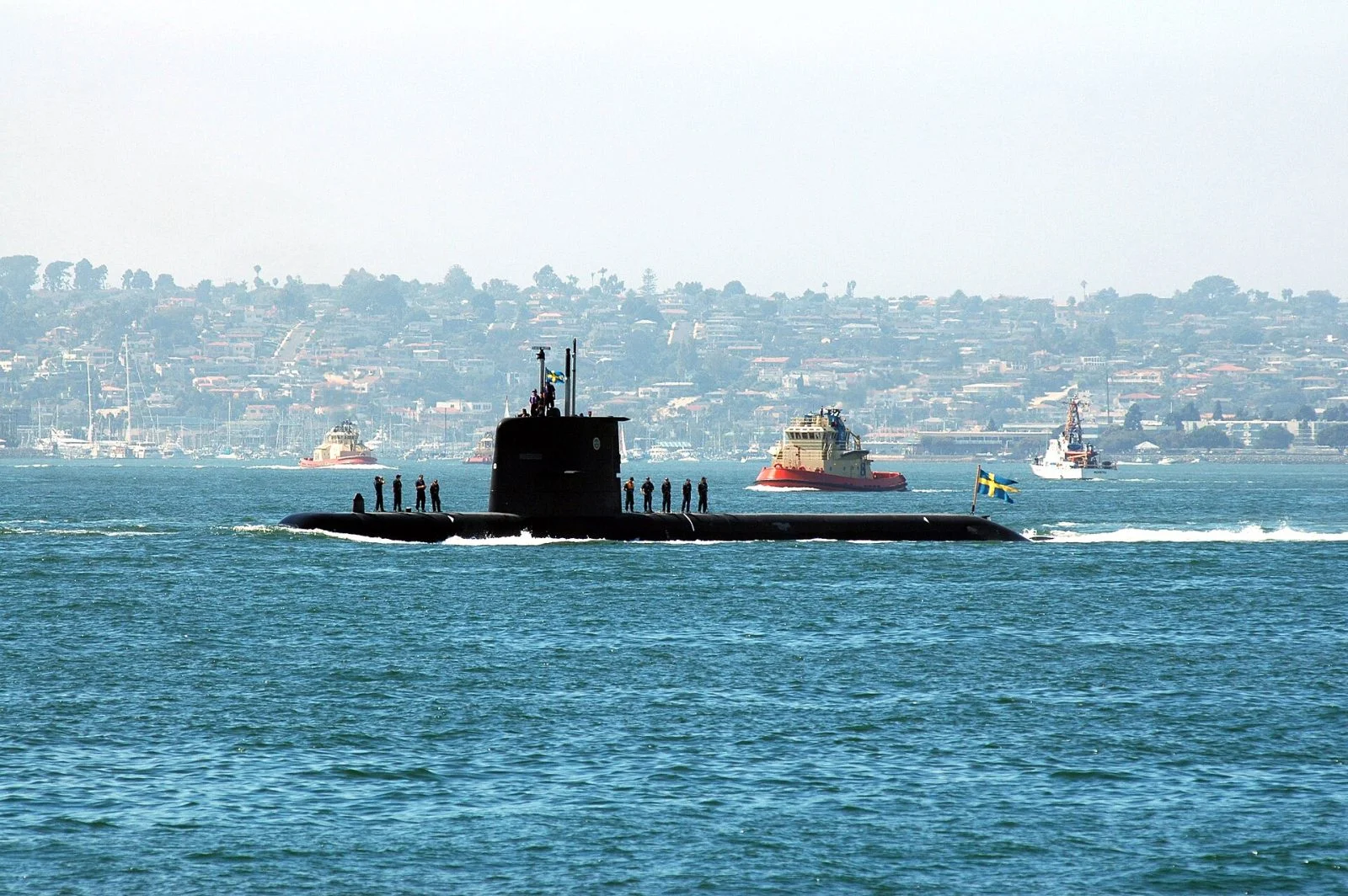
Poland’s long-delayed submarine programme, Orka, is beginning to take shape through its subcontract layer. British defence electronics group Cohort has announced that its Kiel-based German subsidiary ELAC has secured a €140.7 million sonar contract from Saab. The systems will equip the A26 submarines being built for the Polish Navy.
The award covers one of the most expensive and most decisive elements of any submarine: the underwater detection suite. Deliveries begin immediately and continue into the mid-2030s.
Scope of the contract
The agreement covers the supply of integrated active and passive sonar systems for the A26 boats. ELAC sits within Cohort’s Sensors and Effectors division and specialises in naval hydroacoustics. The company marks its 100th anniversary in 2026.
Cohort chief executive Andy Thomis said the order “confirms ELAC SONAR’s position as a world-leading provider of advanced digital sonar systems,” adding that the contract will ensure the submarines receive “cutting-edge active and passive sonar systems, creating a world-class underwater capability.”
The group said the contract, combined with other recent wins, is expected to lift adjusted earnings per share in the following financial year and beyond.
Where Orka stands
Poland ran a long selection process for its submarine replacement. After weighing French, German, Italian, Spanish, Swedish and South Korean bids, Warsaw picked Saab’s A26 design in November 2025.
The prime contract was signed on 29 June 2026 between Saab and Poland’s Armaments Agency. Covering three submarines plus a weapons package and a training and support package, it is valued at roughly SEK 47 billion — about $4.8 billion — with final deliveries expected by 2038. The deal was accompanied by a Baltic Sea Pact between Poland and Sweden.
The A26 is Saab’s next-generation conventional submarine design, developed for the Swedish Navy. Stirling-cycle air-independent propulsion gives the class extended submerged endurance. One distinguishing feature is the Multi-Mission Portal in the bow section, which allows unmanned underwater vehicles and special operations teams to be deployed while submerged.
Why sonar matters in the Baltic
The Baltic is among the hardest bodies of water in the world for submarine detection. An average depth of around 55 metres, rapidly shifting salinity layers and a complex seabed constantly distort sound propagation. Those conditions demand both low-frequency passive listening and high-resolution active search; a single sensor type will not do.
Poland’s current underwater capability is thin. The Soviet-built Kilo-class ORP Orzeł is at the end of its service life, and the Kobben-class boats transferred from Norway have been withdrawn. How Warsaw covers the gap until Orka deliveries arrive remains an open question.
Regional and strategic reading
The contract belongs to the security architecture that has formed in the Baltic since 2022. With Sweden and Finland inside NATO, the Baltic Sea has effectively become an alliance inner sea — and the sabotage incidents against undersea cables and pipelines have pushed subsea situational awareness up the alliance’s priority list. A sonar order in that context is more than a subsystem purchase.
The supply chain is also instructive: a Swedish prime, a German sensor manufacturer, a British parent company and a Polish customer. European defence industry’s cross-border division of labour is deepening even on the most sensitive platform types.
There is a parallel worth drawing for Türkiye. As the Turkish Navy inducts its Reis-class (Type 214TN) boats, it has pushed toward domestic capability in sonar and underwater acoustics, with ARMERKOM and Meteksan Defence working to bring flank array sonar and acoustic processing in-house. The MİLDEN programme is intended to consolidate that capability on a fully national platform. Poland’s choice offers the contrasting model: meeting the same requirement through external supply.
Sources
- Cohort plc — contract announcement and statements by chief executive Andy Thomis, 18 August 2026
- Saab AB — announcement of the A26 submarine contract with Poland’s Armaments Agency, 29 June 2026
- Polish Armaments Agency (Agencja Uzbrojenia) — Orka programme procurement decision