Montenegro’s Military Power: How Many Armoured Vehicles, Helicopters and Ships Are in the Inventory? (2026)

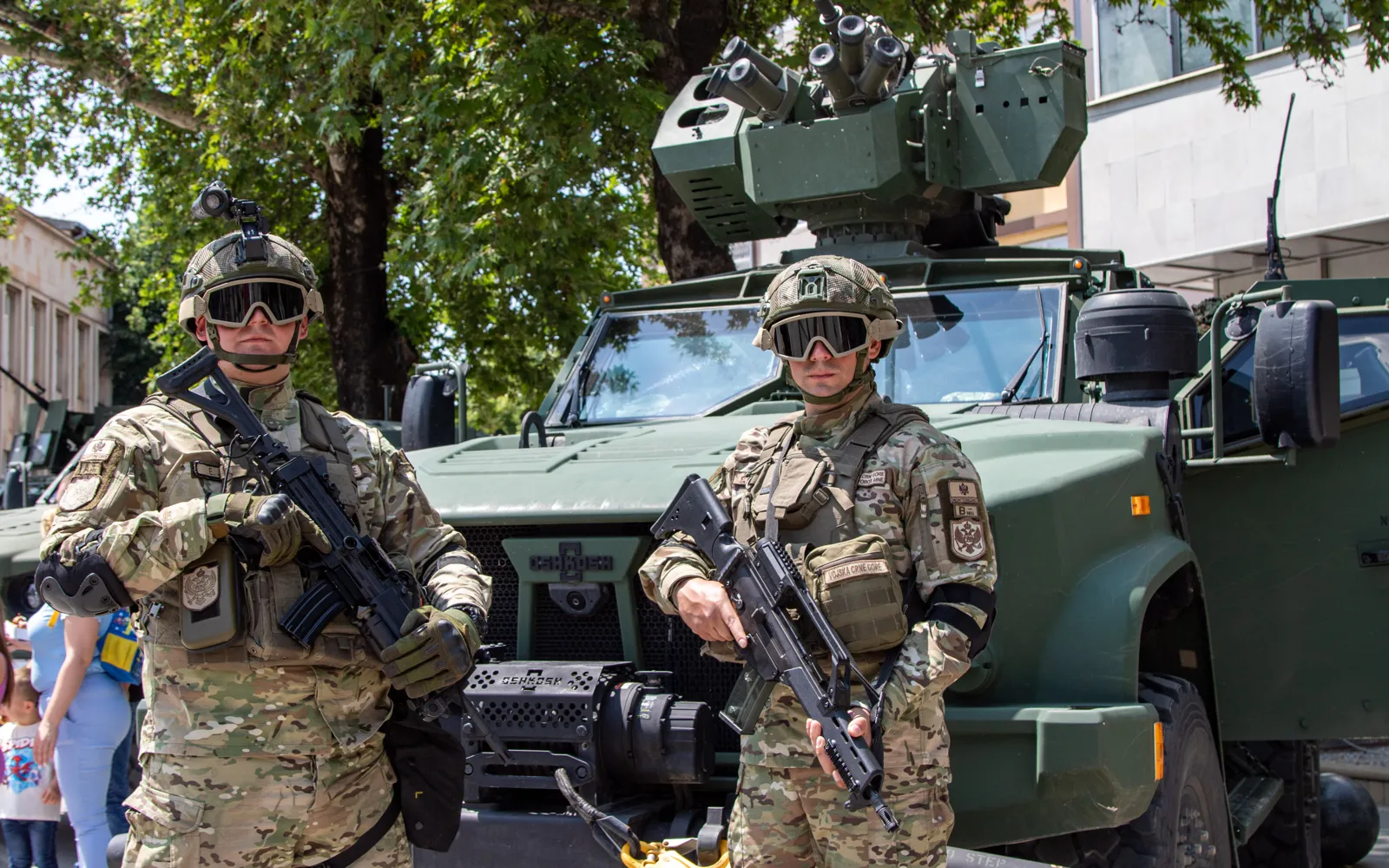
Montenegro’s military inventory shows how an Adriatic country of 600,000 people has scaled its armed forces under the NATO umbrella: having inherited the entire former Yugoslav navy when it left the union with Serbia in 2006, it withdrew its two frigates in 2019, kept no tanks or combat aircraft, and invested instead in wheeled armoured vehicles, multirole helicopters and offshore patrol vessels. A NATO member since 2017, Montenegro has pushed spending above the alliance’s 2 percent threshold and is running three major purchases at once in 2026. Türkiye appears in this picture through donations, training and institutional agreements.
At a Glance
- Active personnel: Global Firepower counts 2,350 active personnel and 5,500 paramilitary forces with no reserves listed; conscription ended in 2006 and the force is all-volunteer
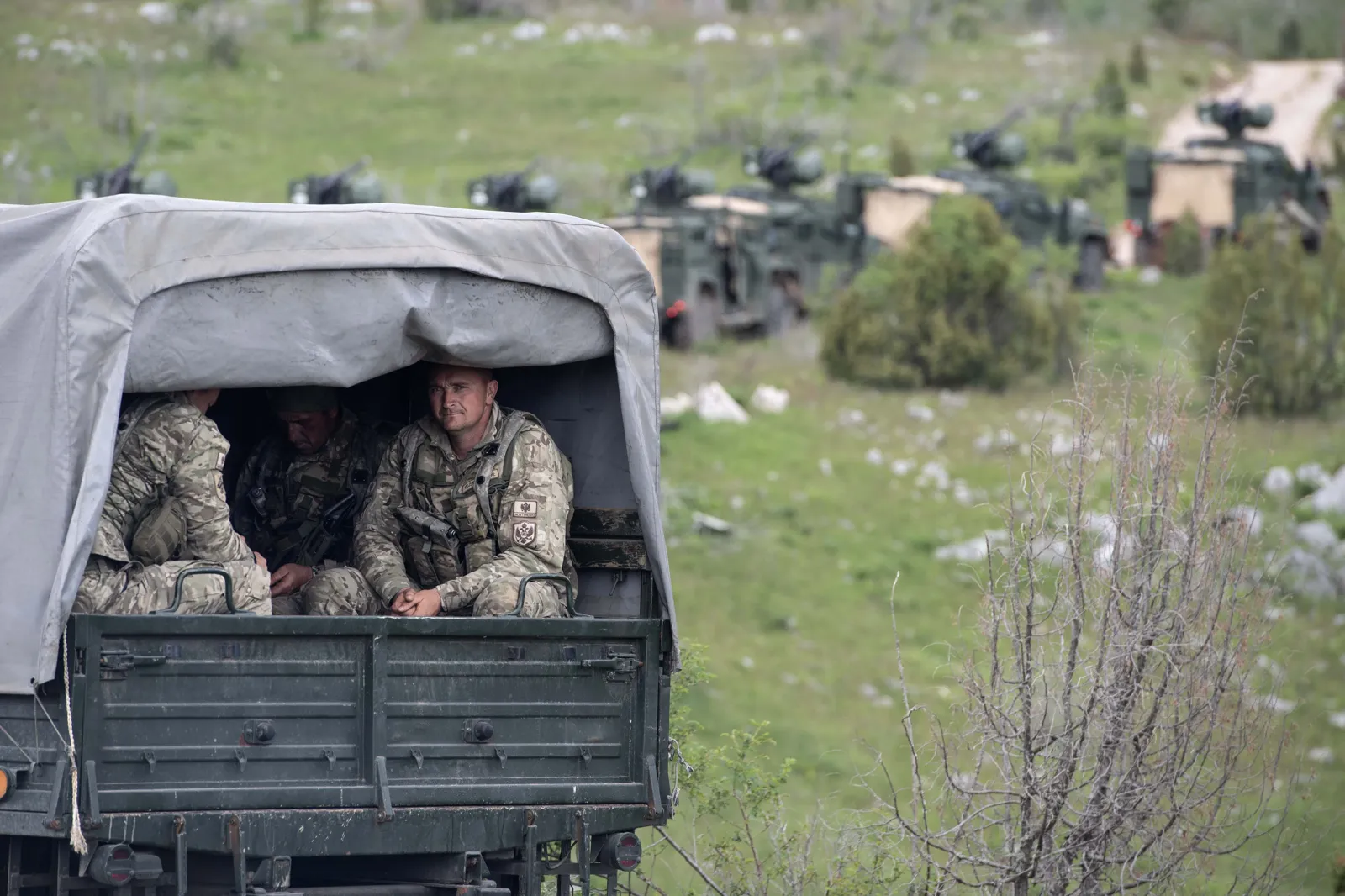
- Main battle tanks: Zero. Montenegro has operated no tanks since independence; the backbone of the land force is a wheeled armoured fleet of 67 Oshkosh JLTVs
- Armoured vehicles: Global Firepower counts 946 armoured vehicles under its broad definition; the combat core is 67 JLTVs, 6 Enoks, 4 Achleitner Survivors, 3 BOV M86s and 1 Otokar Cobra CBRN reconnaissance vehicle
- Artillery and rocket launchers: GFP counts 12 towed guns and 12 rocket launchers; open sources list 12 D-30J 122 mm howitzers and 18 M-94 Plamen-S 128 mm launchers, with no self-propelled artillery
- Military aircraft: Global Firepower counts 10 aircraft, all helicopters, with no fighters. The fleet rests on 3 Bell 412s and 2 Bell 505s; four H145Ms were ordered through Germany in June 2026
- Defence budget: Global Firepower shows about $204 million; NATO-methodology spending is about EUR 161 million for 2025, 2.05 percent of GDP, while the ministry’s core budget is around EUR 75 million
Note: The inventory figures below are approximate values drawn from open sources such as Global Firepower, the IISS Military Balance and SIPRI.
About the Montenegro Armed Forces
The Armed Forces of Montenegro (Vojska Crne Gore) consist of the Ground Army, the Navy and the Air Force; the Commander-in-Chief is President Jakov Milatović, the Defence Minister is Dragan Krapović and the Chief of the General Staff has been Brigadier General Miodrag Vuksanović since 3 June 2025. The backbone of the land force is the 1st Infantry Battalion at Danilovgrad; the Combat Support Battalion in Podgorica holds the special forces company, the marine detachment, military police and the honour guard company, while two infantry battalions and a mixed artillery battalion are reserve formations. Conscription ended in 2006, and the country became NATO’s 29th member on 5 June 2017.
In the Global Firepower 2026 count Montenegro ranks 128th of 145 with a Power Index of 2.9782. Active personnel number 2,350, no reserves are listed and paramilitary forces total 5,500. Global Firepower puts the defence budget at about $204 million; NATO-methodology spending was 2.02 percent of GDP for 2024 and 2.05 percent for 2025 (about EUR 161 million), while the Ministry of Defence’s core budget is around EUR 75 million. In June 2026 Krapović told the North Atlantic Council in Brussels that 2026 spending would again exceed 2 percent, and a ten-year framework is being prepared for the 5 percent target adopted at The Hague summit.
The land inventory has no tanks, and this is a deliberate choice. At its centre is the Oshkosh JLTV fleet, included in the $803.9 million US contract of December 2019 and first delivered in October 2020; the 67 vehicles are split between Elbit 12.7 mm weapon stations, Samson 30 mm guns, Spike LR launchers and command-reconnaissance versions. Six Enoks donated by Germany in 2018, 4 Achleitner Survivors, 3 BOV M86s and 1 Otokar Cobra CBRN reconnaissance vehicle complete the fleet. Artillery amounts to 12 D-30J 122 mm howitzers and 18 M-94 Plamen-S rocket launchers; a $22 million contract was signed with Elbit in May 2023 for JLTV-mounted 120 mm SPEAR mortar systems.
A generational change in small arms began in 2026: Colt CZ Group is supplying CZ BREN 3 rifles, pistols, light machine guns and sniper rifles under an intergovernmental agreement with the Czech Republic; the first batch was presented on 7 October 2026 at the special forces barracks in Danilovgrad in the presence of Krapović and Vuksanović, together with two Guardiaris JLTV simulators procured jointly with Slovenia. Tara Aerospace and Defence Products in Mojkovac, with its TM4 rifle and TM9 pistol, is the country’s only domestic arms maker.
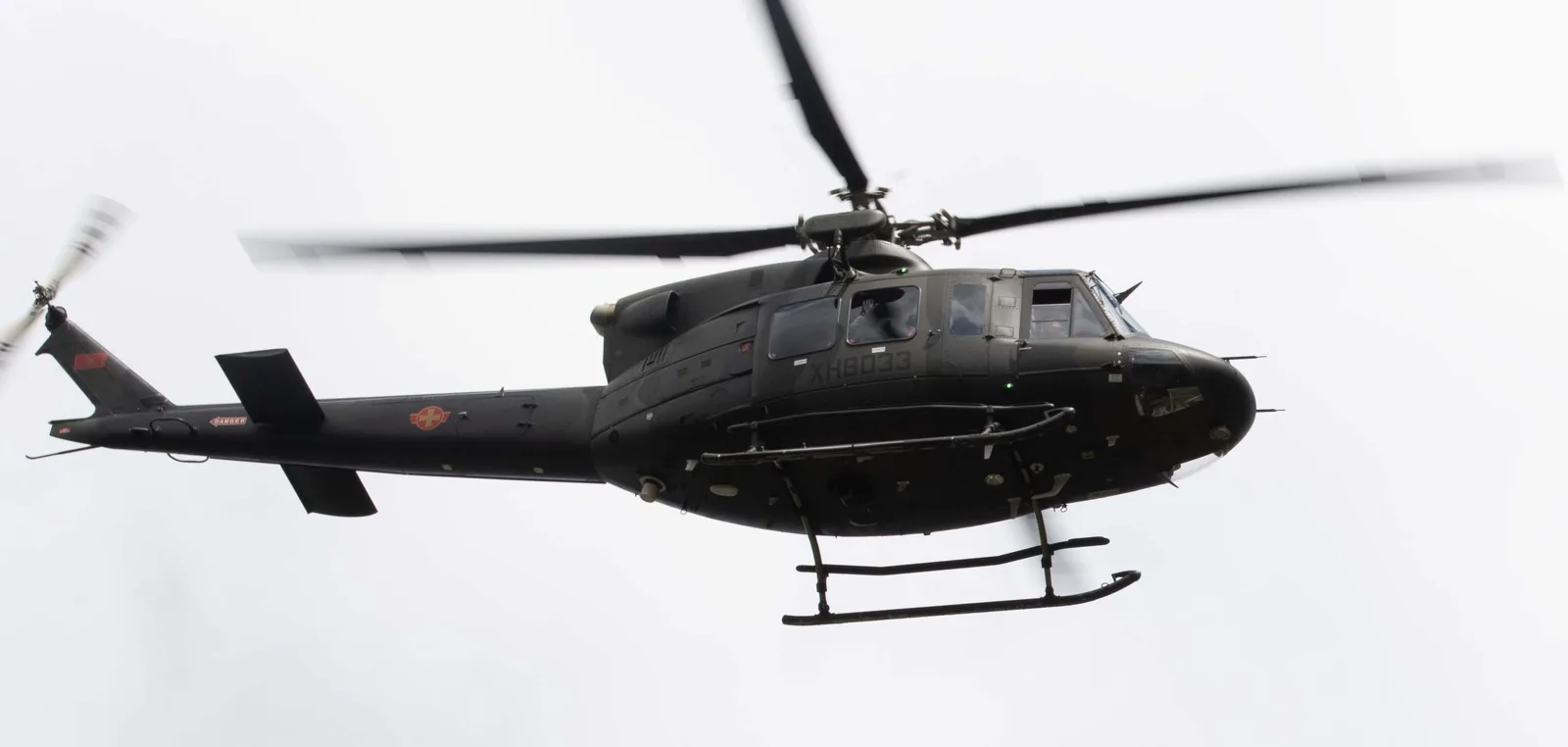
The Air Force operates no combat aircraft; the G-4 Super Galebs were stored in 2012 and the Gazelle fleet grounded in 2019. The active fleet consists of 3 Bell 412s acquired through Canada from 2018 and 2 Bell 505 training helicopters. On 12 June 2026 an agreement signed at ILA Berlin by Defence Ministers Boris Pistorius and Krapović became Germany’s first government-to-government defence sale: four Airbus H145Ms will be set aside for Montenegro from the German Army’s order batch. Air defence is limited to Strela-2M shoulder-fired missiles and Bofors 40 mm guns with a Giraffe radar; Italian and Greek fighters have policed the airspace since 2017. Six Belin V reconnaissance UAVs bought through Slovenia were delivered in July 2024.
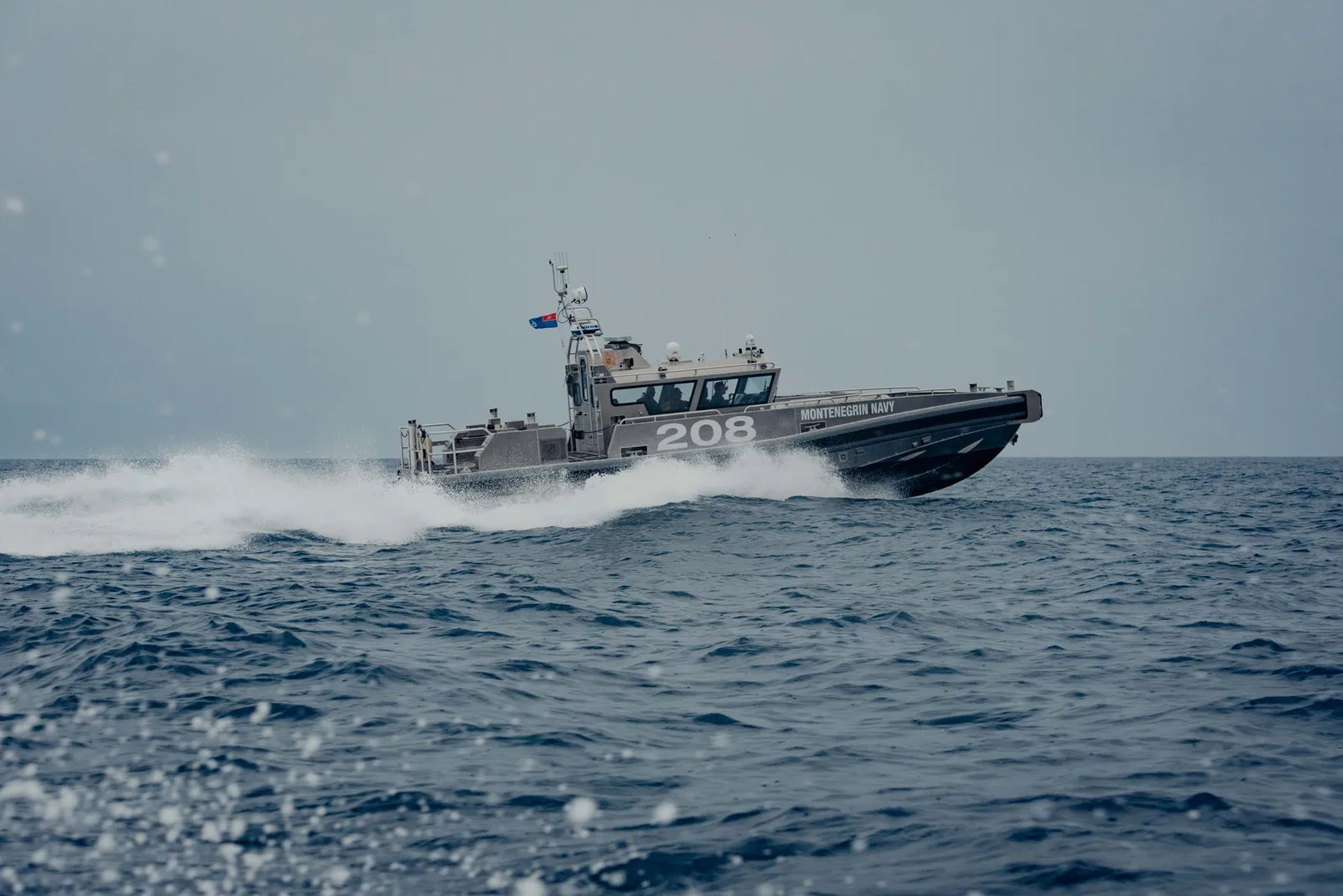
The Navy inherited the whole Yugoslav legacy in 2006 but could not sustain the large ships: the two Kotor-class frigates were withdrawn and offered for sale in 2019, and the former Končar-class missile boat RTOP-405 was converted the same year into the patrol boat P-105 Durmitor. Today’s fleet consists of 4 US-donated Silver Ships patrol boats, the Durmitor, the 1933-built sail training ship Jadran and auxiliaries. The turning point is the contract for two OPV 60Ms worth up to EUR 120 million signed with France’s Kership at Euronaval on 4 November 2024: the first ship, Petar Njegoš I, was launched at Lanester on 11 September 2026 and is due for delivery in April 2027. Montenegro contributes to KFOR, to the NATO battlegroups in Latvia and Bulgaria and to EUNAVFOR Atalanta; in November 2025 parliament approved sending two personnel to NATO’s training mission for Ukraine.
Land Forces Inventory
| System type | Est. quantity |
|---|---|
| Main battle tanks | None. No tanks remained from the inventory inherited from the Serbia and Montenegro armed forces; the land force was built as a tankless, wheeled structure around a single infantry battalion and support units |
| Wheeled armoured vehicles | 67 Oshkosh JLTVs (the first 30 were part of the $803.9 million US contract of December 2019, first deliveries in October 2020; 55 carry Elbit 12.7 mm remote weapon stations, 4 Samson 30 mm guns, 4 Spike LR launchers and 4 are command-reconnaissance vehicles); 6 ACS Enoks (German donation, 2018); 4 Achleitner RCV Survivors; 3 BOV M86s; 1 Otokar Cobra CBRN reconnaissance vehicle (2016) |
| Light tactical vehicles and trucks | 16 Achleitner MMV Survivors, 20 Toyota Hiluxes, 6 Mercedes G-Class, Pinzgauer 710s; trucks include Unimogs, TAM 110/150s, FAP 2026s and 3 BMC vehicles donated by Türkiye in 2023 (2 logistics trucks, 1 fuel tanker) |
| Artillery and mortars | 12 D-30J 122 mm towed howitzers; 18 M-94 Plamen-S 128 mm rocket launchers (GFP counts 12); 43 M57 60 mm, 44 M69 82 mm (14 active) and 32 M74/M75 120 mm mortars; a $22 million contract with Elbit in May 2023 for JLTV-mounted 120 mm SPEAR Mk2 mortar systems |
| Anti-tank and small arms | Spike LR/SR (on JLTVs), 9M14 Malyutka, M79 Osa 90 mm and M80 Zolja 64 mm rocket launchers; the standard rifle is moving from the H&K G36 to the CZ BREN 3 (Czech intergovernmental agreement, July 2026; first batch delivered at Danilovgrad on 7 October 2026); domestic Tara TM4/TM9; 15 MPT-76 and 15 MPT-55 rifles donated by Türkiye |
Air Force Inventory
| Platform | Est. quantity |
|---|---|
| Total military aircraft | 10 (Global Firepower), all helicopters, with no fixed-wing combat aircraft. The Air Force operates from the Knjaz Danilo (Golubovci) base at Podgorica; the airspace has been policed by Italian and Greek fighters since 2017 |
| Multirole helicopters | 3 Bell 412s (EP/EPI; acquired from 2018 through the Canadian Commercial Corporation) for medical evacuation, search and rescue, firefighting and patrol. In April 2025 the EU’s EUR 6 million European Peace Facility package delivered helicopter-borne search and rescue equipment |
| New-generation helicopters | 4 Airbus H145Ms: Germany’s first government-to-government defence sale, under an agreement signed by Defence Ministers Boris Pistorius and Dragan Krapović at ILA Berlin on 12 June 2026; the helicopters will be drawn from the German Army’s order batch and no delivery schedule has been published |
| Training and support aircraft | 2 Bell 505 Jet Ranger X training helicopters; 1 Air Tractor AT-802F firefighting aircraft (4 were bought, 1 operational as of 2025 after accidents); 1 Cessna 421B transport and evacuation aircraft |
| Retired types and UAVs | The SOKO/Aérospatiale Gazelle fleet was placed in storage in 2019 and has not flown since 2020; the G-4 Super Galebs were stored in 2012 and the Mi-8Ts retired the same year. On UAVs, six C-Astral Belin V reconnaissance drones bought through Slovenia were handed over in Podgorica on 2 July 2024 (40 km range, 2.5 hours endurance) |
Missile and Air-Defence Systems
| System | Type / Note |
|---|---|
| Shoulder-fired air-defence missiles | 9K32 Strela-2M, held by two air-defence platoons within the Air Force. The ministry plans to buy a new-generation man-portable system; none has been selected |
| Anti-aircraft guns and radar | Bofors 40 mm L/70 guns paired with a Giraffe radar (modernisation planned); in 2024 Slovenia’s Ministry of Defence donated an air-defence system named BANS, with no technical details released |
| Airspace surveillance | The Air Surveillance and Reporting Centre at Golubovci reports to NATO’s CAOC at Torrejón; installation of a NATO-donated HR 3000 3D radar on Bjelasica was delayed and a September 2025 deadline was debated publicly |
| Medium and long-range air defence | None. Air defence rests on NATO’s Integrated Air and Missile Defence System and on Italian and Greek air policing |
| Ballistic and cruise missiles | None. The longest-range land strike comes from the 128 mm M-94 Plamen-S launchers (about 13 km); Spike LR on the JLTVs is the only guided missile |
Naval Power
| Class / Type | Est. quantity |
|---|---|
| Offshore patrol vessels | 2 Kership OPV 60Ms: contract signed at Euronaval on 4 November 2024 with a ceiling of EUR 120 million including training and logistics; the first ship, Petar Njegoš I, was launched at Lanester on 11 September 2026 with delivery targeted for April 2027, and the second is due to launch in the first quarter of 2027. 62.95 m, about 550 tonnes, 21 knots, 9,700 nautical miles, remote-controlled 40 mm gun |
| Patrol boats | P-105 Durmitor (the former Končar-class missile boat RTOP-405, recommissioned as a patrol boat in 2019); RTOP-406 Ante Banina awaits funding for conversion; 4 US-donated Silver Ships CFRB fast patrol boats (seen at Bar during Defender Europe 25 in May 2025); GFP counts 14 patrol vessels |
| Withdrawn frigates | The two Yugoslav-built Kotor-class frigates (P-33 Kotor, P-34 Pula) were withdrawn in 2019 and offered for sale; no sale has been confirmed in open sources. There are no frigates, corvettes or submarines |
| Training and auxiliary vessels | The 1933-built sail training ship Jadran; the PO-91 transport (in reserve); tugs PR-41 Orada and LR-77; 2 diving boats, Valiant 620PT inflatables and the LDI 18 floating crane; GFP counts 20 naval assets in total |
| Bases and missions | Navy headquarters at Bar; the Pero Ćetković base (Bar) and Pristan base (Herceg Novi); the Marine Detachment carries out special-forces tasks. A vessel protection detachment serves with EUNAVFOR Atalanta; for the 294 km coastline and the Bay of Kotor the OPV programme will give the first real offshore capability from 2027 |
The Turkey Angle: Turkish Defence Industry
The Türkiye link in Montenegro is institutional and donation-based; the Turkish items in the inventory are small but real. The framework is set by a 2014 agreement on military cooperation in training, technology and science and by the Defence Industry Cooperation Agreement signed in Ankara on 17 November 2017. The main lever is the Military Financial Cooperation Agreement and Cash Assistance Implementation Protocol signed on 1 October 2019 by National Defence Minister Hulusi Akar and Defence Minister Predrag Bošković, whom Akar received with a military ceremony in Ankara. According to the Montenegrin press the package is worth about EUR 15.5 million spread over 2020-2024: most of it for logistics vehicles and equipment to be selected from Turkish defence companies, and about half a million euros for training Montenegrin personnel in Türkiye. The Turkish Embassy explained that no cash is transferred and that purchases are made by the Ministry of National Defence.
The concrete outputs of this agreement can be traced. Under a 2019 protocol 15 MPT-76 and 15 MPT-55 rifles were donated; Montenegro’s Ministry of Defence put the value at about EUR 38,500 (March 2021). In September 2023 two BMC-built logistics trucks and a fuel tanker were handed over at the Marko Miljanov Popović Barracks in Podgorica at a ceremony attended by Defence Ministry Coordinator Filip Adžić and Ambassador Barış Kalkavan, who said Turkish military schools were preparing to admit Montenegrin students. The inventory has also carried an Otokar Cobra in the CBRN reconnaissance role since 2016. On 23 October 2024, at SAHA EXPO in Istanbul, National Defence Minister Yaşar Güler and Krapović signed a protocol on training and cooperation in military health.
The political layer is active too. Türkiye was among the first countries to recognise Montenegro and openly supported its NATO accession in 2017; President Erdoğan made the first official visit by a Turkish president on 28 August 2021, and President Milatović paid an official visit to Ankara on 2 December 2024. On 9 July 2026, the day after the NATO summit in Ankara, Erdoğan and Prime Minister Milojko Spajić agreed to sign a memorandum establishing a High-Level Cooperation Council as soon as possible, with the defence industry and security among the areas to be expanded. After the February 2023 earthquake Montenegro sent a 53-member search and rescue team.
The market reality also has to be recorded: Montenegro’s last three big decisions went to France (OPV), Germany (H145M) and the Czech Republic (small arms), and in armoured vehicles Oshkosh was chosen in 2019 over a field that included BMC and Nurol Makina. The openings for Turkish industry are small-scale: the need for a new-generation shoulder-fired missile and counter-UAV capability, growth of the UAV fleet that began with the Belin V, small craft to accompany the OPVs, and renewal of the Military Financial Cooperation Agreement for a new period after 2024. This article records only public and confirmed steps; it contains no claim of an unsigned contract or an unannounced delivery.
Frequently Asked Questions
How many tanks does Montenegro have? Zero. Montenegro has operated no tanks since independence; the land force rests on a wheeled structure of 67 Oshkosh JLTVs, 6 Enoks and a few older Yugoslav armoured vehicles.
Does Montenegro have fighter jets? No. Global Firepower counts 10 aircraft, all helicopters: 3 Bell 412s and 2 Bell 505s. Four Airbus H145Ms were ordered through Germany in June 2026, and the airspace has been policed by Italian and Greek fighters since 2017.
What military equipment has Montenegro received from Türkiye? Under the 2019 Military Financial Cooperation Agreement, 15 MPT-76 and 15 MPT-55 rifles and, in September 2023, two BMC logistics trucks and a fuel tanker were donated; the inventory has also included an Otokar Cobra CBRN reconnaissance vehicle since 2016.
Is there a military agreement between Türkiye and Montenegro? Yes. The 2014 military cooperation framework agreement, the Defence Industry Cooperation Agreement of 17 November 2017, the Military Financial Cooperation Agreement signed in Ankara on 1 October 2019 and the military health protocol signed at SAHA EXPO on 23 October 2024 are in force.
How many ships does the Montenegrin Navy have? Global Firepower counts 20 naval assets, 14 of them patrol craft; there are no frigates, corvettes or submarines. The first of two Kership-built OPV 60Ms, Petar Njegoš I, was launched in September 2026 and is due for delivery in April 2027.
Bottom Line
Montenegro’s inventory shows clearly where a small NATO member puts its resources: JLTVs, multirole helicopters and offshore patrol vessels instead of tanks and fighters. Three major programmes are running at once in 2026, and each went to a different European supplier. Türkiye is an institutional partner here through the 2019 Military Financial Cooperation Agreement, donated vehicles and the training channel, and the decision on a High-Level Cooperation Council could widen that base. The market is small, but gaps such as counter-UAV, UAVs and small naval platforms offer Turkish industry a measured and realistic reference area.
Related Reading
Sources
- Global Firepower — Montenegro
- IISS — The Military Balance
- SIPRI — Arms Transfers Database
- Wikipedia — Armed Forces of Montenegro
- Wikipedia — Montenegrin Navy
- Wikipedia — Montenegrin Air Force
- Hürriyet — Akar meets Montenegrin Defence Minister Bošković (1 October 2019)
- Anadolu Agency — Three military vehicles sent by Türkiye reach Montenegro
- Government of Montenegro — Spajić and Erdoğan agree to establish a High-Level Cooperation Council
- Naval News — Kership starts the construction of two OPVs for Montenegro
- Aviation Week — Helicopter sale to Montenegro is Germany’s first G2G defence deal
- Colt CZ Group — Small arms supply to the Armed Forces of Montenegro