





Iran Says It Captured a US Anduril Dive-LD Underwater Drone in the Strait of Hormuz

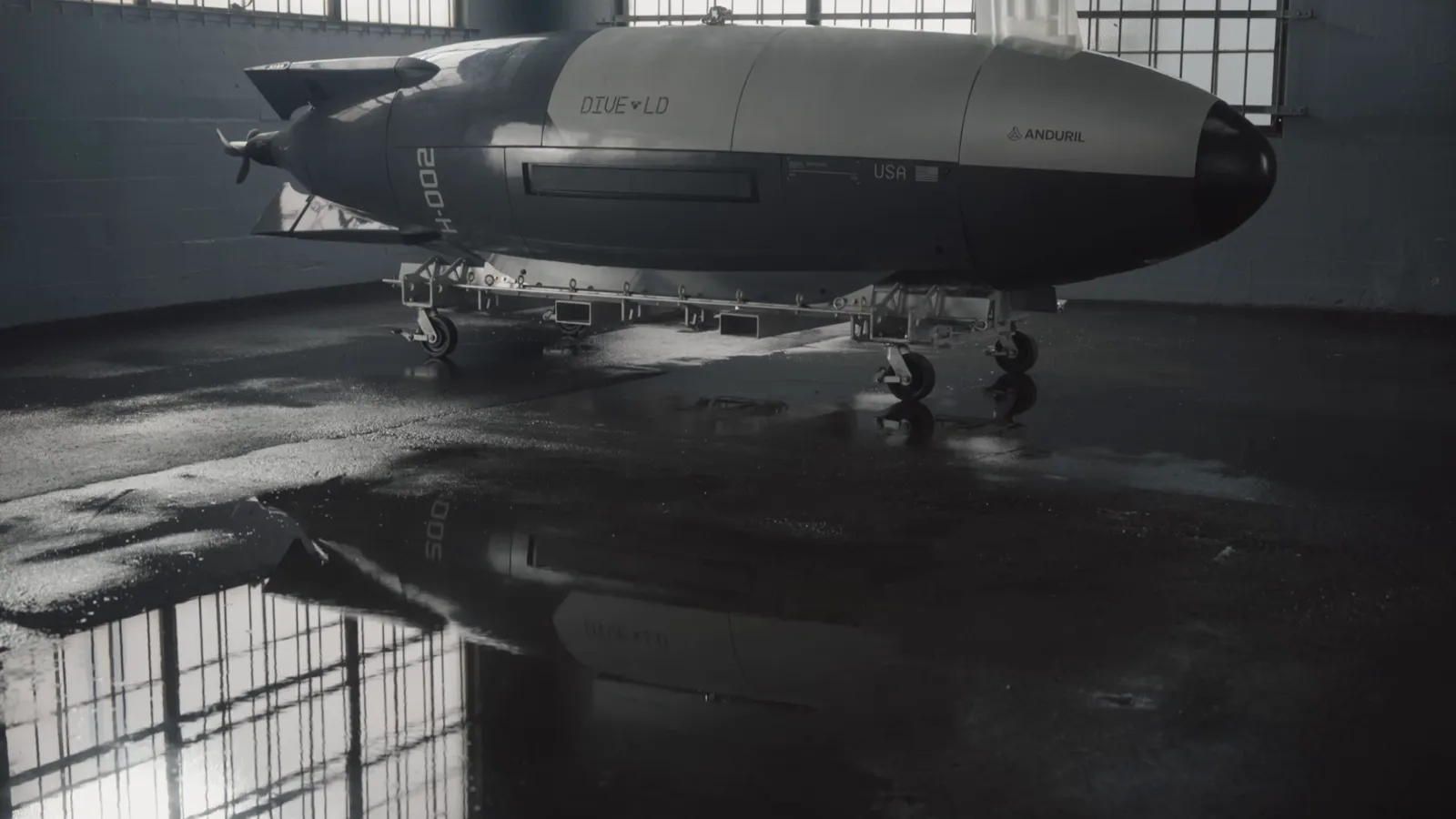
Iran’s Islamic Revolutionary Guard Corps (IRGC) announced on September 8, 2026, that it had seized a US Navy unmanned underwater vehicle (UUV) in the Strait of Hormuz. Photos released by Iranian channels closely match the Anduril Industries-built Dive-LD, and US Central Command (CENTCOM) confirmed the capture while downplaying its significance, saying the drone had malfunctioned during a routine survey mission and carried no classified sensors or sensitive data.
At a Glance
- Location and date: Strait of Hormuz, September 8, 2026
- Capturing force: Iran’s IRGC Navy
- Platform: Anduril Dive-LD autonomous underwater vehicle (AUV)
- US position: the drone had malfunctioned; it carried no classified sonar or radar and collected no sensitive data
- Operating unit: US Navy Unmanned Undersea Vehicle Group (UUVGRU) 1 / Undersea Vehicle Squadron (UUVRON) 3
Background
The Dive-LD is roughly 5.8 meters (19 feet) long, 1.2 meters (4 feet) in diameter, and weighs about three tons. It is built for multi-day missions of up to ten days and can operate at depths of up to 6,000 meters. Its open architecture and generous payload bays — some of its hull sections are additively manufactured — let it be reconfigured quickly across intelligence, surveillance and reconnaissance (ISR), mine countermeasures, anti-submarine warfare, and seafloor-mapping missions.
The capture comes amid persistently high tensions following the US-Iran conflict that effectively began in February 2026, during which the US Air Force also lost a significant number of MQ-9 Reaper drones over the region. Iran has form here: it seized a US underwater glider back in 2016, and it has separately supplied its own armed unmanned surface vessels to Houthi forces in Yemen.
Regional Impact
The Strait of Hormuz remains one of the world’s most critical chokepoints for oil and gas shipments, so any escalation there carries indirect implications for energy-dependent economies far beyond the Gulf, including Türkiye. More broadly, the incident underscores how central unmanned underwater systems have become to modern naval operations — a trend closely watched by Turkish defense firms such as ASELSAN, Roketsan, and STM, which are developing their own sonar and AUV programs and will note the emphasis on anti-capture hardening: self-destruct mechanisms, encrypted data, and remote wipe capability.
FAQ
Has Iran’s claim been verified? CENTCOM confirmed the capture but characterized the drone as an older, malfunctioning unit carrying no sensitive data.
What missions is the Dive-LD designed for? ISR, mine countermeasures, anti-submarine warfare, and seafloor mapping, among other multi-day undersea tasks.
Has this happened before? Yes — Iran seized a US underwater drone in 2016, and the US lost multiple MQ-9 Reapers during the same 2026 conflict.
Sources
Naval News, DefenseScoop, The War Zone (TWZ), Newsweek, Iran International, Al Jazeera, Army Recognition, SOFREP