





What Is HAVELSAN? What It Does, Who Owns It, Products and Exports

HAVELSAN is a Turkish, state-linked technology company that works primarily in defence software and system integration. Founded in 1982 and headquartered in Ankara, it builds command-and-control systems, naval combat management software, training and simulation solutions, unmanned and autonomous systems, cyber security products and public-sector digital projects. Because roughly 98 percent of its capital belongs to the Turkish Armed Forces Foundation (TSKGV), HAVELSAN is a joint-stock company that is effectively under public control.
This overview summarises, based on open sources, what HAVELSAN does, who owns it, which product families it develops, where it exports and where it sits within Türkiye’s defence industry.
What does HAVELSAN do?
HAVELSAN is fundamentally a software and systems house rather than a platform manufacturer. It does not build ships or aircraft; instead it produces the software layer that makes those platforms “intelligent” — the combat management system that fuses a warship’s sensors, weapons and communications onto a single screen, the flight simulators that train pilots without a real aircraft, the autonomy software that lets an unmanned vehicle carry out a mission on its own, and the digital backbone of public institutions.
The company groups its work into four official domains:
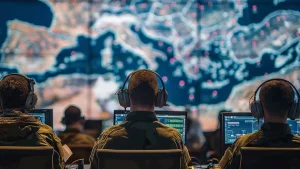
- Command-and-control defence technologies: C4ISR and combat management systems that merge naval, air and land elements into a common operational picture.
- Training and simulation technologies: full-mission simulators, training centres and virtual-environment software for military and civil platforms.
- Homeland and cyber security solutions: critical-infrastructure protection, cyber monitoring and data-security products.
- Management information systems: public-sector digital transformation, data management and enterprise software.
In recent years unmanned/autonomous systems and artificial intelligence have been added to these domains. HAVELSAN describes its ambition as a “digital troop” concept, in which different platforms are managed as a swarm from a single command centre.
Who owns HAVELSAN? Is it a state company?
HAVELSAN was set up in 1982, initially as the foreign-partnered “HAVELSAN-Aydın”, to support the Turkish Air Force’s radar needs. In 1985 it became a wholly national company, with about 98 percent of its capital held by the Turkish Armed Forces Foundation (TSKGV) — the same foundation that is the principal shareholder of ASELSAN, TUSAŞ and ROKETSAN.
As a result, HAVELSAN is a joint-stock company that is not listed on the stock exchange and is effectively under public control. Its headquarters are in Ankara, with campuses in Ankara and İstanbul and offices and projects abroad. Its current general manager is Dr. Mehmet Akif Nacar. While some sources cite a workforce above three thousand, HAVELSAN does not routinely publish detailed figures such as its current headcount or annual revenue.
HAVELSAN’s main products and solutions
HAVELSAN’s portfolio is organised not around a single flagship but around several product families, each answering a distinct defence need.
Naval: combat management systems
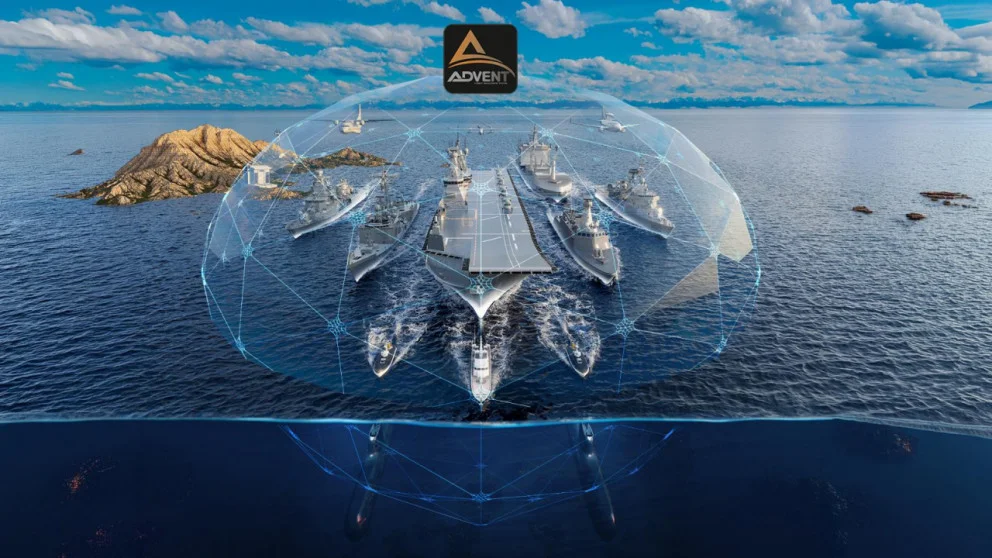
HAVELSAN’s best-known products are the combat management systems that act as a warship’s “brain”. GENESIS, developed from 1999 for the modernisation of Gabya-class frigates, was Türkiye’s first indigenous combat management system. ADVENT is a newer, network-centric system developed from the 2010s that links several platforms over a network and is reported to be in use on more than thirty platforms.
Unmanned and autonomous systems
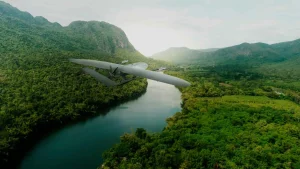
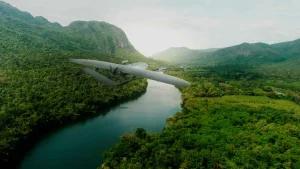
The company has recently expanded into unmanned systems. BARKAN is an autonomous unmanned ground vehicle, KAPGAN a heavier-class unmanned ground vehicle, and BAHA a sub-cloud autonomous unmanned aerial vehicle. HAVELSAN also supplies the mission-management software for SANCAR, an armed unmanned surface vessel built jointly with the Yonca-Onuk shipyard. The common goal across these vehicles is not merely remote control but autonomous, swarm-capable mission execution.
Training and simulation
HAVELSAN produces full-mission simulators for both military and civil platforms, including the ATAKSİM simulator for the T129 ATAK attack helicopter and training systems for helicopters such as the S-70 and Cougar. Simulators let crews rehearse emergency and combat scenarios repeatedly without risking a real platform.
Cyber security and artificial intelligence
The company’s current AI flagship is HAVELSAN MAIN, an enterprise AI platform that can be trained on an organisation’s own data and run on closed networks, with a built-in security module offering AI-assisted vulnerability detection and anomaly analysis. HAVELSAN is also involved in public-sector IT projects such as elections, land registry and e-government.
Which countries does HAVELSAN export to?
The most widely exported HAVELSAN product is the ADVENT combat management system. Open sources place ADVENT in the naval programmes of countries including Pakistan, Indonesia, Ukraine, Qatar, Oman, Nigeria, Malaysia and Chile. In July 2026 the system was integrated onto a corvette for the Romanian Navy, announced as HAVELSAN’s first combat-management-system export to a NATO member state.
The relationship with Pakistan is particularly notable: under a firm contract in the Pakistan Navy’s MILGEM-class corvette programme, with ASFAT as prime contractor, ASELSAN and HAVELSAN handle combat-systems integration. In such data it is important to distinguish a letter of intent from a signed contract; a product being marketed to a country does not mean that country has bought it.
HAVELSAN’s place in Türkiye’s defence industry
Platform makers — shipyards and aircraft or armoured-vehicle manufacturers — are usually the visible side of the industry, but the software layer that makes those platforms “smart” is largely produced by companies like HAVELSAN. In that sense HAVELSAN occupies a critical position on the software and system-integration side of the Turkish defence sector, and its recent direction has shifted from stand-alone products toward network-centric, autonomous system architectures that connect platforms together.
HAVELSAN at a glance
| Company | HAVELSAN A.Ş. |
|---|---|
| Sector | Defence software and IT |
| Founded | 1982 (nationalised 1985) |
| Main shareholder | Turkish Armed Forces Foundation (TSKGV, ~98%) |
| Headquarters | Ankara, Türkiye |
| Domains | Command-and-control, simulation, cyber security, management IT, unmanned systems, AI |
| Key products | ADVENT, GENESIS, BARKAN, KAPGAN, BAHA, SANCAR, MAIN |
| Exports | ADVENT to several countries; first NATO export to Romania (2026) |
| Revenue | Detailed financials not routinely disclosed |
Frequently asked questions
What does HAVELSAN produce?
Mainly software and systems: combat management systems, flight and mission simulators, autonomy software for unmanned vehicles, cyber-security products, AI platforms and public-sector IT solutions. It does not build ships or aircraft; it provides their software and integration.
Is HAVELSAN a state company?
It is a joint-stock company, but around 98 percent of its capital belongs to the Turkish Armed Forces Foundation, so it is effectively under public control. Its shares are not publicly traded.
Where is HAVELSAN located?
Its headquarters are in Ankara, with campuses in Ankara and İstanbul and offices and projects abroad.
When was HAVELSAN founded?
In 1982; it became a fully national company in 1985.
Which countries does HAVELSAN export to?
Its ADVENT combat management system is associated with programmes in Pakistan, Indonesia, Ukraine, Qatar, Oman, Nigeria, Malaysia and Chile. In 2026 Romania became the first NATO member state to receive the system.
What is HAVELSAN’s best-known product?
Internationally, the ADVENT naval combat management system; on the unmanned side, BARKAN and BAHA stand out.
Sources
- HAVELSAN Company Profile — havelsan.com
- HAVELSAN product pages (ADVENT, BARKAN, BAHA, SANCAR, MAIN) — havelsan.com
- TSKGV, Affiliates — tskgv.org.tr
- Anadolu Agency, “First NATO export for national combat management system”, 5 July 2026