Gambia’s Military Power: Which Armoured Vehicles and Boats Are in the Inventory? (2026)

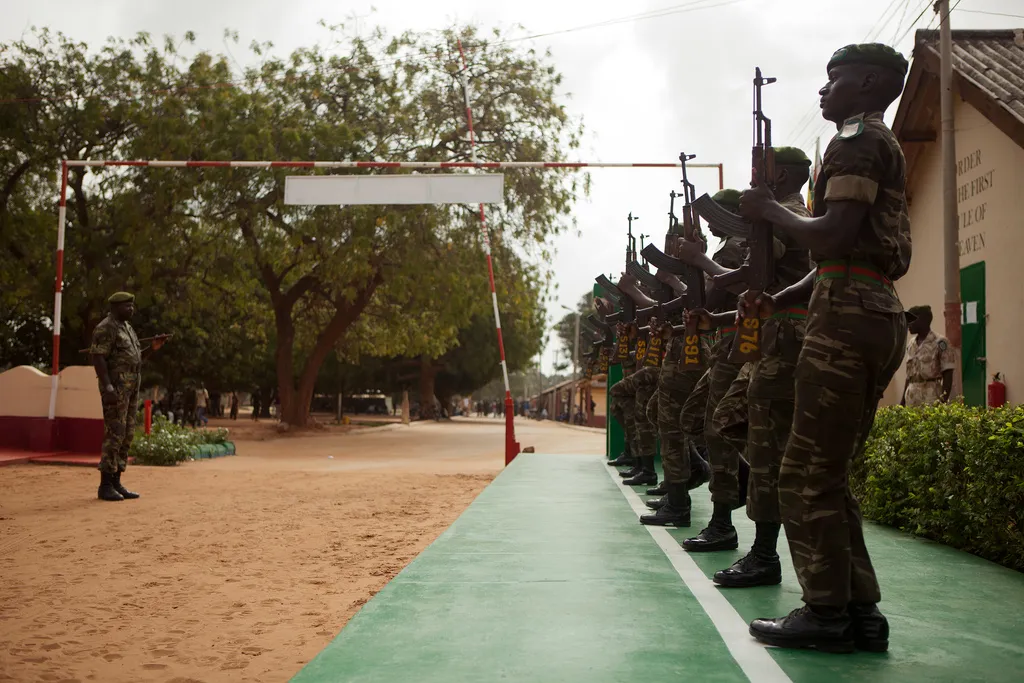
The Gambia’s military inventory describes a modest force structure, proportionate to its population and geography, in mainland Africa’s smallest country. The Gambia Armed Forces have three branches: the Gambia National Army, the Gambia Navy and the Republican National Guard. The country leans on a mutual defence pact signed with Senegal in 1965 and on international partners.
At a Glance
- Active personnel: About 4,000 personnel (2019, Wikipedia); army, a small navy and a Republican National Guard of about 50; estimates of the army range from 900 to 1,900
- Tanks: No main battle tanks; armour consists of light reconnaissance vehicles
- Armoured vehicles: 8 Ferret, 4 M8 Greyhound; 17 Otokar Cobra-1 and 2 Katmerciler Hızır donated by Türkiye (Wikipedia)
- Military aircraft: No combat aircraft; a Su-25 bought from Georgia in 2003 did not lead to an air force, and 2026 reports note no combat aircraft at all
- Navy: About 500 personnel; patrol boats of Taiwanese and US origin and GNS Kunti Kinte; the fleet list rests on 2015 estimates
- Defence budget: About 0.8% of GDP (2020, Wikipedia); no current detailed figure is public
Note: The inventory figures below are approximate values drawn from open sources such as Global Firepower, the IISS Military Balance and SIPRI.
About the Gambia Armed Forces
The Gambia Armed Forces grew out of the paramilitary Field Force that held the country’s security after independence in 1965. Following the 1981 coup attempt and Senegal’s intervention, a formal army was created under the 1985 Armed Forces Act. Today’s structure comprises the National Army, the Navy and the Republican National Guard, added in 2008. The president is commander-in-chief, while practical control rests with the Chief of the Defence Staff.
Total personnel number about 4,000 (2019, Wikipedia); the strength of the National Army varies by source between 900 and 1,900, the Navy is about 500 and the Guard about 50. Defence spending is about 0.8% of GDP (2020). Figures are approximate.
The land inventory amounts to Ferret (8) and M8 Greyhound (4) armoured cars and at least one M101 howitzer; there are no tanks or modern artillery. The army has two infantry battalions, an engineering squadron and a Presidential Guard company, with barracks at Fajara, Yundum, Kudang and Farafenni.
The air arm effectively does not exist. A 2002 plan for an air force saw pilots trained in Ukraine and a Su-25 bought from Georgia in 2003, but the programme was not pursued. According to 2026 reports the Gambia has no combat aircraft and the country is absent from FlightGlobal’s 2026 World Air Forces report.
No missile or air-defence layer is documented. Open sources show no guided anti-tank, anti-ship or surface-to-air missile system; protection of the airspace rests in practice on neighbouring Senegal and regional partners.
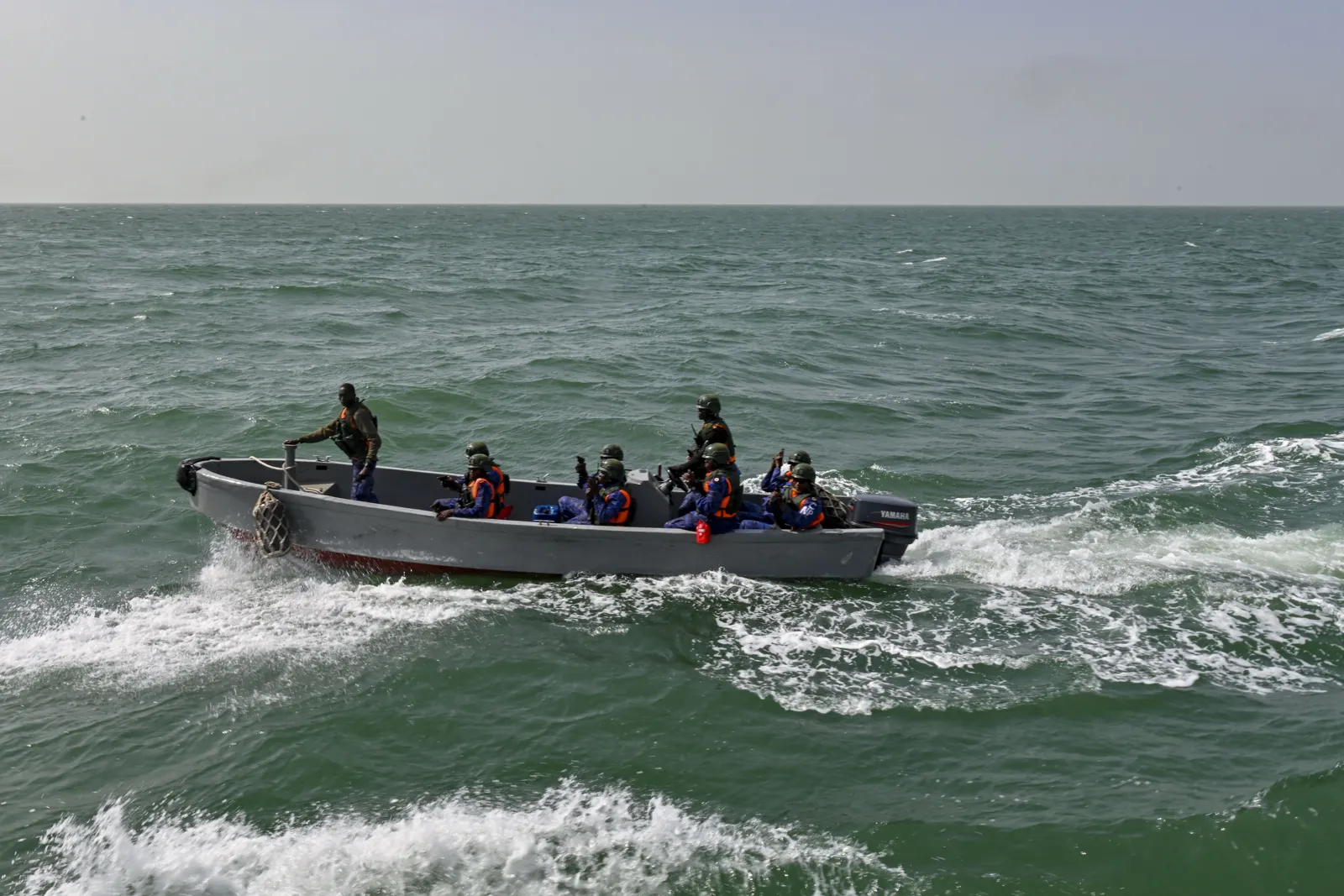
The Navy, announced in 1995 and formed in 1997, enforces fisheries law and fights smuggling and human trafficking. As estimated in 2015, the inventory comprises 3 Berre Kuntu, 4 Taiwanese-built HAI-OU-class, 2 Fatimah and 1 Peterson PBI/Swift PCF patrol boats; Taiwan donated boats in 2009 and 2013. The US Navy helped install the MSSIS tracking system in 2008, and GNS Kunti Kinte took part in the Obangame Express exercise in March 2019. There is no major warship.
The Gambia has kept troops in peacekeeping missions since 2000, since 2004 mainly in UNAMID in Darfur. The ECOWAS force ECOMIG, which entered the country in January 2017, served under Senegalese leadership; official ECOWAS statements should be consulted for the current deployment status.
Land Forces Inventory
| System type | Est. quantity |
|---|---|
| Tanks | No main battle tanks or light tanks are documented in open sources |
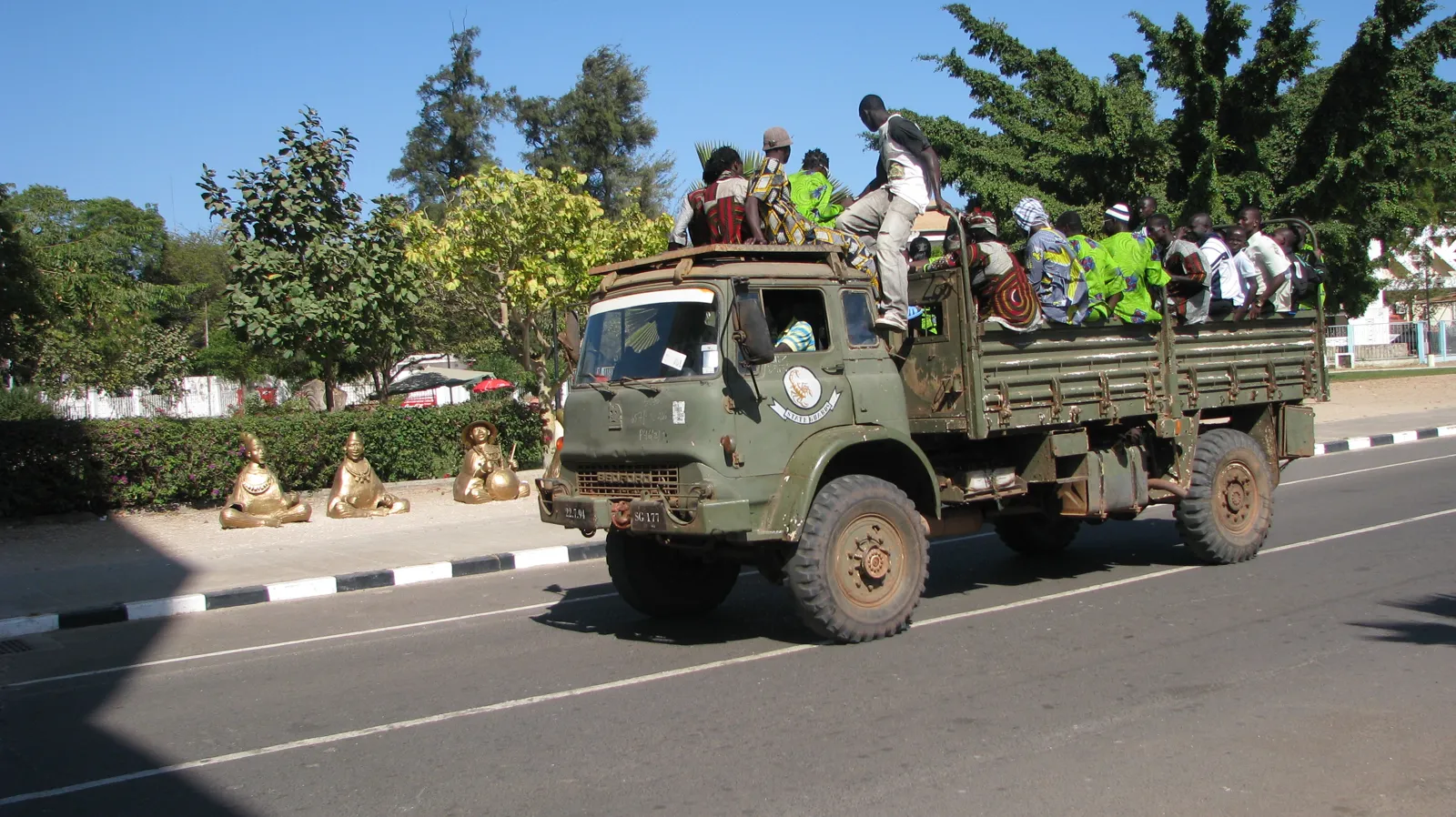
| Armoured cars and infantry vehicles | 8 Ferret and 4 M8 Greyhound armoured cars (Wikipedia); 17 Otokar Cobra-1 and 2 Katmerciler Hızır MRAP donated by Türkiye |
| Artillery | At least 1 M101 howitzer (flagged as needing a source); no other artillery inventory is documented |
| Structure | Two infantry battalions, an engineering squadron and a Presidential Guard company; barracks at Fajara, Yundum, Kudang and Farafenni |
| External security presence | The Gambia has hosted the ECOWAS ECOMIG force since 2017; Senegal surrounds the country and the bilateral defence link dates to 1965 |
Air Force Inventory
| Platform | Est. quantity |
|---|---|
| Combat aircraft | None; 2026 reports say Gambia has no combat aircraft and it is absent from FlightGlobal’s 2026 World Air Forces report |
| Air force attempt | A 2002 plan for an air force sent pilots for training in Ukraine and a Su-25 was bought from Georgia in 2003; the programme was not pursued |
| Air force status | The 1985 Armed Forces Act foresaw four branches, but the Air Force was never truly operational |
Missile and Air-Defence Systems
| System | Type / Note |
|---|---|
| Anti-armour | No guided anti-tank missile is documented in open sources |
| Anti-ship | None |
| Air defence | No air-defence system is documented; the country’s airspace in practice depends on neighbouring Senegal and partners |
Naval Power
| Class / Type | Est. quantity |
|---|---|
| Patrol craft | As estimated in 2015: 3 Berre Kuntu (from 2013), 4 Taiwanese HAI-OU-class (from 1980), 2 Fatimah (from 1999) and 1 Peterson PBI/Swift PCF |
| Personnel | About 500 personnel (an estimate flagged as needing a source); the Navy was formed in 1997 |
| Maritime tasks | The core task is enforcing fisheries rules and countering smuggling and human trafficking, with help from the Senegalese Navy |
| External support | The United States (AFRICOM, Obangame Express exercise, MSSIS) and Taiwan (boat donations in 2009 and 2013) supplied training and equipment |
The Turkey Angle: Turkish Defence Industry
Türkiye is one of the long-standing defence partners of the Gambia Armed Forces. According to Wikipedia, Turkish trainers helped train about 5,000 Gambian soldiers between 1991 and 2005, about 60 officers and NCOs were sent to Türkiye for training, a Military Advisory Mechanism continued after the agreement ended in 2005, and a new bilateral defence agreement was signed in 2014.
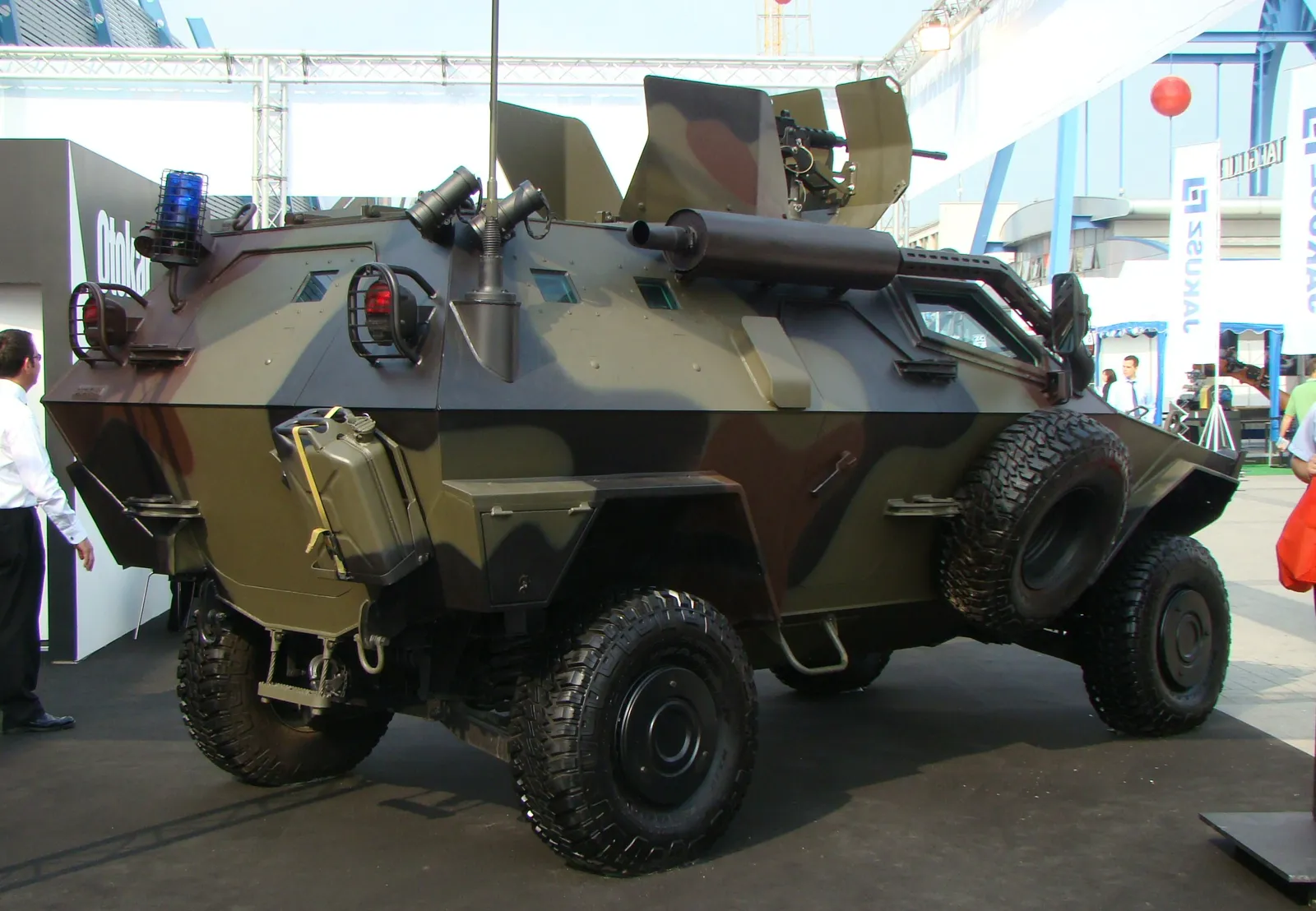
The Turkish footprint in the inventory comes from donated vehicles: as Wikipedia reports, Türkiye donated 17 Otokar Cobra-1 armoured vehicles and 2 Katmerciler Hızır MRAPs to the Gambia, along with high-frequency radios, mine detectors, uniforms and winter jackets. This was a donation, not a sales contract; delivery dates and current serviceability were not verified here.
The Gambia’s stated needs overlap with the light product groups in which Turkish industry has proven export credentials: mine-resistant armoured vehicles, coastal and river patrol boats and surveillance systems. These are a framework for potential cooperation, not a market claim; no tactical drone or naval purchase is documented.
Frequently Asked Questions
How many tanks does the Gambia have? No tanks are documented in open sources. The land inventory consists of 8 Ferret, 4 M8 Greyhound and the Otokar Cobra-1 and Hızır vehicles donated by Türkiye.
Does the Gambia have fighter jets? No. A Su-25 was bought from Georgia in 2003 but no air force was created; according to 2026 reports the country has no combat aircraft.
How many soldiers does the Gambia have? About 4,000 (2019); the army’s strength is 900-1,900 depending on the source, the navy about 500 and the Republican National Guard about 50.
What boats does the Gambian Navy use? As estimated in 2015, Berre Kuntu, Taiwanese-built HAI-OU-class, Fatimah and Peterson PBI/Swift PCF-class patrol boats; there is no major warship.
What vehicles did Türkiye give the Gambia? According to Wikipedia, 17 Otokar Cobra-1 and 2 Katmerciler Hızır MRAP vehicles were donated, along with radios, mine detectors and uniforms.
Bottom Line
The Gambia’s inventory is a small force without tanks or combat aircraft, built on light armour and coastal boats. Geography sets its security reality: Senegal, which surrounds the country entirely, and the ECOWAS framework are the real carriers of defence. For Türkiye the link is genuine: long-running training cooperation, the 2014 defence agreement and the donated Cobra-1 and Hızır vehicles are documented, and anything beyond sits in the potential framework.