French Navy Admits Fourth Suffren-Class Nuclear Attack Submarine De Grasse Into Active Service

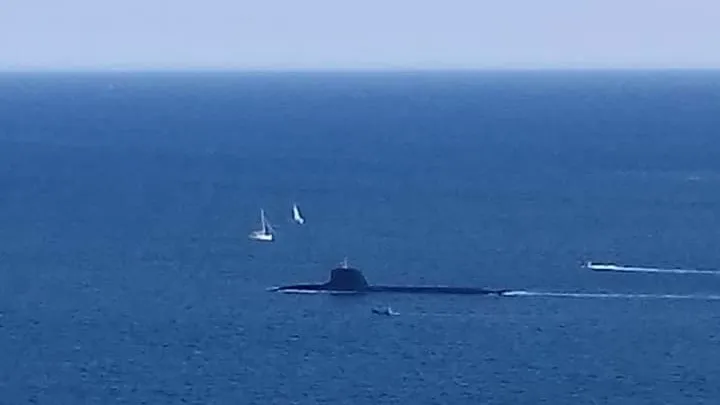
The French Navy has admitted De Grasse (S638), the fourth Suffren-class nuclear-powered attack submarine, into active service. The decision was signed by the Chief of Staff of the French Navy, Admiral Christophe Cluzel, on 20 November 2026, after nine months of sea trials that took the boat from Arctic waters off Norway to the US East Coast. De Grasse joins Suffren, Duguay-Trouin and Tourville at the Toulon naval base, bringing France two-thirds of the way through its six-boat Barracuda programme.
From Cherbourg to Toulon
Naval Group received the individual order for De Grasse on 18 July 2014 and began cutting steel in 2015 at Cherbourg. The hull reached the launch facility on 27 May 2025, and its K15 reactor achieved first criticality on 12 December 2025. The submarine first left Cherbourg on 24 February 2026 for trials in the English Channel and Atlantic, and the DGA procurement agency handed it to the Navy on 24 June. A 149-day military capability verification phase followed, including navigation in polar and warm waters with port calls at Tromsø and Norfolk, Virginia.
What is new on the fourth boat
According to Army Recognition, De Grasse is the first of its class to carry an upgraded version of the SYCOBS combat management system and a new-generation electronic warfare suite. Its arrival raises the number of French attack submarines able to fire the MdCN naval cruise missile from three to four. The time from delivery to active service has fallen by about 74 percent compared with the lead boat Suffren, a sign that the Navy and industry have streamlined qualification.
| Boat | Pennant | Active service |
|---|---|---|
| Suffren | S635 | June 2022 |
| Duguay-Trouin | S636 | April 2024 |
| Tourville | S637 | July 2025 |
| De Grasse | S638 | November 2026 |
| Rubis | – | Under construction |
| Casabianca | – | Under construction, all deliveries by 2029 |
Replacing the Rubis class
The Suffren class replaces the Rubis-class boats one for one. The fleet size stays at six, but capability rises sharply: standard patrol endurance grows from 45 to 75 days and weapons capacity from 14 to 24 per submarine. The boats can also embark a dry-deck hangar for special forces swimmer delivery vehicles, a role the older submarines could not perform to the same standard.
Faster acceptance
The 12 years and four months between the order and active service may look long, but most of that time was spent waiting in the production sequence behind the first three boats. The keel-laying ceremony at the Laubeuf hall in Cherbourg took place on 31 July 2023, only eleven days after Tourville left the same building. Each boat has needed less time between delivery and operational status, which helps the Navy retire the remaining Rubis-class submarines on schedule.
Analysis: France’s undersea reach
Attack submarines protect France’s ballistic missile submarines leaving Brest, escort the carrier Charles de Gaulle and gather intelligence far from home. With MdCN, they can also strike land targets at long range without exposing aircraft. The polar trials point to a growing French interest in the High North, where Russian submarine activity matters to the whole of NATO. For the Alliance, a fourth modern French SSN adds to a small pool of European nuclear attack submarines alongside the UK’s Astute class, at a time when demand for undersea presence in the Atlantic and Mediterranean is rising.
Where is De Grasse based?
At Toulon, home of France’s nuclear attack submarine force.
How many Suffren-class boats will France have?
Six. Four are now in service; Rubis and Casabianca are due by 2029.