Australia’s Military Power: How Many Tanks, Aircraft and Ships Are in the Inventory? (2026)

Australia’s military inventory shows how a country of fewer than 27 million people is trying to build one of the world’s most expensive and technologically advanced forces. On paper the Australian Defence Force (ADF) is small, at 58,910 active personnel, but it holds a capability layer fully compatible with the United States, from the F-35A and E-7A Wedgetail to Aegis-equipped Hobart destroyers and HIMARS. The 2023 Defence Strategic Review and the 2024 National Defence Strategy shifted the force from continental defence toward deterrence in the Indo-Pacific. Turkish defence industry is not yet in this inventory, but beyond the shared memory of Gallipoli the two countries are in contact through the NATO partnership and a defence-industry dialogue.
At a Glance
- Active personnel: Global Firepower counts 58,910 active and 33,270 reserve personnel with no paramilitary force; the force is fully volunteer and professional
- Main battle tanks: Global Firepower counts 46 tanks; the M1A1 AIM SA fleet is being replaced through a 75-tank M1A2 SEPv3 purchase
- Military aircraft: Global Firepower counts 348 aircraft: 24 fighters, 71 attack aircraft and 72 helicopters (22 of them attack); the core of the fleet is the F-35A and F/A-18F
- Artillery and rocket launchers: GFP counts 48 towed guns and 8 rocket launchers with no self-propelled guns; the backbone is the M777A2 howitzer, with HIMARS as the start of long-range strike
- Naval platforms: Global Firepower counts 45 naval assets: 3 destroyers, 7 frigates, 2 helicopter carriers, 6 submarines, 13 patrol vessels and 3 mine warfare craft
- Defence budget: Global Firepower gives about 57.35 billion US dollars; the budget is about 2 percent of GDP with a 2033 target of 2.4 percent
Note: The inventory figures below are approximate values drawn from open sources such as Global Firepower, the IISS Military Balance and SIPRI.
About the Australia Armed Forces
The Australian Defence Force consists of the Australian Army, the Royal Australian Air Force (RAAF) and the Royal Australian Navy. The Army fields the 1st, 3rd and 7th combat brigades, the 2nd Commando Regiment and the SASR special air service. There is no conscription; the force is fully volunteer and professional.
In the Global Firepower 2026 count Australia ranks 17th of 145 with a Power Index of 0.3208. Active personnel are 58,910, reserves 33,270 and there is no paramilitary force. The defence budget is about 57.35 billion US dollars according to Global Firepower, around 2 percent of GDP, with the 2024 National Defence Strategy aiming for 2.4 percent by 2033. Most of the money goes to AUKUS submarines, frigates and guided munitions.
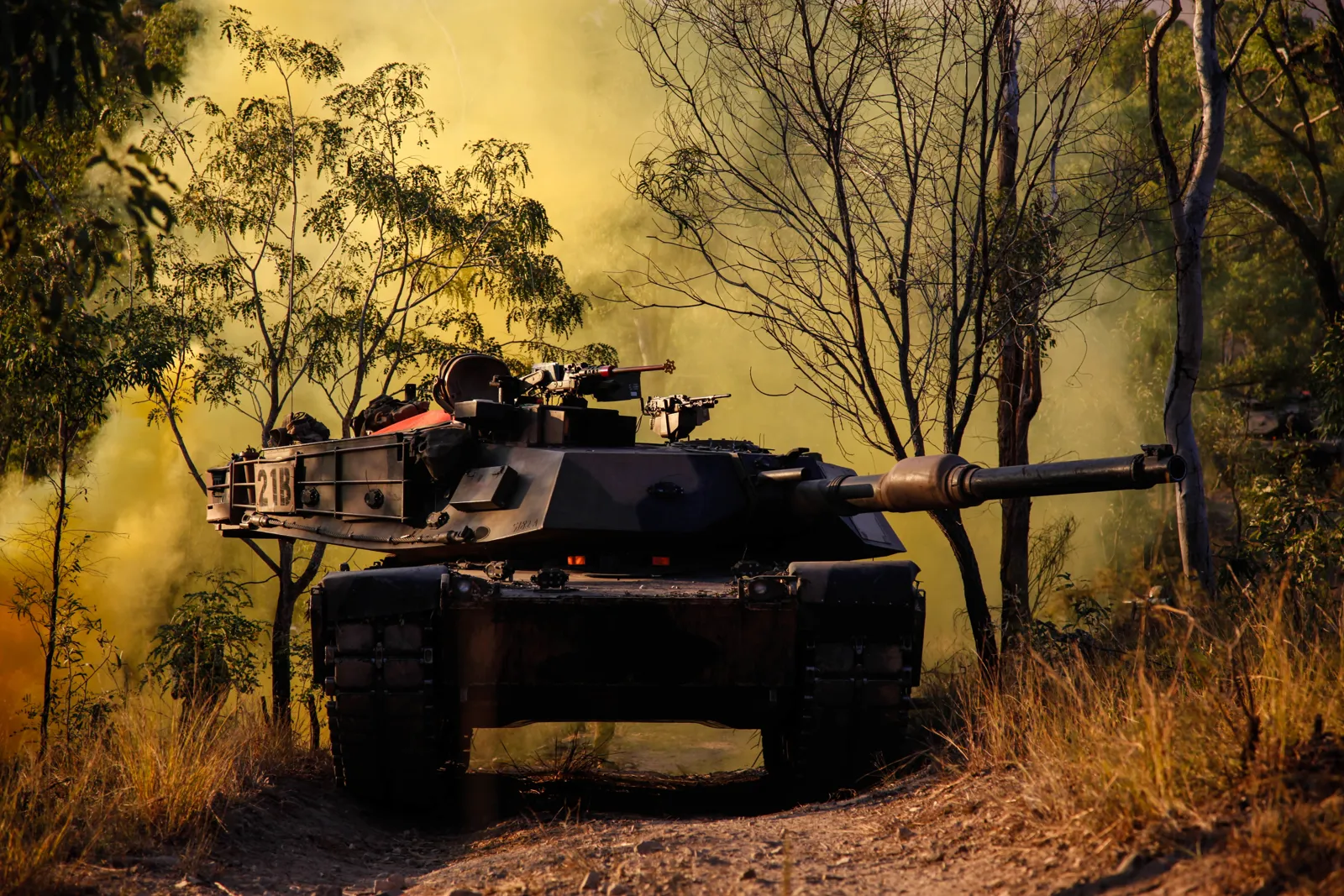
The land inventory is being renewed. The tank fleet is 59 M1A1 AIM SAs, being replaced by 75 M1A2 SEPv3s bought from the United States; the Global Firepower total is 46. The Rheinmetall Boxer CRV (211 vehicles, built at Ipswich in Queensland) is replacing the ASLAV, and Hanwha’s Redback infantry fighting vehicle was selected for Land 400 Phase 3. Armoured carriers include the M113AS4, about 1,000 Bushmaster PMVs and the Hawkei. The artillery backbone is about 54 M777A2 lightweight howitzers; there are no self-propelled guns.
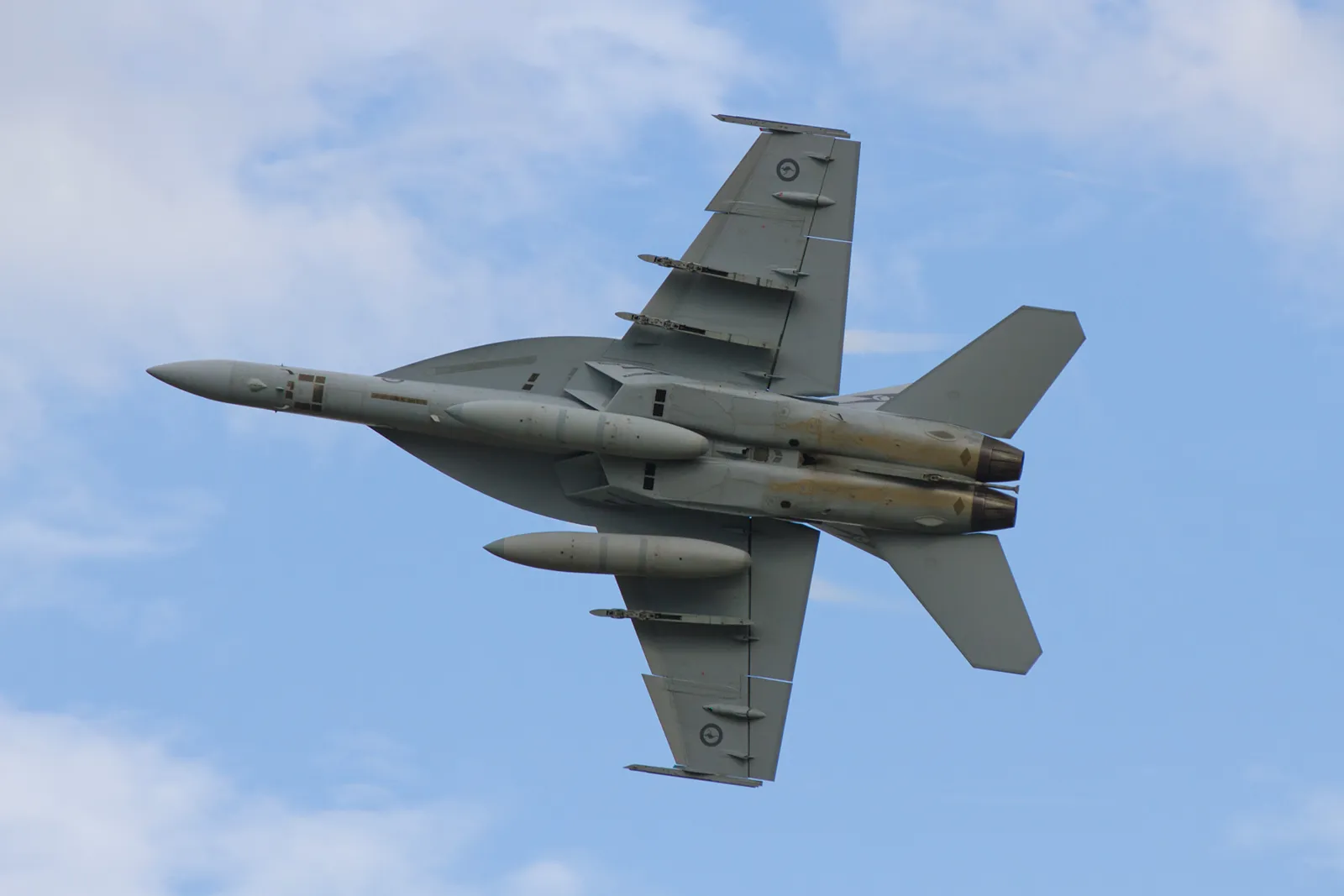
At the centre of the RAAF are 72 F-35As on order (Williamtown and Tindal). 24 F/A-18F Super Hornets and 11 EA-18G Growlers cover electronic warfare and multirole missions; the Hornet fleet was retired in 2021. 6 E-7A Wedgetail early-warning aircraft, 12 P-8A Poseidons, 7 KC-30A tankers, 8 C-17As, 12 C-130J-30s and 10 C-27Js make up the support fleet. About 22 Tiger ARH attack helicopters are in service, and UH-60M Black Hawks are replacing the MRH90 fleet. The MQ-28 Ghost Bat is the country’s own loyal-wingman uncrewed programme.
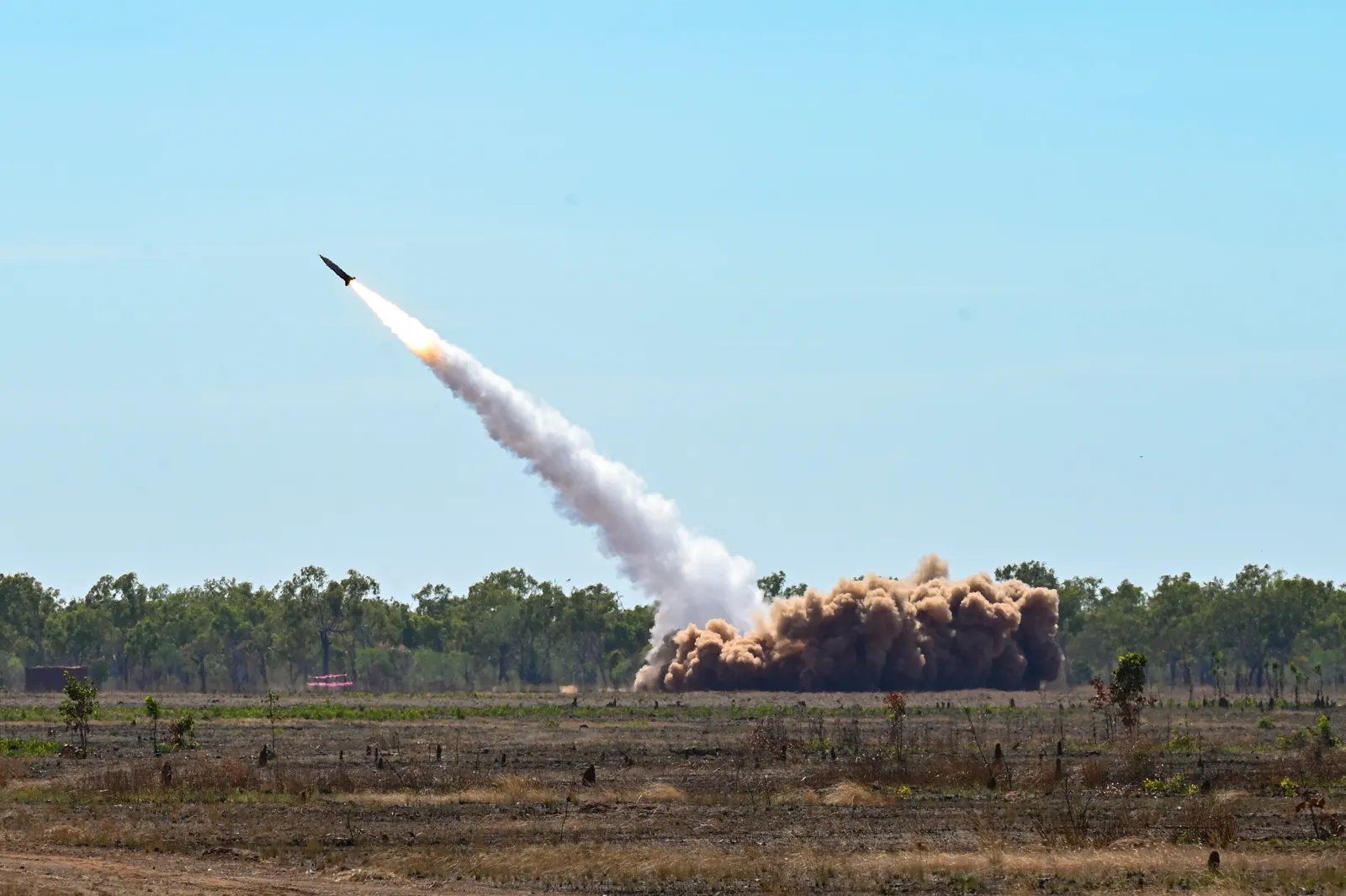
Air defence relied until recently on short-range RBS 70s; NASAMS was selected under Land 19 Phase 7B. In long-range strike HIMARS (first deliveries from 2023), Tomahawk and JASSM-ER stand out. The Hobart-class Aegis destroyers carry SM-2 and SM-6, and the Guided Weapons and Explosive Ordnance Enterprise has been set up to build guided munitions at home.
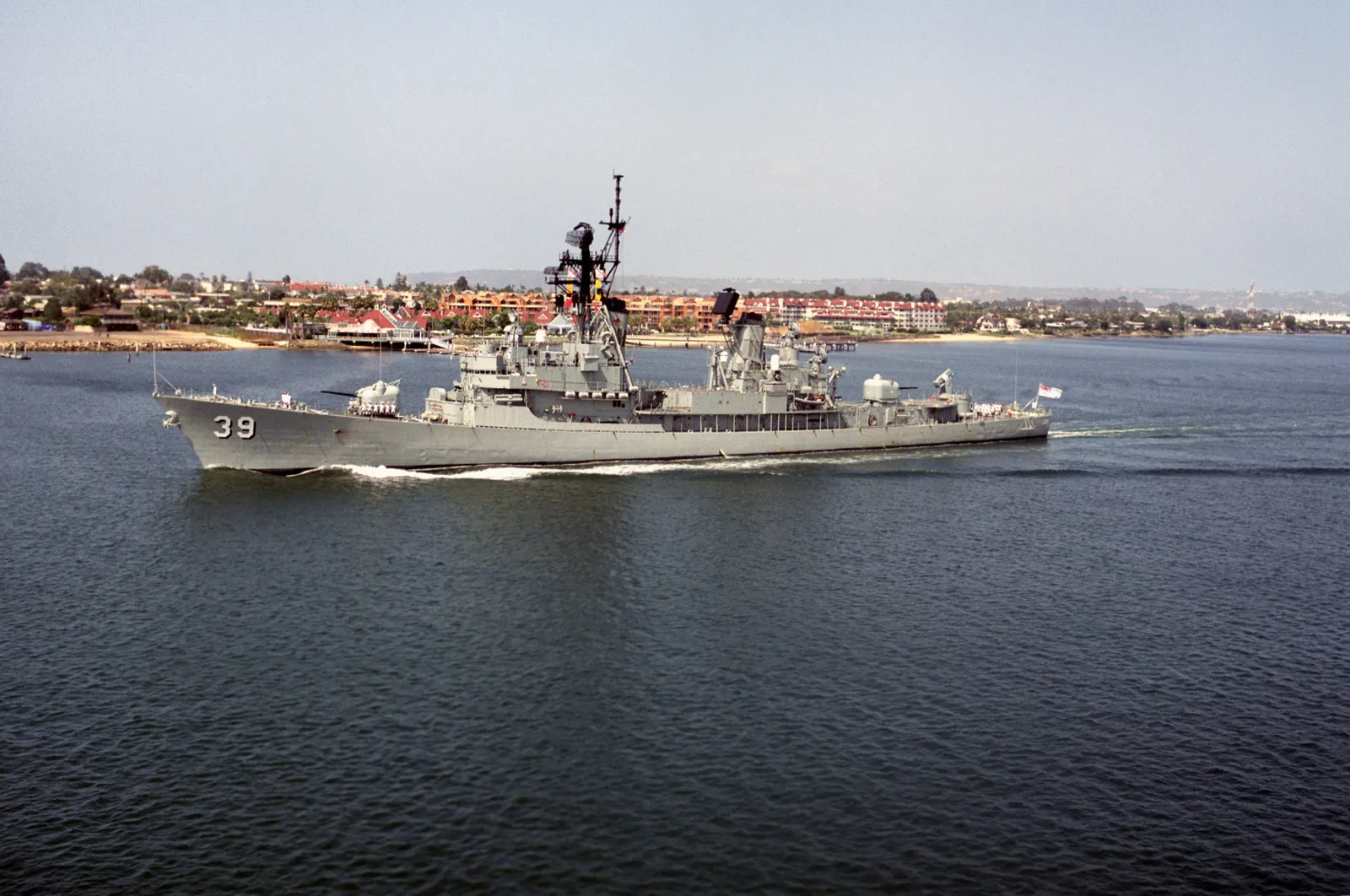
The Navy consists of 3 Hobart destroyers, Anzac-class frigates, 2 Canberra-class LHDs, 6 Collins-class submarines and Arafura-class offshore patrol vessels. In August 2025 Mitsubishi Heavy Industries’ Mogami class was selected for the 11-ship SEA 3000 frigate programme. Under AUKUS the plan is to transfer Virginia-class nuclear submarines in the 2030s and co-design the SSN-AUKUS; the Collins class has had its service life extended.
Land Forces Inventory
| System type | Est. quantity |
|---|---|
| Main battle tanks | The M1A1 AIM SA fleet (59 tanks) and 75 M1A2 SEPv3s bought from the United States; deliveries have continued since 2024, and the Global Firepower total is 46 |
| Armoured combat and reconnaissance vehicles | Rheinmetall Boxer CRV (211 vehicles, built at Ipswich in Queensland) replacing the ASLAV; Hanwha’s Redback infantry fighting vehicle was selected for Land 400 Phase 3 |
| Armoured personnel carriers and light vehicles | M113AS4 armoured carriers, the Bushmaster PMV (about 1,000 vehicles) and the Hawkei light protected vehicle; GFP gives 17,118 armoured vehicles in total |
| Artillery | M777A2 155 mm lightweight howitzers (about 54), 81 mm and 120 mm mortars; the self-propelled gun programme has been restructured |
| Force structure | 3 combat brigades (1st, 3rd and 7th), the 2nd Commando Regiment, the SASR special air service and the 6th Combat Support Brigade; reserve brigades make up the rest |
Air Force Inventory
| Platform | Est. quantity |
|---|---|
| Total military aircraft | 348 (Global Firepower): 24 fighters, 71 attack aircraft and 72 helicopters; the RAAF has roughly 14,000 personnel |
| Fifth-generation fighters | 72 F-35A Lightning IIs on order (Williamtown and Tindal), with most deliveries complete. Türkiye, once a partner in the programme, was removed in 2019 |
| Multirole and electronic warfare | 24 F/A-18F Super Hornets and 11 EA-18G Growlers; the F/A-18A/B Hornet fleet was retired in 2021 |
| Airborne early warning, patrol and tanker | 6 E-7A Wedgetail early-warning aircraft, 12 P-8A Poseidon maritime patrol aircraft (a rise to 14 was planned) and 7 KC-30A MRTT tankers |
| Transport, helicopters and uncrewed systems | 8 C-17As, 12 C-130J-30s, 10 C-27Js; about 22 Tiger ARH attack helicopters; UH-60M Black Hawks replacing the MRH90 fleet; and the MQ-28 Ghost Bat and MQ-4C Triton programmes |
Missile and Air-Defence Systems
| System | Type / Note |
|---|---|
| Surface-to-air defence | Short-range RBS 70s rather than a heavy system; NASAMS was selected under Land 19 Phase 7B and will be the first layered ground-based air defence |
| Rocket artillery and long-range strike | HIMARS (first deliveries from 2023, with GMLRS and PrSM munitions), Tomahawk, JASSM-ER and a planned LRASM; GFP counts 8 rocket launchers |
| Shipborne defence missiles | SM-2 and ESSM with Aegis on the Hobart class, ESSM and Harpoon on the Anzac class; the SEA 3000 programme covers the new Mogami-based frigates |
| Guided anti-tank and air-to-air | Javelin, Spike LR2 (with Hawkei and Boxer integration), AIM-120 AMRAAM, AIM-9X and ASRAAM; Hellfire for the Tiger |
| Precision munitions and the gap | The Guided Weapons and Explosive Ordnance Enterprise aims at domestic guided munitions production; the missing links are stockpile depth and counter-UAS protection |
Naval Power
| Class / Type | Est. quantity |
|---|---|
| Destroyers | 3 Hobart-class Aegis destroyers: Hobart, Brisbane and Sydney; the 7,000-tonne ships carry SM-2 and SM-6 from a 48-cell VLS |
| Frigates | Anzac-class frigates remain in service; the Mogami class was selected in August 2025 for the 11-ship SEA 3000 programme meant to replace them. The BAE Hunter-class frigates are a separate programme |
| Submarines | 6 Collins-class diesel-electric submarines (Stirling); under AUKUS the plan is to transfer Virginia-class nuclear submarines in the 2030s and build the SSN-AUKUS |
| Amphibious and replenishment | 2 Canberra-class LHDs (HMAS Canberra and Adelaide), HMAS Choules and the Supply-class replenishment ships, working alongside the United States in exercises such as Talisman Sabre |
| Patrol and mine warfare | Arafura-class offshore patrol vessels (a 12-ship programme), Cape-class boats and Huon-class mine countermeasure vessels; 3 mine warfare craft (GFP) |
The Turkey Angle: Turkish Defence Industry
There is no Turkish-built weapon system or platform in the Australian inventory; the force’s equipment comes mainly from the United States, Europe and South Korea, and AUKUS and the partnership with Japan reinforce this structure. By contrast the tie between Türkiye and Australia is historically very strong: the 1915 Gallipoli campaign is the foundation of a shared memory, and Anzac Cove receives thousands of Australian visitors every year.
There is an institutional framework too: the two countries signed the Australia-Türkiye Materiel Cooperation Arrangement in March 2010. Australia is not a NATO member but takes part in NATO summits as an Indo-Pacific partner; Defence Industry Minister Pat Conroy represented Australia at the NATO summit and the NATO Defence Industry Forum (NSDIF26) held in Ankara in July 2026. According to Anadolu Agency, Conroy said Türkiye’s expanding defence industry and increased state investment create opportunities for cooperation, and described bilateral relations as at an all-time high.
That statement names no product, project or contract, so it is reported here only as an expression of intent. Because Türkiye was removed from the F-35 programme in 2019, it stands apart from the common platform of the Australian fleet; however, Australia’s need to diversify its Indo-Pacific supply chain defines a potential space for Turkish industry.
The gaps in the inventory point to this space: counter-UAS and short-range air defence, stockpile depth of guided munitions, uncrewed maritime and air platforms and munitions production capacity. It is logical for Turkish industry to come up under these headings, but there is no recorded Australia-Türkiye arms contract today; the framing should be read as a potential market and a peer comparison.
Frequently Asked Questions
How many tanks does Australia have? The Global Firepower 2026 count gives 46 tanks. The fleet is 59 M1A1 AIM SAs, being replaced by 75 M1A2 SEPv3s bought from the United States.
What fighter jets does Australia have? At the centre are 72 F-35A Lightning IIs on order. They are joined by 24 F/A-18F Super Hornets and 11 EA-18G Growler electronic warfare aircraft.
Does Australia have submarines? Yes: 6 Collins-class diesel-electric submarines. Under AUKUS the plan is to transfer Virginia-class nuclear submarines in the 2030s and design the SSN-AUKUS.
Which countries does Australia buy weapons from? Mainly the United States (F-35A, Abrams, Super Hornet, HIMARS, P-8A), followed by Germany (Boxer), South Korea (Redback), Japan (Mogami frigate), Spain (Canberra LHD, Supply class) and the United Kingdom (Hunter frigate, AUKUS).
Is there defence cooperation between Türkiye and Australia? In a limited framework: the 2010 Materiel Cooperation Arrangement and Defence Industry Minister Conroy’s July 2026 statement on new cooperation opportunities at the NATO summit. There is no Turkish platform or recorded contract in the inventory yet.
Bottom Line
Australia’s inventory is that of a small but high-quality force: 46 tanks and 24 fighters are modest in number, but the F-35A, Aegis destroyers, P-8A and E-7A provide a critical capability layer in the US-centred network. The real transformation is in AUKUS nuclear submarines, Mogami frigates and domestic guided munitions production. The Turkish link today is limited to shared history, the 2010 arrangement and the July 2026 statement of intent; counter-UAS, short-range air defence and munitions capacity stand as a potential area of contact for Turkish industry.
Related Reading
Sources
- Global Firepower — Australia
- IISS — The Military Balance
- SIPRI — Arms Transfers Database
- Wikipedia — Australian Defence Force
- Wikipedia — Australian Army
- Wikipedia — Royal Australian Air Force
- Wikipedia — Royal Australian Navy
- A News — Australian minister sees new defense industry cooperation opportunities with Türkiye
- Australian Department of Defence — Travel to Türkiye for the 2026 NATO summit