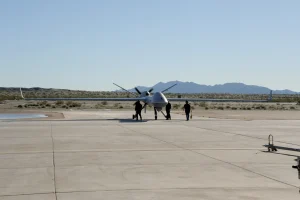
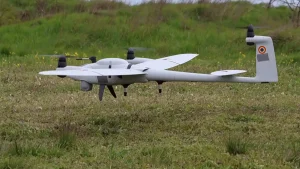
ASELSAN’s EJDERHA Neutralises 51 Drones Launched Simultaneously Within Seconds

ASELSAN marked its 51st anniversary by putting its EJDERHA High-Power Electromagnetic (HPEM) counter-UAS system through a live demonstration. According to the company, 51 drones launched at the same time were neutralised simultaneously within seconds. ASELSAN says no directed-energy system had previously been recorded defeating this many drones at once.
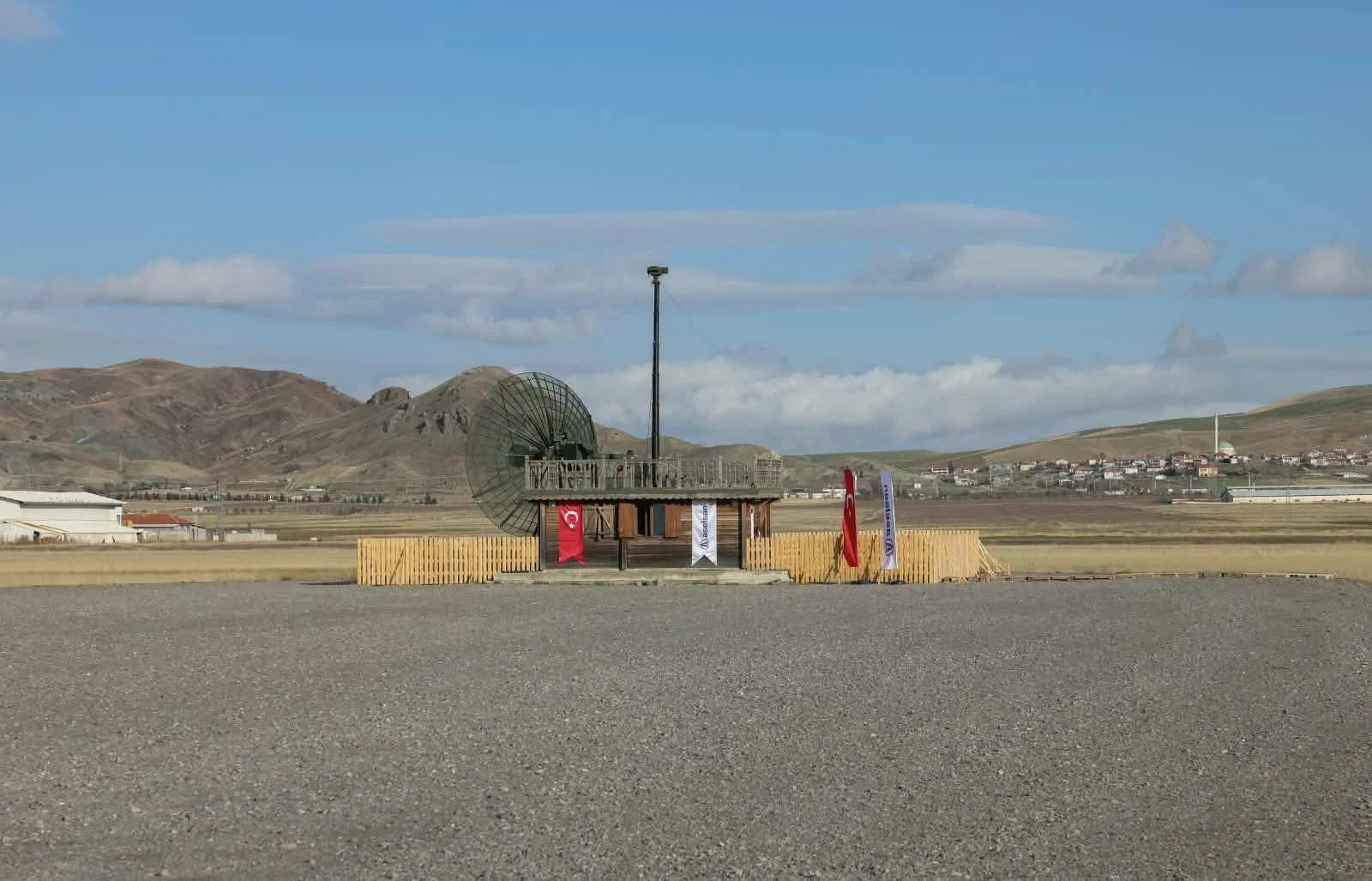
A two-stage demonstration
In the first stage, EJDERHA disabled two separate tethered drones at a range of roughly 1,000 metres. Tethered drones receive commands over a fibre-optic cable instead of a radio link, so conventional jamming-based counter-drone systems cannot touch them. An electromagnetic pulse attacks the drone’s own electronics, which makes the type of link irrelevant. ASELSAN used this stage to show that the system protects regardless of threat type.
The second stage was a swarm scenario. Fifty-one drones, one for each year of the company’s history, took off together. EJDERHA defeated every airborne drone in the multi-threat scenario within seconds and at the same time. ASELSAN described the result as a world first in counter-electronic warfare.
Akyol: “We downed 51 drones at the push of a button”
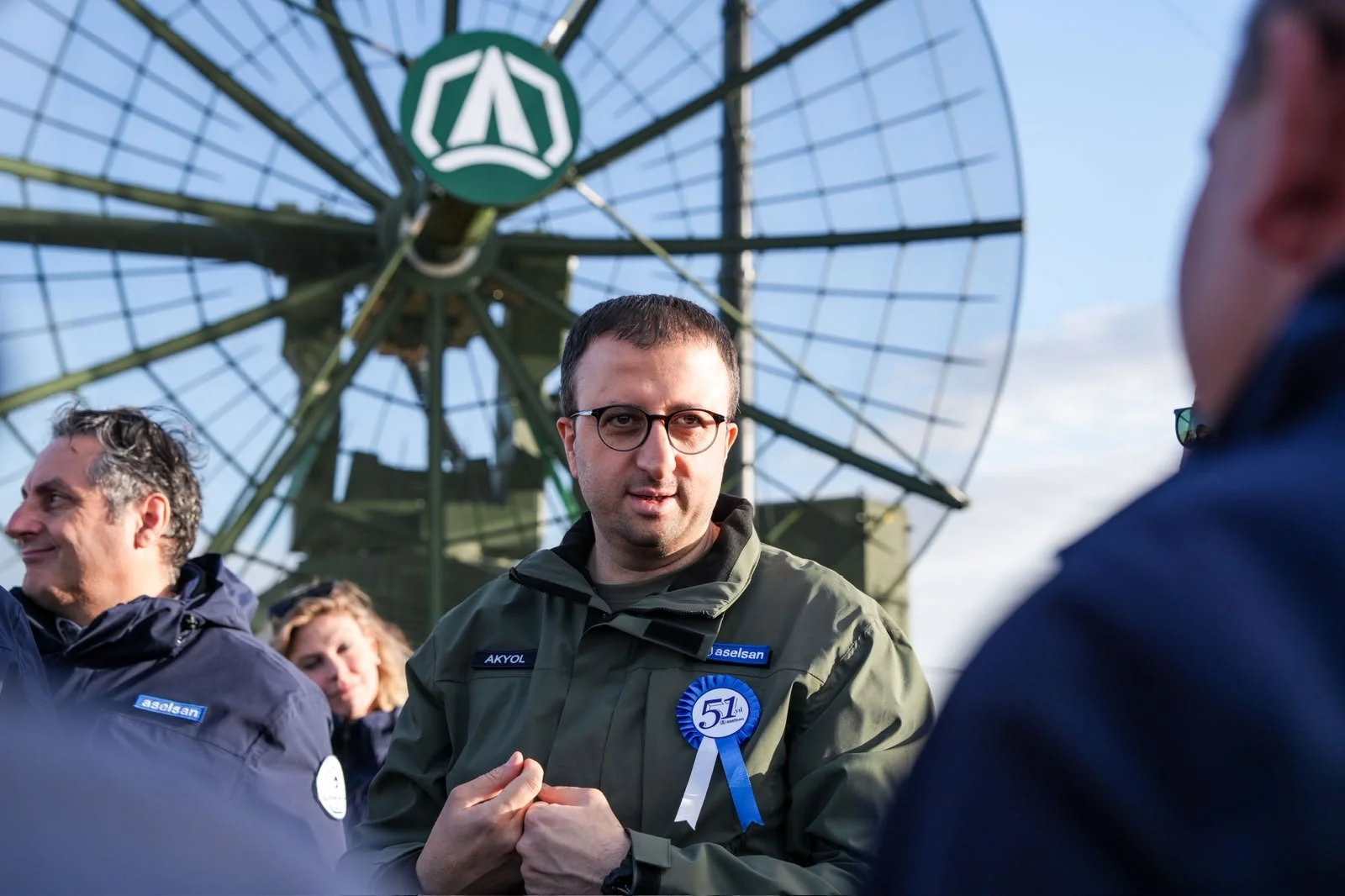
ASELSAN President and CEO Ahmet Akyol commented on the record:
“On ASELSAN’s 51st anniversary we came together with our employees to demonstrate a very special technology. ASELSAN’s EJDERHA has become the first system in the world to bring down 51 drones with a single button, without firing a missile or using any munition. With high-power electromagnetic waves, it has become one of the most effective systems at destroying drones, one of the greatest threats of our time.”
Akyol stressed that EJDERHA is past the laboratory stage: “As a result of these efforts, EJDERHA is now a technology that has been fielded, has entered serial production and has reached the level where it contributes to our country’s security. We will keep developing these technologies.”
How EJDERHA works
EJDERHA uses vacuum electronics to generate high-power electromagnetic waves. It detects targets with an active radar, tracks them with an electro-optical sensor and steers the energy precisely onto them. ASELSAN says it can produce four effects on any threat that contains electronic circuits: suppression, forced reset, neutralisation or permanent damage.
The effect targets a drone’s navigation, communication and command-and-control systems, disabling them from a safe distance. The company says EJDERHA has repeatedly demonstrated detection, tracking, pointing and defeat in field conditions against:
- Mini and micro UAVs
- Fixed-wing UAVs flying below cloud cover
- Tethered and wireless FPV drones
- UAVs powered by internal combustion engines
Its place in Steel Dome
EJDERHA was developed to detect and defeat mini and micro UAV threats within ÇELİKKUBBE (Steel Dome), Türkiye’s national layered air defence architecture. This time the demonstration involved a dense swarm arriving at once rather than a single target.

Why it matters
Swarm attacks go after air defence’s weakest point: the number of shots it can take. Spending an interceptor or a round on every drone is costly and limited by stockpiles. A directed-energy system can keep firing as long as it has power and can affect several targets with one broad beam. Defeating 51 drones in a single engagement puts a concrete number on that advantage.
What was not disclosed
- EJDERHA’s maximum effective range and the distance in the 51-drone trial
- The drone types used and how widely the swarm was spread
- The scale of serial production and which units have received the system
Source: ASELSAN press release. Photos: ASELSAN.