ASELSAN Signs $1.1 Billion Air Defense Export Deal: What It Changes for Turkey

Turkish defence electronics maker ASELSAN has signed an export contract worth a total of 1.1 billion US dollars for the sale of air defense systems to an undisclosed international customer. The agreement was disclosed in the Defence Industry Agency’s (SSB) weekly bulletin, published on 10 November 2026.
According to a filing on Turkey’s Public Disclosure Platform (KAP), the contract was signed on 3 November 2026. ASELSAN did not name the buyer, citing commercial sensitivity, a common practice for export deals of this scale in the defence sector.
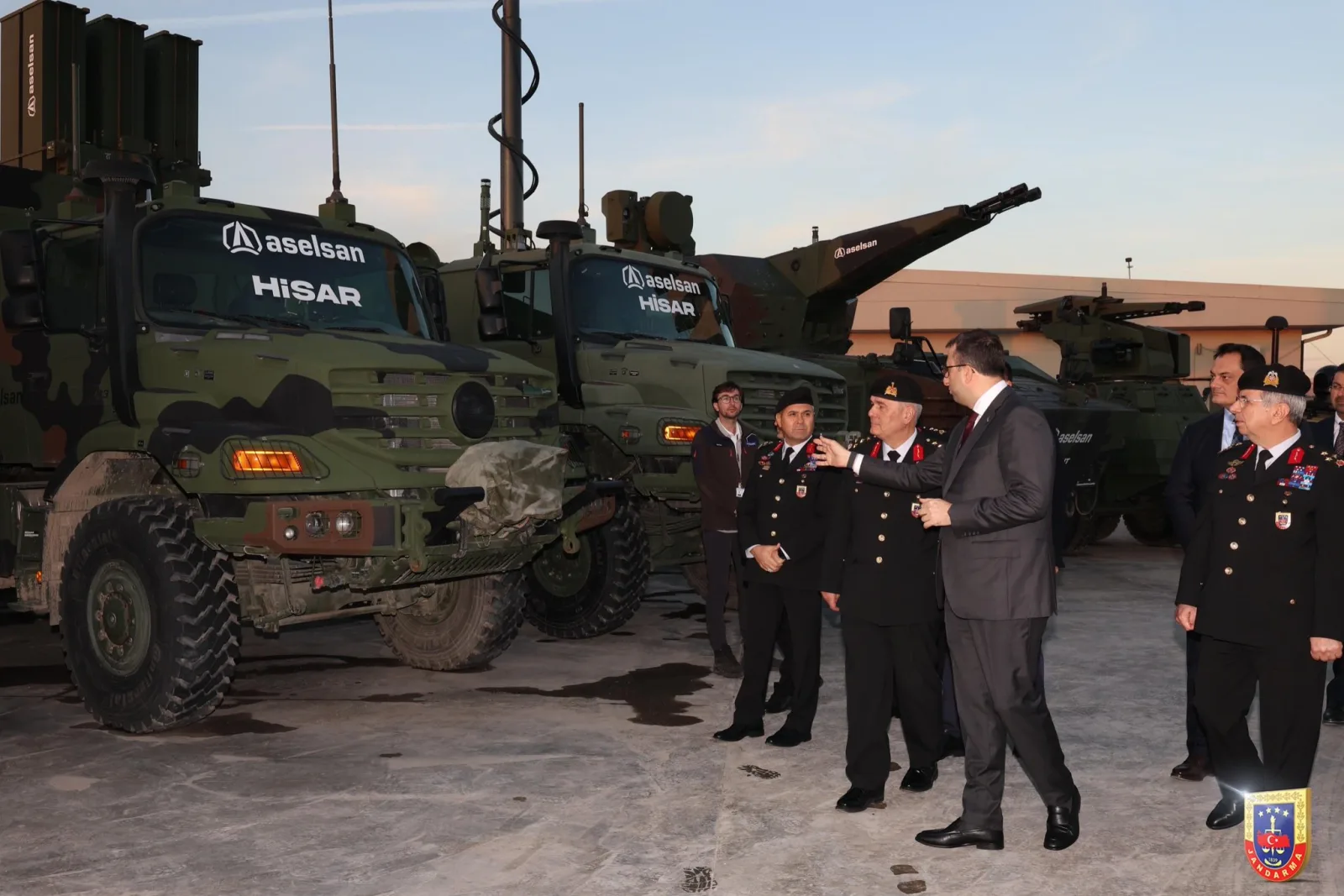
No breakdown of the systems covered was released, but the label “Air Defense Systems” points to ASELSAN’s existing product line in the segment: the short- and medium-range HİSAR A/A+ and O/O+ missile families, the twin 35mm-gun-based KORKUT point-defence system, the ALKA laser weapon, and the man-portable SUNGUR air defense missile.
The HİSAR family was developed under SSB’s leadership to give Turkey an indigenous short- and medium-range air defense capability, while KORKUT is built specifically to counter low-flying aircraft and drone threats, including the swarms of small UAVs that have become more common on modern battlefields. Exporting these systems abroad is part of a broader strategy that mirrors Turkey’s push to cut its own reliance on imported air defense equipment.
The new deal extends a run of air defense export activity for ASELSAN. In October, the company signed a separate contract worth 488.5 million euros for an air defense system sale to an undisclosed end user abroad. Taken together, the two contracts put ASELSAN’s air defense export volume at more than 1.6 billion dollars within a span of roughly six weeks.
In the same bulletin, SSB President Haluk Görgün said Turkey’s defence and aerospace exports rose 61 percent year-on-year in October to 1.14 billion dollars, while exports over the trailing 12 months climbed 37 percent to 11.357 billion dollars. ASELSAN’s new contract suggests that a meaningful share of that growth is being driven by a small number of large, single-customer deals rather than broad-based incremental sales.
Demand for air defense systems has been climbing globally as militaries look for layered protection against drones and FPV loitering munitions. Several countries are now procuring short-range point-defence systems alongside medium-range missile batteries at the same time, a pattern that favours manufacturers like ASELSAN that field multiple products across that spectrum.
Because ASELSAN is publicly traded, contracts of this size must be disclosed through KAP, though the disclosed text withholds the buyer’s identity, the delivery schedule and the exact system mix, citing military confidentiality. The deal adds to a 2026 export performance in which air defense is emerging as a growing contributor alongside the company’s communications and electronic warfare lines.
The scale of the deal will likely show up in ASELSAN’s year-end revenue mix once the company reports full results, though the firm does not break out air defense exports as a separate line item in its quarterly filings. Contracts of this size disclosed through KAP tend to move ASELS shares in the short term, reflecting how closely investors track large, single-customer defence deals. Beyond ASELSAN, Turkey’s broader air defense push includes SSB-led programmes such as SİPER and GÖKDOĞAN, which are expanding the country’s layered defence architecture even as more of that capability starts to find buyers abroad.
Sources
Presidency of Defence Industries (SSB), weekly bulletin “What Happened in the Turkish Defence Industry This Week?”, 10 November 2026 — ssb.gov.tr. Used to confirm the contract value, date and export context.