APC vs IFV: Armoured Personnel Carrier and Infantry Fighting Vehicle Compared

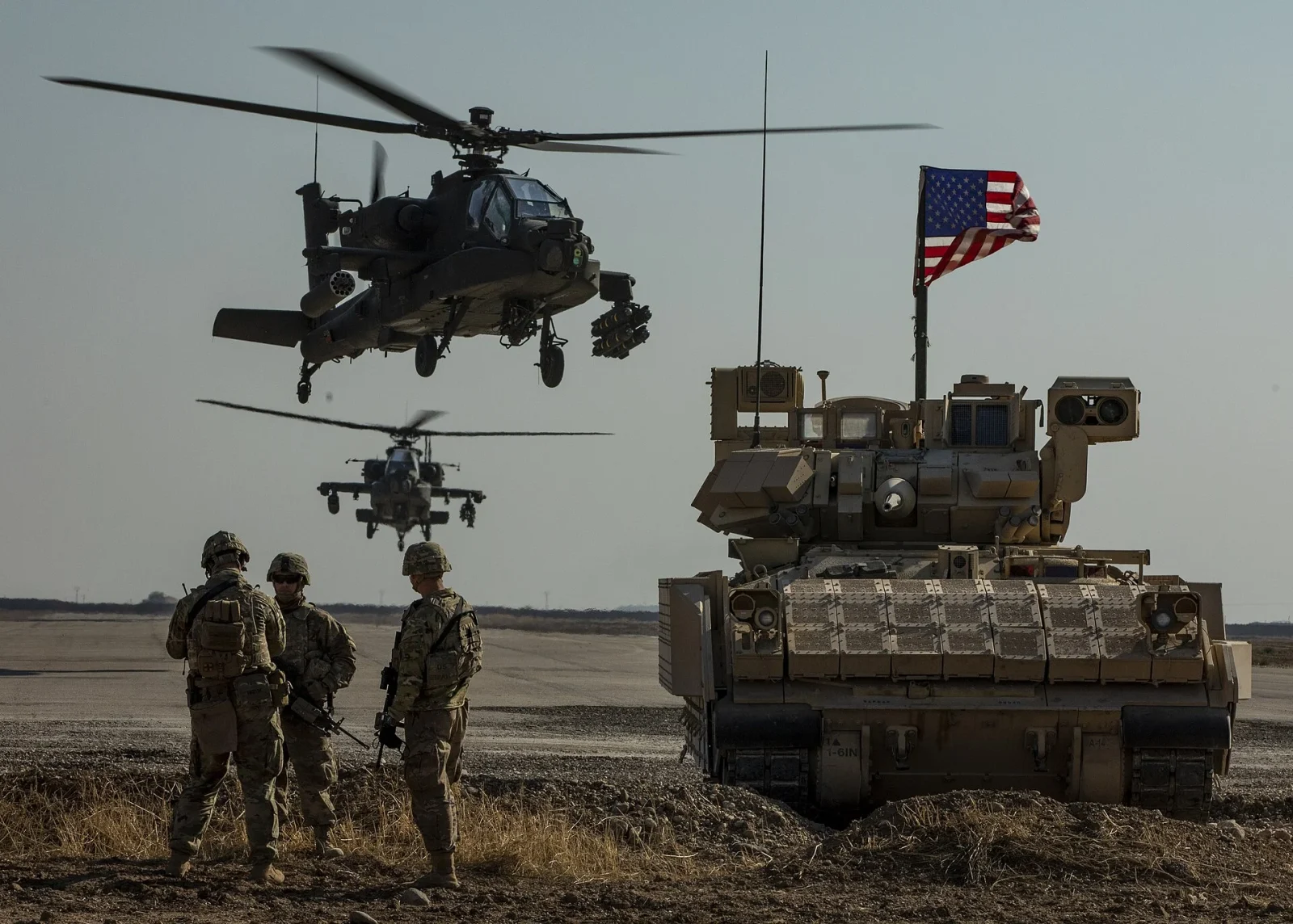
An armoured personnel carrier (APC) and an infantry fighting vehicle (IFV) both move troops under armour. The difference is what they are built to do once they arrive. An APC is mainly a protected taxi. An IFV is built to fight alongside the infantry it carries.
The U.S. Army’s M113 is a classic APC. The M2 Bradley is the Army’s standard infantry fighting vehicle, armed with a 25 mm cannon, a coaxial machine gun and anti-tank missiles, and able to carry an infantry squad into combat under armour.
What is an armoured personnel carrier?
An APC is an armoured vehicle whose main job is to transport infantry to the battlefield and give them protection from small arms and shell fragments on the way. Its own weapon is usually a machine gun, sometimes in a small turret or a shielded ring mount. The passengers typically dismount to fight on foot.
Tracked examples include the M113 family. Wheeled APCs are also widely used. The emphasis is on capacity, mobility and protection, not on matching a tank’s firepower.
What is an infantry fighting vehicle?
An IFV, sometimes called a mechanized infantry combat vehicle, carries infantry too, but it is armed and protected so that it can fight while the squad is still aboard and after they dismount. A typical IFV has a turret with an automatic cannon of about 20–40 mm, a machine gun and often anti-tank guided missiles. Firing ports were common on earlier designs; many newer vehicles rely on the turret and sensors instead.
The M2 Bradley, fielded by the U.S. Army, is the standard American example. Other well-known IFVs include the Soviet and Russian BMP series and several European 8×8 and tracked designs.
APC vs IFV: the practical differences
- Role: the APC delivers infantry; the IFV delivers them and joins the fight.
- Armament: APCs usually have a machine gun; IFVs have a cannon and often missiles.
- Protection and weight: IFVs tend to be heavier, with stronger armour and a larger turret, which can reduce the number of troops carried.
- Cost: the added sensors, cannon and missiles make IFVs more expensive to buy and to sustain.
A related distinction is the mine-resistant ambush-protected (MRAP) vehicle, built first for roadside bombs rather than for mechanized assault. See our earlier guide to the difference between an MRAP and an APC (in Turkish).
Frequently asked questions
What is the difference between an APC and an IFV?
An APC is designed mainly to carry infantry under armour. An IFV carries infantry and is armed to fight with them, usually with a cannon and sometimes anti-tank missiles.
Is the Bradley an APC or an IFV?
The M2 Bradley is an infantry fighting vehicle, not a simple APC.
Is the M113 an IFV?
No. The M113 is an armoured personnel carrier. It moves troops under armour and is typically armed with a machine gun.
Sources: U.S. Army descriptions and official imagery of the M2 Bradley and the M113; standard NATO and U.S. usage of the terms APC and IFV.