ÇAKIR Cruise Missile: Range, Specifications, Engine and Platforms

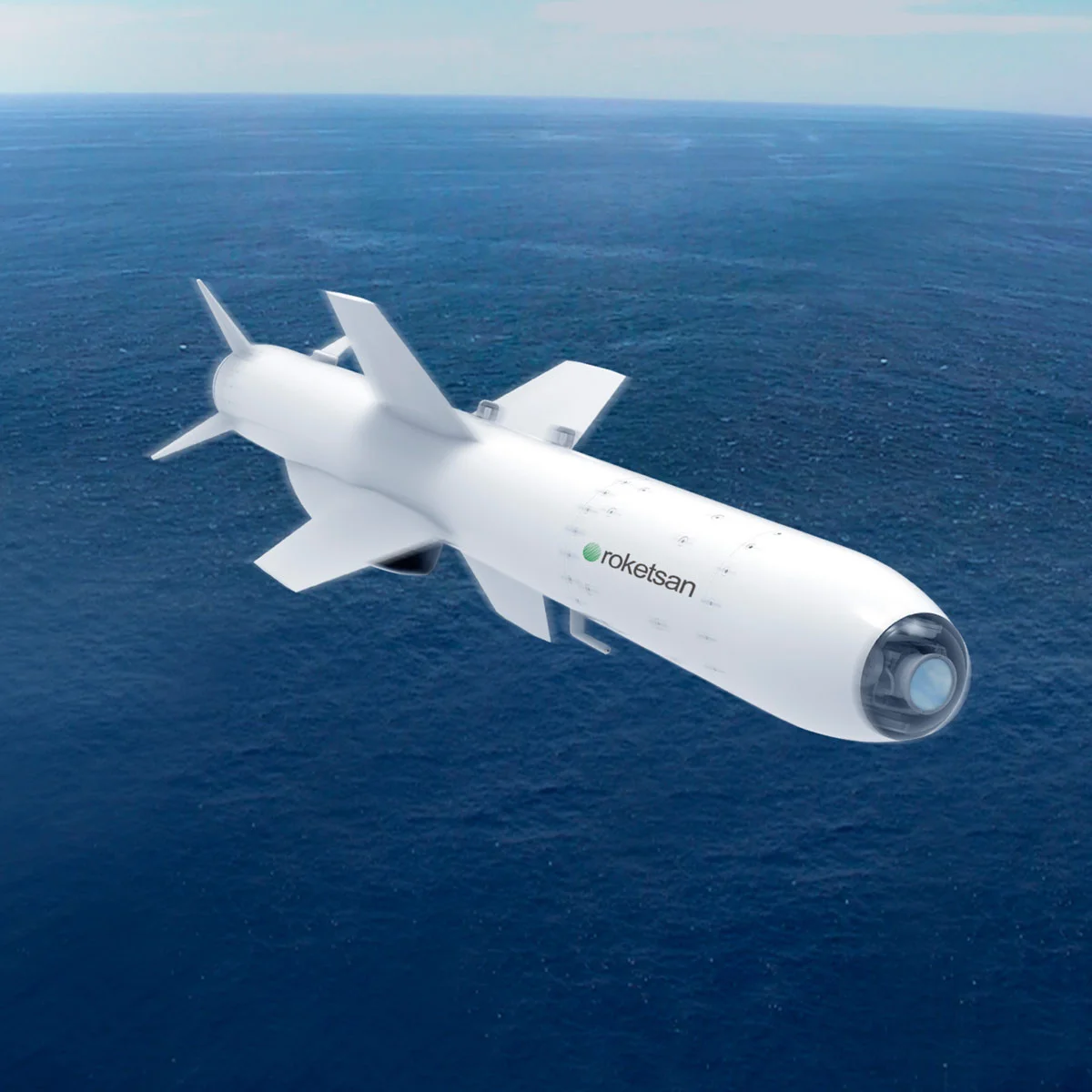
ÇAKIR (often written CAKIR) is a compact, turbojet-powered cruise missile developed by Türkiye’s ROKETSAN. It is designed to be launched from aircraft, drones, ground vehicles, unmanned surface vessels and ships. ROKETSAN lists its range as “over 150 km”. The missile was unveiled on 31 March 2022, entered serial production in July 2024 and was fired from a land platform for the first time in August 2026.
Quick answer: ÇAKIR is a high-subsonic (Mach 0.75–0.85) multi-platform cruise missile. ROKETSAN’s official range is 150+ km. It weighs up to 275 kg without a booster or up to 330 kg with one, and carries a 70 kg warhead. It is powered by the domestic KTJ-1750 turbojet. An extended-range configuration with a new fuel system was tested in August 2026, but no new range figure has been published.
CAKIR missile range
ROKETSAN’s product page gives one official figure: over 150 km. Other numbers circulate online, and they come from different sources:
| Figure | Source | Status |
|---|---|---|
| 150+ km | ROKETSAN product page, launch event (31 Mar 2022) | Current official value |
| Extended range, no figure | ROKETSAN statement, 27–28 Aug 2026 land-launch tests | Tested with a new fuel system, number not disclosed |
| 175+ km (air-launched) | International trade press (e.g. EDR Magazine, Jan 2026) | Reported, not on ROKETSAN’s page |
Until ROKETSAN publishes a new number, the only figure that can be stated with confidence is 150+ km.
CAKIR missile specifications
| Manufacturer | ROKETSAN (Türkiye) |
| Type | Multi-platform, high-subsonic cruise missile |
| Unveiled | 31 March 2022 |
| Engine | KTJ-1750 turbojet (Kale) + solid-fuel booster for surface launch |
| Range | 150+ km (official) |
| Weight | ≤275 kg without booster / ≤330 kg with booster |
| Length | ≤3.3 m without booster / ≤4.1 m with booster |
| Diameter | ≤275 mm |
| Warhead | 70 kg. High-explosive semi-armour-piercing, fragmentation and thermobaric options |
| Speed | Mach 0.75–0.85 |
| Mid-course guidance | INS, anti-jam GNSS, radar and barometric altimeters, terrain-referenced navigation |
| Seeker | Imaging infrared (IIR), RF or hybrid IIR+RF |
| Datalink | Network-enabled two-way datalink (target update, mission abort) |
| Production | Serial production since July 2024 |
| Last verified | 13 October 2026 |
Values are from ROKETSAN’s product page. Older figures of “about 350 kg” and “3.8 m” seen in some articles, including an earlier version of this page, do not match ROKETSAN’s published data.
Engine: KTJ-1750
ÇAKIR is powered by the KTJ-1750, a small turbojet developed by Kale Arge (now Kale Jet Engines). ROKETSAN and Kale signed the development and delivery contract at ÇAKIR’s launch on 31 March 2022. According to Türkiye’s Presidency of Defence Industries (SSB) catalogue, the engine was developed in about two years. It made its first flight on a ÇAKIR fired from a Bayraktar AKINCI drone and is not subject to foreign export licences.
Launch platforms
| Platform | Status |
|---|---|
| Bayraktar AKINCI UCAV | Demonstrated by live firing (first flight 2023; direct hit on 29 Feb 2024) |
| Land vehicle | Demonstrated by live firing (27–28 Aug 2026) |
| Ships, unmanned surface vessels | Design goal, no announced firing |
| Fixed-wing aircraft, helicopters | Design goal, no announced firing |
Test timeline
- 31 Mar 2022: unveiled at ROKETSAN’s Lalahan facility, KTJ-1750 contract signed.
- 2023: first flight test from AKINCI. ROKETSAN also announced a first export contract with an undisclosed customer.
- 29 Feb 2024: AKINCI-launched ÇAKIR hits a sea target about 100 km away off Sinop (Baykar, Anadolu Agency).
- 9 Jul 2024: serial production begins.
- Jul 2025: ROKETSAN and Indonesia’s Republikorp sign a serial production and technology transfer agreement at IDEF 2025.
- 27–28 Aug 2026: two land-launched firings hit a land target and a sea target. The tests used a new-generation IIR seeker, and an extended-range configuration with a new fuel system was also tested.
Export status
ROKETSAN said in 2023 that ÇAKIR’s first export contract had been signed with an undisclosed country. In July 2025 it signed a production and technology transfer agreement with Republikorp in Indonesia. Some international outlets name Qatar as a user, but ROKETSAN has not identified customers. No delivery to the Turkish Armed Forces has been officially announced.
CAKIR vs SOM vs ATMACA
| ÇAKIR | SOM | ATMACA | |
|---|---|---|---|
| Role | Compact multi-platform | Air-launched stand-off | Anti-ship |
| Range | 150+ km | 250 km | 250 km |
| Weight | ≤330 kg | ~600 kg | <750 kg |
| Warhead | 70 kg | ~230 kg | 220 kg |
ÇAKIR does not replace SOM or ATMACA. Its lower weight lets drones, light vehicles and small boats carry it. For a comparison with a US missile in a different weight class, see ÇAKIR vs AGM-158 JASSM.
FAQ
What is the range of the CAKIR missile?
Over 150 km according to ROKETSAN. An extended range was tested in August 2026, but no figure was released.
Who makes the CAKIR cruise missile?
ROKETSAN of Türkiye. Its KTJ-1750 turbojet engine is made by Kale.
Is CAKIR an anti-ship missile?
It can engage ships, but it is a multi-role cruise missile designed against both sea and land targets. Türkiye’s dedicated anti-ship missile is ATMACA.
Has CAKIR been exported?
An export contract with an undisclosed customer was announced in 2023, and Indonesia signed a production and technology transfer agreement in 2025.
Sources
- ROKETSAN, ÇAKIR, SOM and ATMACA product pages (accessed 13 Oct 2026)
- Anadolu Agency, 31 Mar 2022, 29 Feb 2024 and 27 Aug 2026 reports
- Naval News, “Roketsan Tests Ground-Launched ÇAKIR Missile Against Land & Sea Targets”, Aug 2026
- Republikorp / Breaking Defense, IDEF 2025 agreement reports, Jul 2025
- SSB Product Catalogue 2026, KTJ-1750 entry
Last verified: 13 October 2026.