US Navy Moves to SM-6 Block IAU: Preparing for 500 Missiles a Year Through the 2030s

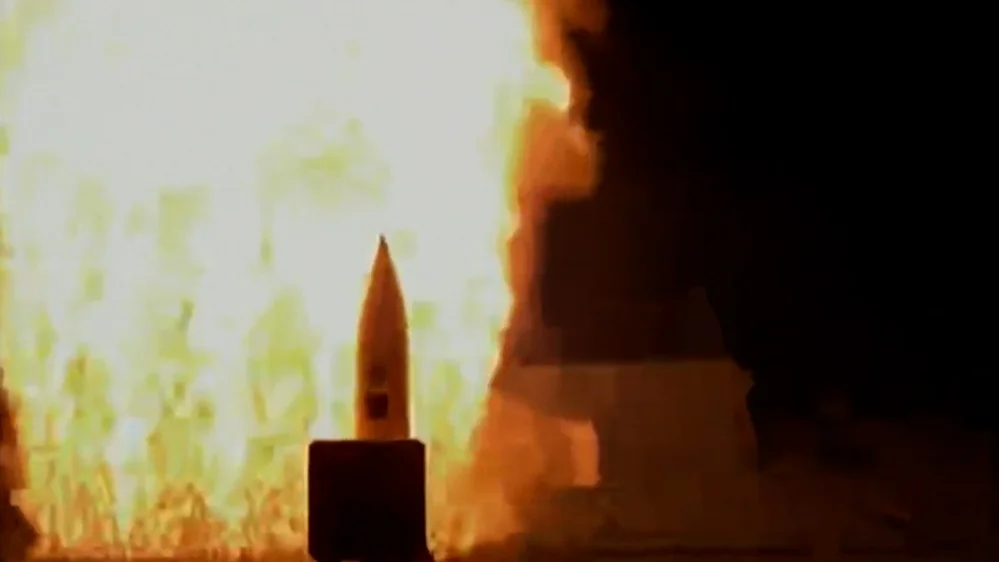
The US Navy has awarded Raytheon a $160.9 million transition-to-production contract for Block IAU, the newest electronic configuration of the Standard Missile-6 (SM-6). According to Army Recognition, the contract was signed on September 24, 2026, and covers replacing aging electronic components in the current Block IA missile’s guidance section and Target Detection Device. The engine, airframe and warhead remain unchanged.
US government procurement records describe SM-6 Block IAU as addressing a “critical obsolescence” issue in the existing Block IA, with the Navy planning to award the production work to Raytheon on a sole-source basis — reflecting the company’s status as the only qualified SM-6 manufacturer. That procurement record functions as an independent second source confirming the technical framing in Army Recognition’s report.
The missile’s physical specifications are unchanged: 6.6 meters long, 1,497 kilograms, a 343mm main-body diameter and a 533mm booster. Initial Block IAU deliveries are targeted for fiscal year 2030, while current Block IA production continues through 2027. The Navy is preparing for its next procurement period, spanning fiscal years 2027 through 2037, and aims to raise production capacity above 500 complete missiles per year.
Recent output figures show the scale of that ambition: 108 missiles in fiscal 2024, 103 in fiscal 2025, and 139 planned for fiscal 2026. A typical production cycle runs about 36 months from contract award to delivery, which lines up with Block IAU’s targeted first deliveries in 2030.
The SM-6 family operates within the Aegis combat system and is fielded aboard Arleigh Burke-class destroyers, including USS Daniel Inouye and USS Preble. Beyond air defense, the missile also supports ballistic missile defense in its Dual II variant and, in certain scenarios, can engage surface targets — a multi-role design that sits at the center of the Navy’s strategy of answering multiple threat categories with a single missile family.
The program’s electronic lineage is notable in its own right: SM-2 Block IIICU shares the same Guidance Section Electronics Unit as SM-6, letting the two missile families receive synchronized production-line updates and benefit from shared supply-chain economies of scale. A separate Block IB program, aimed at range extension, runs in parallel — Block IAU and Block IB should not be confused, since they represent distinct development tracks.
Raytheon’s position in this contract reads more clearly alongside the company’s other SM-6 awards this year. In February 2026 the Navy signed a critical-munitions deal with Raytheon to bolster both Tomahawk and SM-6 production, and in April 2026 a separate $335 million contract modification covered production of SM-6 tactical all-up rounds. Taken together, these awards show the Navy reinforcing the SM-6 supply chain from several directions within a single fiscal year.
In the bigger picture, the Navy’s total SM-6 contract ceiling can reach up to $24.4 billion across a five-year base period plus two option years. The $160.9 million transition-to-production share allocated to Block IAU is a comparatively small piece of that larger framework contract, but a technically critical one: leaving the aging electronic components unreplaced would eventually have exposed the entire production line to supply risk.
For Turkey’s own air-defense architecture, the SM-6 case offers an instructive reference point on scale and production continuity. Roketsan’s SİPER long-range air defense missile and the HİSAR family are being developed with a similar goal of sustained serial production; the US Navy’s target of 500 missiles a year for a single missile family is a concrete example of the production scale a NATO ally sets for itself. SM-6’s integration with Aegis is also worth watching comparatively against the indigenous naval air-defense architecture Turkey is building into its MİLGEM and İstif-class ships.
The contract’s transition-to-production status means final pricing has not yet been settled, even as the production line begins preparing for the Block IAU standard. Final pricing and the full-rate production decision will become clearer across upcoming budget cycles, with congressional defense budget approvals remaining a variable that directly shapes the timeline.
Kaynaklar
- Army Recognition, “US Navy to launch upgraded SM-6 Block IAU production to secure missile supply through the 2030s,” October 7, 2026 — https://www.armyrecognition.com/news/navy-news/2026/us-navy-to-launch-upgraded-sm-6-block-iau-production-to-secure-missile-supply-through-the-2030s (contract value, technical details, production targets)
- US Navy procurement record (NAVSEA, via SAM.gov opportunity listing on G2Xchange), SM-6 Block IAU sole-source production intent — https://g2x.com/app/opportunities/sam/82efafa6-9cae-4a9c-9462-fac908cf49e0 (official description of Block IAU as an obsolescence upgrade and Raytheon’s sole-source status)
- USNI News, “Raytheon to Bolster Tomahawk and SM-6 Production in Critical Munition Deal,” February 4, 2026 — https://news.usni.org/2026/02/04/raytheon-to-bolster-tomahawk-and-sm-6-production-in-critical-munition-deal (prior contract context in the SM-6 supply chain)