Over-Under Shotguns: Why Two Stacked Barrels Dominate the Clay Range

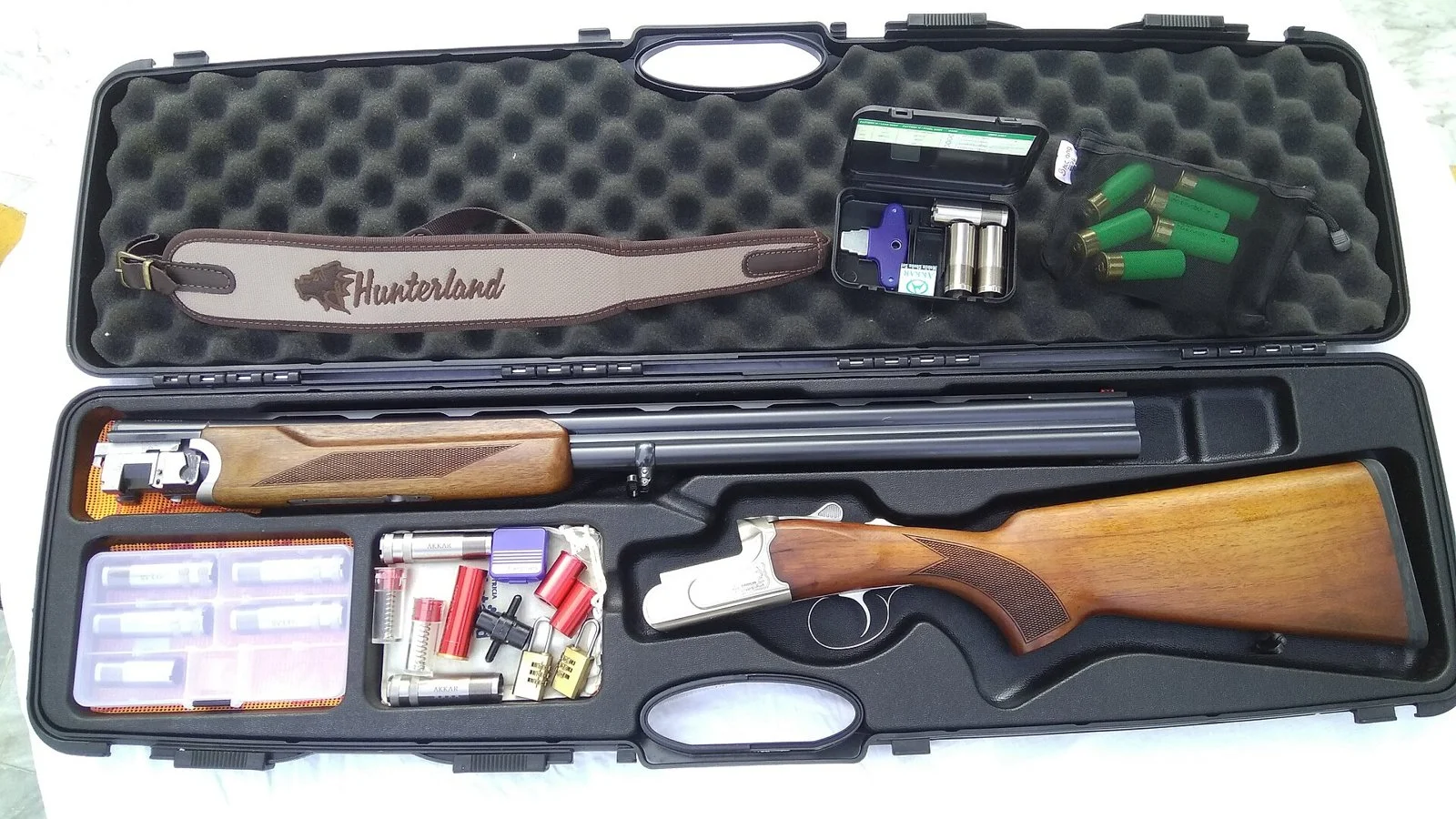
Break open a shotgun at a trap or skeet range and you’ll see the same layout again and again: two barrels, one stacked directly above the other, hinged to the receiver so the gun folds open at that single point. That’s an over-under — known in Turkish as superpoze, from the French superposé, meaning stacked one on top of the other.
The stacked layout isn’t cosmetic. It narrows the sight plane the shooter looks along, it lets each barrel carry a different choke constriction, and the simple hinge mechanism has relatively few moving parts to go wrong — three things that matter a great deal in disciplines where a shooter fires hundreds of rounds in a session.
This page covers how the over-under mechanism works, how it differs from the older side-by-side layout, and why it became the standard gun for trap and skeet shooting.
Last updated: September 20, 2026 · Envanter Medya editorial team
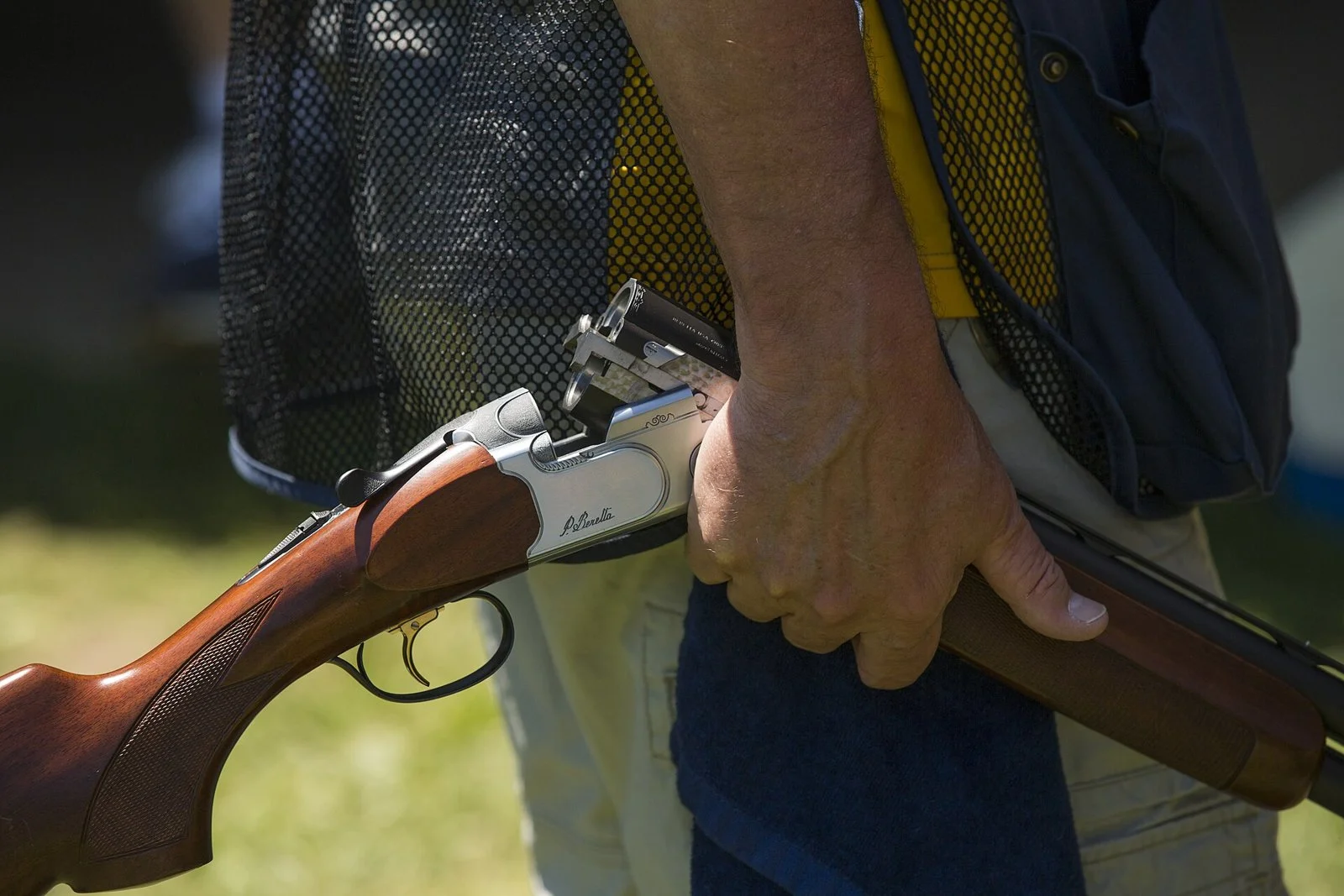
- Over-under = two barrels stacked vertically, break-action, hinged at the receiver
- Opens by folding down at the hinge; shells are loaded and unloaded by hand
- Each barrel usually carries its own interchangeable choke
- The standard gun of choice in trap and skeet shooting
- Differs from a side-by-side mainly in barrel layout and typically a narrower profile
- Simple mechanism, few moving parts, generally regarded as highly reliable
How the mechanism works
In an over-under, the two barrels are aligned vertically — one above the other — and joined to the receiver through a single hinge point at the bottom. Pulling the trigger fires one barrel at a time; on most modern guns a single trigger cycles between barrels through a selector mechanism, though some older or specialized models still use two separate triggers.
To open the action, the shooter presses the barrels downward at the hinge. That motion extracts — or on some guns, ejects — the spent shells and leaves the chambers open for the next pair to be loaded by hand. It’s a simple open-close cycle, and that simplicity is a large part of why break-action guns like this have a reputation for mechanical reliability.
Choke tubes and the over-under
Most over-unders take screw-in, interchangeable choke tubes at the muzzle end of each barrel. The choke controls how tightly the shot pattern holds together as it leaves the barrel — a tighter constriction keeps the pattern dense at distance, a more open one spreads it sooner. Because an over-under carries two barrels, a shooter can fit each with a different choke and effectively cover two engagement distances with one gun.
Over-under versus side-by-side
A side-by-side shotgun mounts its two barrels next to each other rather than stacked — a design that predates the over-under and dates to the 19th century. Stacking the barrels vertically instead narrows the sight plane down to what looks, from the shooter’s eye, like a single line rather than two barrels side by side, which many shooters find easier to align on target. Today, over-unders dominate competitive clay shooting, while side-by-sides tend to be reserved for classic-style field guns and collector pieces.
| Feature | Over-Under | Side-by-Side |
|---|---|---|
| Barrel layout | Vertical, stacked | Horizontal, side-by-side |
| Sight plane | Narrow, single-line appearance | Wider, two-barrel appearance |
| Common use | Trap/skeet, modern field use | Classic field use, collecting |
| Weight distribution | Tends toward a more centered feel | Barrel group sits slightly wider |
Why trap and skeet shooters use it
Trap and skeet are both clay-target disciplines, and both differ mainly in how the targets are launched and how the shooting stations are arranged. The over-under’s ability to carry two different chokes, plus its well-balanced barrel weight, is a large part of why it’s the standard gun in both disciplines. In Turkey, these sports are shot on ranges organized under the Turkish Shooting Sport Federation (TAF); internationally, competitive rules fall under the ISSF.
- Even with the action open at the hinge, keep the muzzle pointed in a safe direction at all times.
- Check the safety catch before loading or unloading shells.
Frequently Asked Questions
What does over-under mean on a shotgun?
It describes a shotgun with two barrels stacked vertically, one above the other, that opens at a hinge — in Turkish, superpoze, from the French superposé (stacked).
How many shots can you fire from an over-under before reloading?
Two — one from each barrel — before the shooter has to break the action open and load fresh shells by hand.
What’s the difference between an over-under and a pump-action shotgun?
An over-under is a break-action gun with two barrels; a pump-action has a single barrel fed from a magazine that the shooter cycles by hand. Each suits different shooting situations.
Why does choke selection matter on an over-under?
The choke tube controls how tightly the shot pattern holds together at distance; fitting each of the two barrels with a different choke lets one gun cover two effective ranges.
What’s the difference between trap and skeet?
In trap, clay targets launch from in front of the shooter, generally moving away; in skeet, targets launch from two separate towers on crossing paths. They’re distinct disciplines with different station layouts and shooting technique.
Are over-unders used for hunting as well as sport shooting?
Yes — over-unders are common in both bird and small-game hunting as well as clay target sports; the choice usually comes down to the shooter’s experience and the type of hunting.
How does the trigger work on an over-under?
Most modern over-unders use a single trigger with a selector that automatically switches to the second barrel after the first shot; some older or specialized models instead use one trigger per barrel.
Editorial note: This is technical journalism, not purchase or maintenance advice; always follow your manufacturer’s owner’s manual and an authorized service technician.
Bu içeriğin orijinal Türkçe versiyonu için: Türkçe sayfayı okuyun.