Which Middle Eastern Military Tops the 2026 Power Index? The Answer May Surprise You
DEFENSE ANALYSIS · 2026 RANKINGS
Which Middle Eastern Military Tops the 2026 Power Index? The Answer May Surprise You
A full countdown of the 10 most capable armed forces in the region — from rising Gulf states to battle-hardened heavyweights. Last position is not what most analysts would predict.
The 2026 GlobalFirepower (GFP) Military Strength Index has ranked the armed forces of the Middle East and its immediate neighbors, weighting more than 60 factors — from active personnel and armored vehicle counts to naval tonnage, air power, logistics depth, and financial reserves. A lower PowerIndex score indicates a stronger military posture; perfect parity would score 0.0000, a figure no nation has ever reached.
What the 2026 data reveals is a region in rapid transition. Gulf monarchies that once relied almost entirely on foreign procurement are now fielding domestically supported brigades. Legacy powers are modernizing aging Soviet-era inventories with Western and Chinese systems. And one nation — sitting at the very top of the list — has transformed its defense-industrial base so thoroughly that it no longer resembles the military it operated just a decade ago. Read the full countdown to find out who.
#10 BAHRAIN
PowerIndex: 1.6731
The Kingdom of Bahrain fields the smallest military in this ranking by nearly every raw metric, yet its strategic relevance far exceeds its size. Home to the US Navy’s Fifth Fleet at NSA Bahrain, the island nation effectively operates as the anchor of American forward presence in the Gulf — a deterrence multiplier that no raw PowerIndex score can fully capture. The Bahrain Defence Force (BDF) numbers roughly 8,200 active personnel and maintains a modest fleet of F-16C/D Block 40 fighters, M60A3 main battle tanks, and American-supplied artillery.
Doctrine is defensive by nature, calibrated to internal security and coalition interoperability rather than power projection. Budget constraints and a small population base (fewer than 1.5 million citizens) cap force ceilings, but Bahrain consistently punches above its weight in joint exercises with the US, UK, and fellow GCC partners. Procurement in the 2020s has focused on upgrading its air-defense umbrella and expanding its small but capable special-operations capacity.
| Category | Bahrain |
|---|---|
| Active Personnel | ~8,200 |
| Combat Aircraft | ~25 |
| Armored Vehicles | ~400 |
| Naval Assets | ~11 |
| GFP PowerIndex | 1.6731 |
Bahrain’s real military value lies in what it hosts, not what it deploys. Up next: a kingdom that has waged multiple wars in the past decade and emerged with a far larger force than its territory suggests.
#9 JORDAN
PowerIndex: 1.5581
The Jordan Armed Forces (JAF) occupy a uniquely exposed geostrategic position — bordered by Israel, Syria, Iraq, and Saudi Arabia — which has shaped their doctrine into something rare in the Arab world: a genuinely battle-ready, combined-arms force that prioritizes quality over quantity. With around 100,000 active personnel and a robust reserve system, Jordan operates an eclectic inventory that mixes American F-16s, British Challenger 1 tanks, and home-upgraded M60 Phoenixes.
What distinguishes Amman from its peers is training culture and Western interoperability, honed through decades of joint exercises and peacekeeping deployments. Jordan’s special-operations units are widely regarded among the region’s most professional. The defense budget remains constrained relative to Gulf neighbors, forcing selective modernization — the JAF has prioritized precision strike, counter-UAS, and border surveillance systems. Ongoing instability along the Syrian and Iraqi borders keeps the force in a permanent state of operational readiness that paper-drill militaries cannot match.
| Category | Jordan |
|---|---|
| Active Personnel | ~100,500 |
| Combat Aircraft | ~100 |
| Armored Vehicles | ~1,600 |
| Naval Assets | ~12 |
| GFP PowerIndex | 1.5581 |
Jordan proves that budget doesn’t buy everything — discipline and geography do the rest. Next: a newcomer to serious military spending that has bought an arsenal faster than almost any nation in history.
#8 QATAR
PowerIndex: 1.4096
Qatar’s military build-up since 2017 — driven partly by the GCC blockade that isolated Doha diplomatically — is one of the most dramatic in recent Gulf history. The Qatar Armed Forces have signed procurement deals worth tens of billions of dollars, acquiring Rafale fighters from France, Eurofighters from the UK, Apache helicopters, Patriot air-defense batteries, and a modern naval surface combatant fleet. On paper, the hardware catalogue rivals states with populations ten times larger.
The gap between hardware and operational depth remains real, however. Qatar’s citizen population barely exceeds 300,000, which caps the recruitment base severely. The country relies significantly on US Central Command’s Al Udeid Air Base — the largest American air operations hub in the Middle East — for its strategic security umbrella. Doctrine is defensive, emphasizing deterrence and coalition embeddedness over independent power projection. If the hardware investment eventually matures into a fully trained and integrated force, Qatar’s PowerIndex could climb substantially in coming cycles.
| Category | Qatar |
|---|---|
| Active Personnel | ~16,000 |
| Combat Aircraft | ~96 |
| Armored Vehicles | ~600 |
| Naval Assets | ~18 |
| GFP PowerIndex | 1.4096 |
Money can buy platforms — but training and doctrine take decades to build. Up next: Qatar’s larger and more geopolitically active neighbor, whose military has been tested by proxy conflicts across three continents.
#7 UNITED ARAB EMIRATES
PowerIndex: 1.0188
The UAE Armed Forces are the most operationally experienced military in the Arabian Peninsula — a claim backed by their ground campaign record in Yemen, Libya advisory operations, and sustained counter-piracy missions off the Horn of Africa. Abu Dhabi has also invested more aggressively in domestic defense manufacturing than any other Gulf state: EDGE Group, the state conglomerate, now develops armored vehicles, guided munitions, electronic warfare systems, and cyber tools, fundamentally shifting the UAE from pure importer to emerging exporter.
The air force operates one of the most advanced mixed fleets in the region: F-16 Block 60 Desert Falcons, Mirage 2000-9s, and an incoming order for 50 F-35s pending Congressional clearance. The Leclerc main battle tank forms the armored core. Naval modernization has accelerated through the Baynunah-class corvette program. The key vulnerability remains manpower — the native Emirati citizen base is tiny, forcing reliance on contracted professionals and allied coalition partners for sustained large-scale operations.
| Category | UAE |
|---|---|
| Active Personnel | ~65,000 |
| Combat Aircraft | ~172 |
| Armored Vehicles | ~1,400 |
| Naval Assets | ~75 |
| GFP PowerIndex | 1.0188 |
The UAE has crossed from buyer to builder — a transition few Gulf states have managed. Now we enter the top half of the ranking. Up next: a nation whose military was hollowed out by a decade of war but is rebuilding with surprising urgency.
#6 IRAQ
PowerIndex: 0.8115
The Iraqi Security Forces (ISF) have undergone one of the most dramatic collapses and reconstructions in modern military history. After the catastrophic 2014 ISIS offensive that swept through a third of the country’s territory in days, Baghdad — with American, Iranian, and coalition support — rebuilt its ground forces from near zero. The result by 2026 is a numerically large military of roughly 200,000 active personnel, but one where institutional coherence, inter-sectarian trust, and command-and-control remain significant vulnerabilities.
The Iraqi Air Force has taken delivery of F-16IQ fighters and a growing fleet of light attack aircraft, while army brigades operate a mix of American M1A1 Abrams tanks, Russian T-72 upgrades, and a sprawling variety of donated light armor. The Popular Mobilization Units (PMU) — Iranian-aligned paramilitary formations — exist in a legally ambiguous parallel to the official ISF, effectively giving Baghdad’s military posture a dual structure that complicates NATO-style operational assessments.
| Category | Iraq |
|---|---|
| Active Personnel | ~200,000 |
| Combat Aircraft | ~90 |
| Armored Vehicles | ~3,600 |
| Naval Assets | ~50 |
| GFP PowerIndex | 0.8115 |
Iraq has the bodies and some of the equipment — but turning those assets into a coherent fighting force remains a generational project.
#5 SAUDI ARABIA
PowerIndex: 0.4473
The Royal Saudi Armed Forces (RSAF) represent the largest Arab military budget in the world — routinely exceeding $75 billion annually — and have been in active combat operations in Yemen since 2015. That decade-long campaign has exposed both the considerable reach of Saudi air power and the limitations of its ground doctrine against asymmetric opponents armed with drones and ballistic missiles. Houthi drone and missile strikes reaching Riyadh and Jeddah have accelerated Saudi investment in layered air defense, integrating Patriot PAC-3, THAAD, and indigenous short-range systems.
On the modernization front, Vision 2030 defense goals target 50% domestic procurement by 2030. Saudi Arabian Military Industries (SAMI) has moved from pure assembly to design co-development on armored vehicles and munitions. The air force operates over 200 advanced fighters including F-15SA Eagles and Eurofighter Typhoons.
| Category | Saudi Arabia |
|---|---|
| Active Personnel | ~257,000 |
| Combat Aircraft | ~234 |
| Armored Vehicles | ~7,700 |
| Naval Assets | ~55 |
| GFP PowerIndex | 0.4473 |
Saudi Arabia has the money — the question is whether Vision 2030 can translate procurement into genuine operational depth.
#4 EGYPT
PowerIndex: 0.3651
The Egyptian Armed Forces are the largest military in Africa and the Arab world by active personnel — some 450,000 soldiers, sailors, and airmen — with a reserve force that can double that figure. Egypt has pursued one of the most aggressive and eclectic modernization programs of the past decade, simultaneously acquiring Russian Su-35 fighters, French Rafale jets, German MEKO frigates, Italian Fremm frigates, Chinese CH-47 drones, and American M1A2 Abrams tanks.
Egypt’s strategic doctrine focuses on three axes: deterrence against Israel (a peace treaty partner, but a constant planning variable), southern border security against Libyan and Sudanese instability, and protecting the Suez Canal — which generates over $9 billion annually and is existential to national economic security. The navy has received two Mistral-class helicopter carriers from France and is building a blue-water surface combatant fleet.
| Category | Egypt |
|---|---|
| Active Personnel | ~450,000 |
| Combat Aircraft | ~339 |
| Armored Vehicles | ~11,000 |
| Naval Assets | ~220 |
| GFP PowerIndex | 0.3651 |
Egypt’s sheer mass makes it a force multiplier for any coalition it joins. The top three bring capabilities that raw headcount cannot match.
#3 IRAN
PowerIndex: 0.3199
The Islamic Republic of Iran operates the most institutionally complex military architecture in the region: a dual-structure system splitting power between the Islamic Revolutionary Guard Corps (IRGC) and the conventional Artesh. The IRGC — including its Aerospace and Quds Force branches — functions as a parallel military with independent command, ballistic missile capabilities, and a network of proxy forces stretching from Lebanon through Syria, Iraq, Yemen, and Gaza.
Decades of Western and UN arms sanctions have paradoxically accelerated domestic weapons development. Iran today manufactures its own ballistic and cruise missiles, combat drones (the Shahed series has become internationally notable after deployment by Russia in Ukraine), air-defense radars, and naval fast-attack craft. The navy’s asymmetric doctrine — focused on sea-denial in the Strait of Hormuz — represents a credible threat to global energy supply routes.
| Category | Iran |
|---|---|
| Active Personnel | ~610,000 |
| Combat Aircraft | ~186 |
| Armored Vehicles | ~6,800 |
| Naval Assets | ~101 |
| GFP PowerIndex | 0.3199 |
Iran’s greatest weapon is strategic depth — not just territorial but in the network of non-state forces it can activate across the region.
#2 ISRAEL
PowerIndex: 0.2707
The Israel Defense Forces (IDF) represent the most technologically dense military per capita on Earth. A nation of under 10 million citizens fields a force whose qualitative edge — in intelligence, precision strike, cyber warfare, and layered missile defense — compensates for what it lacks in raw manpower. The Merkava Mk IV main battle tank is widely regarded as one of the best-protected armored platforms in operational service. The Trophy Active Protection System (MAPS), developed by Rafael, has demonstrated real-world effectiveness stopping anti-tank guided missiles in Gaza and Lebanese operations.
Israel’s air power is built around the F-35I Adir alongside F-15I Ra’am platforms. The multi-layered air-defense architecture (Iron Dome, David’s Sling, Arrow-2/3) is the most combat-tested missile defense system in history. Israel is also an assumed, though undeclared, nuclear weapons state. The ongoing Gaza conflict and northern Lebanon operations have tested IDF urban warfare doctrine severely.
| Category | Israel |
|---|---|
| Active Personnel | ~170,000 |
| Combat Aircraft | ~241 |
| Armored Vehicles | ~3,100 |
| Naval Assets | ~67 |
| GFP PowerIndex | 0.2707 |
Israel is the region’s most capable military in qualitative terms. But the #1 ranked force by the GFP 2026 index is not Israel.
#1 STRONGEST MILITARY IN THE MIDDLE EAST REGION — 2026
#1 TURKEY
PowerIndex: 0.1975
The Turkish Armed Forces (TSK) claim the top spot in the 2026 GFP Middle East-extended regional ranking — and the data makes the case compellingly. Turkey combines a large conscript-backed manpower pool of over 355,000 active troops with what is now a genuinely world-class domestic defense-industrial complex. That combination — mass and technology — is rare, and it is the precise formula that pushes Ankara ahead of both Israel’s qualitative edge and Egypt’s quantitative depth.
The Altay main battle tank entered production in 2023 and is rolling out to the Turkish Land Forces. The T-155 Fırtına self-propelled howitzer has been exported to the UAE and demonstrated combat effectiveness in Syria and Iraq. The KIRPI MRAP family has been exported to over a dozen nations.
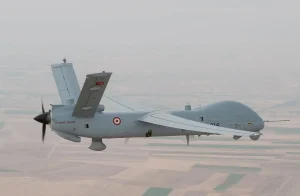
The KAAN fifth-generation fighter aircraft — Turkey’s indigenous stealth combat jet developed by TAI — completed initial flight-test phases by 2024. The Bayraktar TB2 and Akıncı combat drone programs, proven across Libya, Nagorno-Karabakh, Ukraine, and northern Syria, have redefined Turkey’s reputation as a global defense technology exporter.
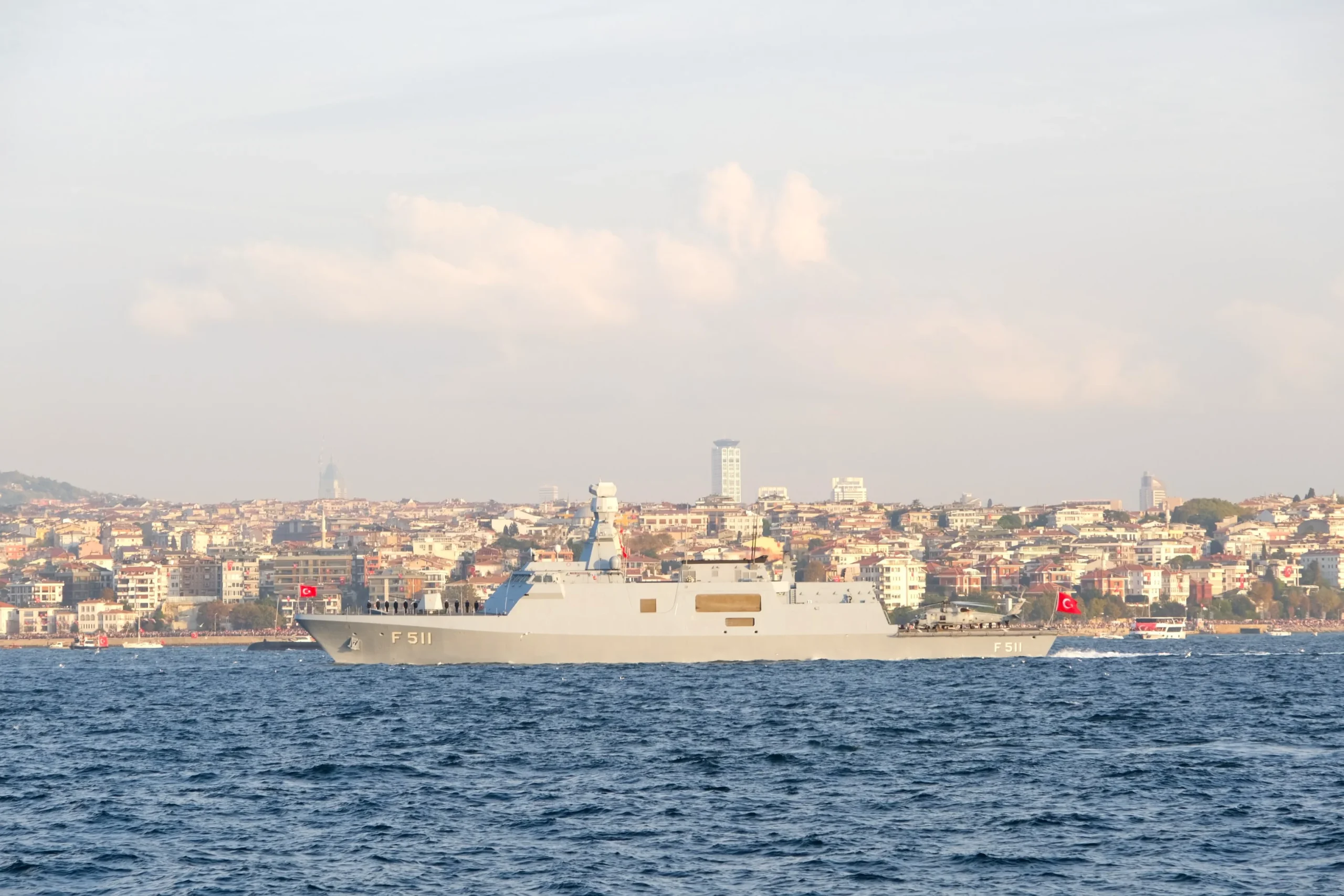
The MILGEM national warship program has delivered Ada-class corvettes and Istanbul-class frigates, with additional hulls for export to Ukraine and Pakistan. NATO membership provides Turkey with interoperability benefits and collective defense guarantees that no other nation in this ranking enjoys. Defense exports crossed $5.5 billion in 2024.
| Category | Turkey |
|---|---|
| Active Personnel | ~355,000 |
| Combat Aircraft | ~207 |
| Armored Vehicles | ~11,800 |
| Naval Assets | ~149 |
| Defense Budget | ~$40B+ |
| GFP PowerIndex | 0.1975 (#1) |
Full Ranking Comparison Table — Middle East Military Power 2026
| Rank | Country | GFP PowerIndex | Active Personnel | Combat Aircraft | Armored Vehicles | Naval Assets |
|---|---|---|---|---|---|---|
| 1 | Turkey | 0.1975 | 355,000 | 207 | 11,800 | 149 |
| 2 | Israel | 0.2707 | 170,000 | 241 | 3,100 | 67 |
| 3 | Iran | 0.3199 | 610,000 | 186 | 6,800 | 101 |
| 4 | Egypt | 0.3651 | 450,000 | 339 | 11,000 | 220 |
| 5 | Saudi Arabia | 0.4473 | 257,000 | 234 | 7,700 | 55 |
| 6 | Iraq | 0.8115 | 200,000 | 90 | 3,600 | 50 |
| 7 | UAE | 1.0188 | 65,000 | 172 | 1,400 | 75 |
| 8 | Qatar | 1.4096 | 16,000 | 96 | 600 | 18 |
| 9 | Jordan | 1.5581 | 100,500 | 100 | 1,600 | 12 |
| 10 | Bahrain | 1.6731 | 8,200 | 25 | 400 | 11 |
Note: Lower PowerIndex score = stronger military. Source: globalfirepower.com
Source: GlobalFirepower 2026 Military Strength Ranking — www.globalfirepower.com. Personnel and platform figures are approximate and reflect GFP 2026 database values. Analysis and editorial commentary by envantermedya.com defense desk.